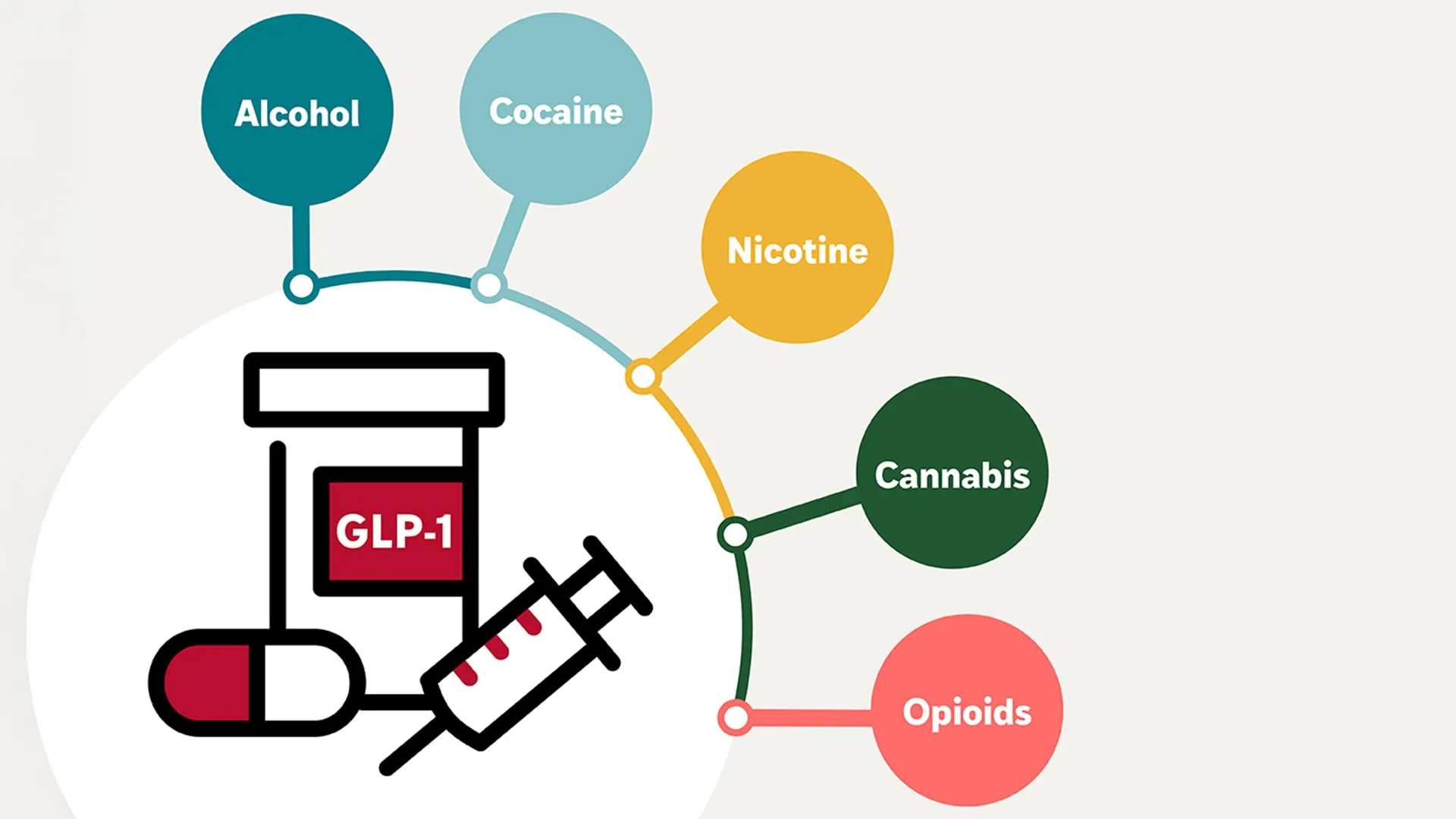
A medication taken daily by millions for weight loss and diabetes is revealing an unexpected superpower: the ability to quiet the cravings that drive addiction to alcohol, nicotine, opioids, cocaine, and other substances. Researchers at Washington University School of Medicine in St. Louis analyzed electronic health records from 606,434 U.S. veterans and found that GLP-1 receptor agonists—drugs like semaglutide (Ozempic, Wegovy), liraglutide, and dulaglutide—are associated with dramatically lower risks of developing substance use disorders and, for those already struggling with addiction, far fewer overdoses and drug-related deaths.
The finding matters because addiction medicine has historically been fragmented, with different treatments for different substances. A nicotine patch addresses smoking but not alcohol dependence. Medications exist for opioid addiction but not methamphetamine. GLP-1 drugs appear to work differently—not by targeting any single substance, but by dampening the craving itself, a neurological commonality underlying all addiction.
Among the 524,817 veterans without a substance use disorder at the study's start, those taking GLP-1 medications had a 14 percent lower risk of developing one compared to those on other diabetes medications. The protective effect held across every substance examined: 18 percent lower risk for alcohol, 14 percent for cannabis, 20 percent for cocaine, 20 percent for nicotine, and 25 percent for opioids. This translated to seven fewer new substance use disorder diagnoses per 1,000 GLP-1 users—a substantial population-level benefit.
For the 81,617 veterans already living with addiction, the results were even more striking. After three years, those taking GLP-1 drugs experienced a 40 percent reduction in overdoses and a 50 percent reduction in drug-related deaths. Emergency department visits dropped by 30 percent, and hospitalizations fell by 25 percent. Overall, researchers estimated 12 fewer serious addiction-related events per 1,000 GLP-1 users.
Dr. Ziyad Al-Aly, the study's senior author and a clinical epidemiologist at Washington University, explained the mechanism: "There is no medication that works across addictive substances, but GLP-1 medication really works against all major substances, and it works uniformly, not because it acts against alcohol or opioids or nicotine specifically, but because it is likely acting against the craving itself."
The insight emerged partly from patient reports. People starting GLP-1 treatment unexpectedly lost interest in cigarettes and alcohol. Researchers knew that GLP-1 receptors are present in brain regions involved in reward processing, suggesting the drugs could influence the cravings that pull people toward addiction. Rather than a coincidence, the data suggests GLP-1s may act on a shared biological pathway underlying multiple forms of addiction.
The implications extend beyond addiction treatment alone. For the millions of people with diabetes or obesity who also struggle with substance use disorders, a single medication could address both conditions simultaneously—a dual benefit that Al-Aly called particularly significant given that some addictive substances like methamphetamine currently lack approved medications.
The research, published in The BMJ, opens a new chapter in addiction medicine: one where the target isn't the substance itself, but the brain's fundamental drive to seek it.