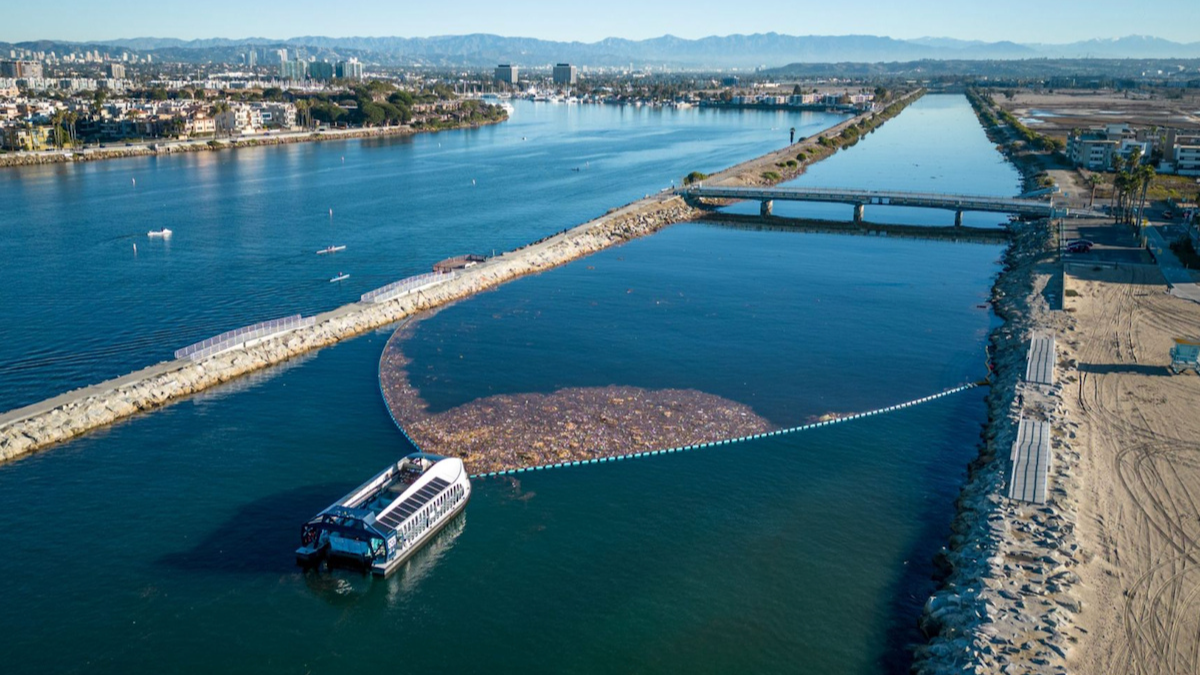
Every time it rains in Los Angeles, a deluge of garbage tumbles from the hills into the city's rivers—a perfectly ordinary disaster that James Patterson, operations director for The Ocean Cleanup in Los Angeles, has learned to expect. Storms wash trash down arroyos and tributaries toward the coast, where what once lay on land becomes a marine catastrophe. It's a peculiar paradox for a region that desperately needs rainfall: the very weather that replenishes aquifers also chokes waterways with waste destined for beaches and open ocean.
Until recently, the only solution was slow and laborious—manual cleanup crews or heavy machinery dragging debris from riverbeds. But in 2013, a Dutch aerospace engineering student named Boyan Slat posed a different question: if most ocean garbage enters the sea through flooded rivers, why not intercept it at the source? That idea became the Interceptor, a solar-powered catamaran-style barge anchored at river mouths, designed to capture waste before it ever reaches the ocean.
The Interceptor's ingenuity lies in its simplicity. Floating barriers extend from both sides of the barge toward the shore, channeling debris while allowing water and wildlife to pass freely. The system absorbs waste into large collection containers that, once full, are transported for proper recycling and management. Some of those collected materials find a second life as components in new automobiles—trash transformed into future vehicles.
After three successful years of operation at Ballona Creek in Marina del Rey, The Ocean Cleanup announced a new partnership with the city of Los Angeles to install additional Interceptors in the Los Angeles River and San Gabriel River. The project, with a total cost potentially exceeding 20 million dollars, has secured backing from mayors of coastal cities including Long Beach and Seal Beach. The urgency is clear: Los Angeles is preparing to host the 2028 Olympic Games, and officials are determined to avoid the water contamination scandals that plagued Rio de Janeiro and Paris. Open water swimming events cannot proceed in polluted conditions, and Los Angeles refuses to let athletes compete in compromised waters.
Yet the vision extends beyond Olympic readiness. The long-term ambition is pragmatic and rooted in daily life—improving environmental conditions for residents, visitors, and wildlife that depends on healthy waterways. When rain arrives, Patterson's team springs into action, dispatching divers and engineers to inspect barriers and machinery. The Interceptor 007 at Ballona Creek has captured colchones, coolers, and even an electric scooter in recent years. On quieter days, visitors aboard the 24-meter barge can observe the system's solar panels overhead and watch the conveyor belt distribute collected debris across mobile containers.
In just three years, the Ballona Creek Interceptor has collected more than 175,000 kilos of waste—more than double the original estimates—proving that prevention at the source works. As storm seasons return to Los Angeles, this solar-powered barge stands ready, a quietly powerful reminder that solutions often emerge when engineers think upstream instead of downstream.