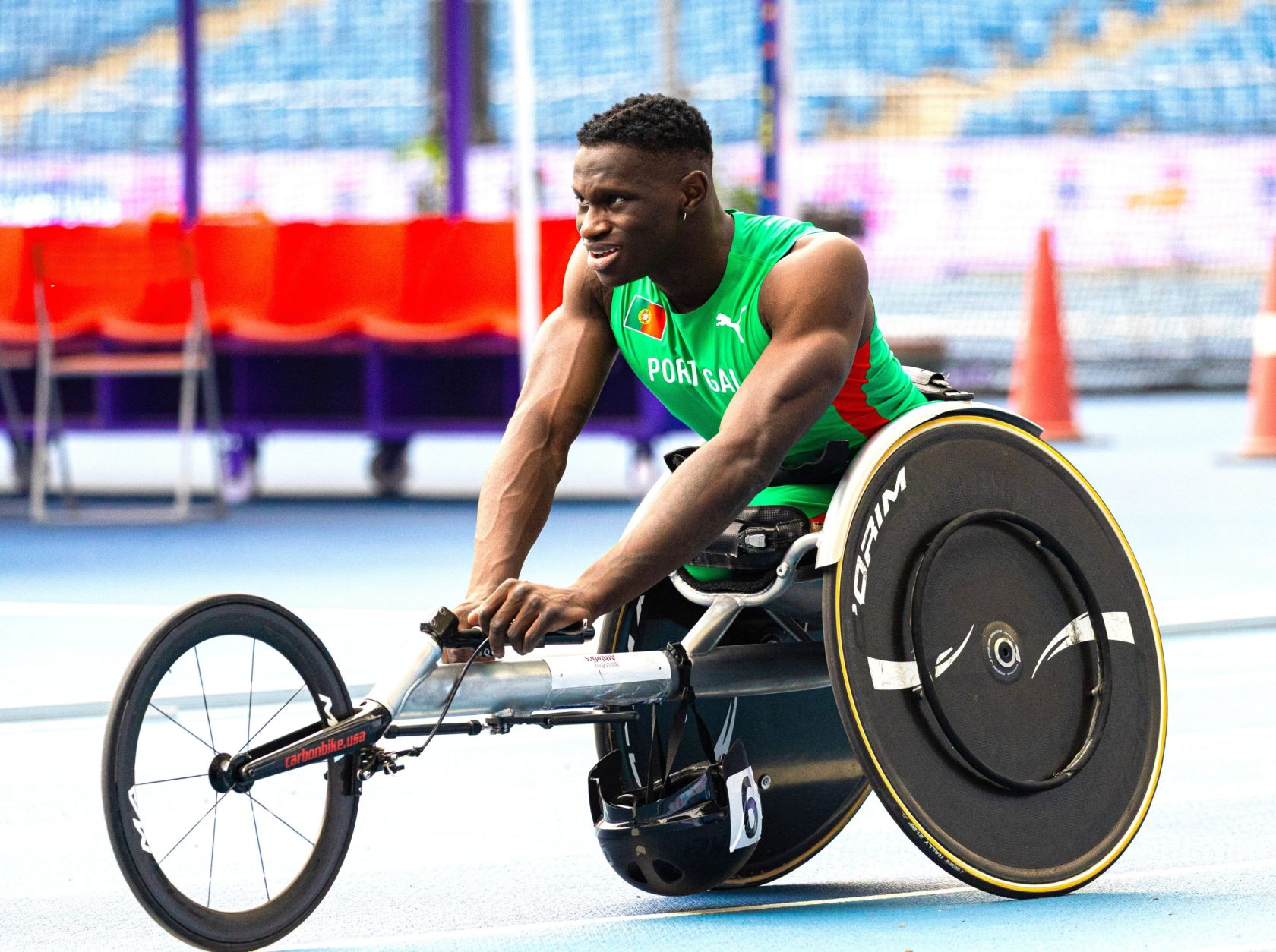
On the Swiss track in Nottwil on May 24, Mamudo Baldé crossed the finish line in 13.61 seconds and rewrote the record books for European wheelchair athletics. The Portuguese athlete from the João Correia Academy, racing in the 100 metres T54 class at ParAthletics 2026, claimed second place while setting a new European record—a moment that caps months of preparation toward the Los Angeles 2028 Paralympic Games.
What makes Baldé's achievement remarkable is the caliber of competition that produced it. The race itself was so fiercely contested that the top two finishers both surpassed the previous world record. Thai athlete Athiwat Paeng-Nuea won in 13.54 seconds, setting a new world standard, but Baldé's 13.61 seconds still represents a historic breakthrough for European wheelchair racing. With this performance, he now holds the second-fastest time ever recorded, anywhere in the world.
The previous European record had stood since the London 2012 Paralympic Games, set by Finnish athlete Leo-Pekka Tähti at 13.63 seconds. Baldé's improvement of two hundredths of a second may sound marginal, but in elite wheelchair athletics it represents years of training, refinement, and athletic progression. The record belongs now to Portugal, a testament to both Baldé's dedication and the coaching environment at the João Correia Academy that has nurtured his development.
Baldé arrived in Nottwil as the world-ranking leader, having just completed an intense three-week competition cycle across Switzerland that began on May 14 with the Daniela Jutzeler Memorial and Swiss Nationals in Arbon. The ParAthletics 2026 WPA Grand Prix event marked the culmination of this demanding schedule, and he delivered when it mattered most.
The Portuguese wheelchair athletics team brought additional momentum home from Switzerland. Fellow athlete Rafael Neto, also from the João Correia Academy, competed in the same 100m T54 final, finishing 13th with a time of 14.63 seconds—a new personal record for him. That dual success underscores the strength of the Portuguese program as it builds toward Los Angeles 2028.
For Baldé, this European record is both a celebration of what he has achieved and a marker on the path ahead. Wheelchair athletics at the Paralympic level demands not just raw speed but extraordinary precision and consistency. Each hundredth of a second compressed reflects months of training, biomechanical analysis, and mental preparation. His second-place finish against a world-record-setting field proves he belongs at the very top of international competition.
As the Portuguese national team returns home from this three-competition tour, they carry with them evidence that their investment in athlete development is paying dividends on the world stage. Baldé's name now stands alongside the best wheelchair sprinters on the planet. With two years until Los Angeles, he has established himself as a genuine medal contender—and shown that European wheelchair racing has a vibrant, competitive future.