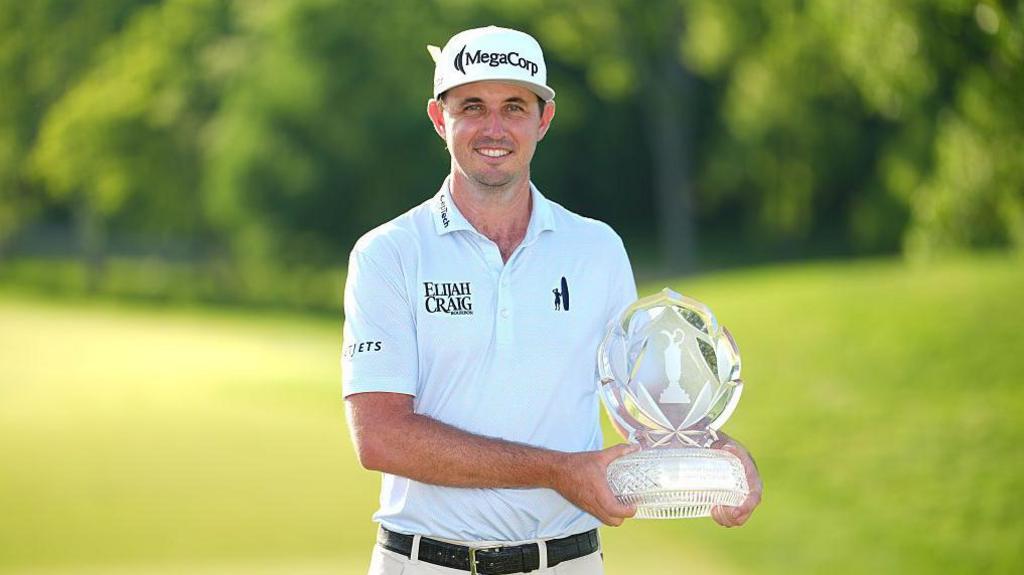
JT Poston's comeback at the Memorial Tournament in Ohio was the kind that reminds you why golf remains one of sport's most unforgiving and redemptive stages. The 33-year-old American had built a commanding lead but squandered it spectacularly with four bogeys in his first 13 holes, watching as England's Tommy Fleetwood seized the moment and briefly took the lead on the 15th. For many players, that collapse would have been the story—the narrative of a tournament lost in a handful of shots. Instead, Poston steadied himself, found his rhythm again, and beat Ryan Gerard in a play-off to claim his biggest career victory.
The path to this triumph was as dramatic as it was unconventional. Play had been suspended on Saturday due to thunderstorms, with the tournament's third round concluding the following morning. That strange rhythm—a day broken up, momentum paused, the pressure reset—might have worked in Poston's favor. When action resumed, he was tied at nine under with Gerard on the sixth green. From that point, Poston pulled away, moving to 12 under and maintaining a four-shot cushion over Gerard heading into the final round. It was enough to hold on and ultimately force the play-off that would decide it all.
Around him, the leaderboard told its own story of elite golf at a historic venue. Tommy Fleetwood's brief flirtation with the lead ended with a bogey on the 17th, leaving him tied for fourth at 10 under par alongside American Sam Burns. Wyndham Clark, the American who shot a final-round 67, finished third. But perhaps the most notable absence from the winner's circle was world number one Scottie Scheffler, who came to Ohio aiming to equal Tiger Woods' record of winning three consecutive titles. Scheffler finished 12th alongside England's Justin Rose and Northern Ireland's Rory McIlroy—a reminder that even the game's best players are vulnerable on any given week.
What makes Poston's victory resonate is not just the play-off triumph, but the resilience it demanded. That four-bogey stretch would have demoralized many competitors, yet Poston found a way to regain his composure and finish the tournament strong enough to earn another chance against Gerard. In golf, where a single shot can swing an entire tournament, that kind of mental fortitude is rarer than any single moment of brilliant play.
For Poston, this Memorial victory stands as a career peak—the kind of win on a storied course that defines a golfer's resume. It's the sort of story that transcends the sport: a player who had it all within reach, lost his grip, and refused to accept defeat.