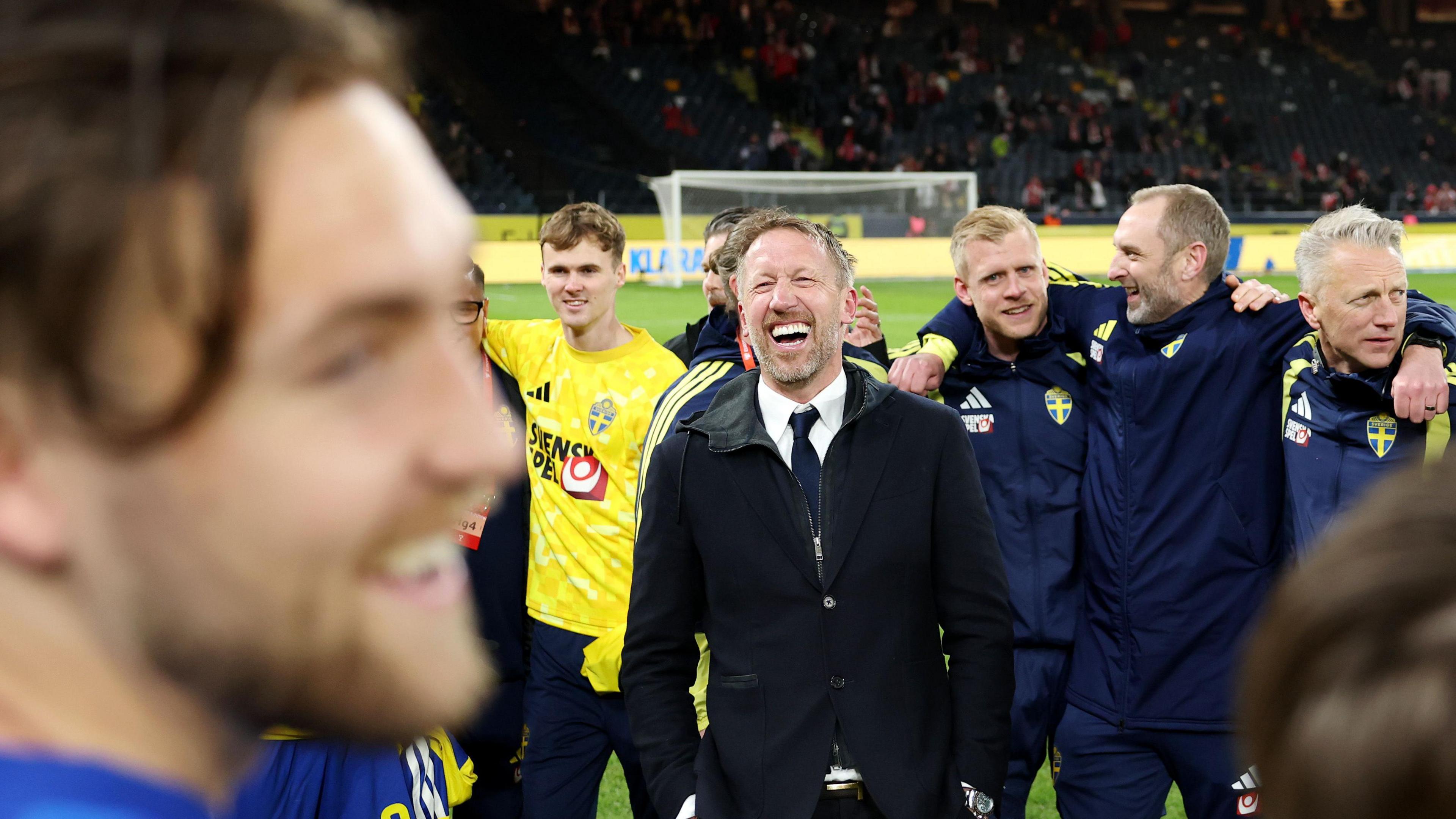
Viktor Gyokeres struck in the 88th minute, and Graham Potter's carefully controlled composure shattered into pure joy. After months of setback and self-doubt—seven months at Chelsea, eight months at West Ham—the 51-year-old English manager stood on the Strawberry Arena pitch in Stockholm in front of 50,000 Swedish fans and told his players words he had barely dared imagine: "We are going to the World Cup, baby."
The 3-2 playoff victory against Poland in March marked more than a qualifying result. It was Potter's answer to the question of whether a manager could survive public failure and find redemption. Sweden's first World Cup appearance since 2018 belonged to Potter now, tied inseparably to his name and his willingness to sit with the weight of his past.
"It hurt," Potter said bluntly when reflecting on his recent dismissals. "They are painful experiences. I have lived failure." But rather than hide from this truth, he leaned into it. The feedback from people he trusted, the perspective required to move forward, the harder-won humility—these became his foundation at the Swedish Football Association. What emerged was not bitterness, but a man oddly grateful for the education that disappointment provides.
The drama of that March night crystallized something ineffable for Potter. Gyokeres, coming off a hat-trick against Ukraine in the previous qualifier, delivered the moment that sent 15 players cascading onto the pitch in violation of every rule he could count—"I'm thinking, 'That's yellow cards, that's problems,' " Potter recalled with wonder. "But of course it's a World Cup, so all the rules are out the door." He allowed himself a few celebratory drinks, then recalibrated: a reminder not to become "quite as good as you say when you're there [high]," nor "quite as bad as they say when you're there [low]."
Potter's Swedish connection runs deeper than this recent appointment. His coaching career began in Scandinavia, where he elevated Östeersunds FK from the fourth tier to the top flight, winning the domestic cup and launching the club's first European campaign. Two of his children were born in Sweden. He learned the language, absorbed its football philosophy, and now sings the national anthem before matches. On his newly launched Instagram, he shares images of himself exploring Nordic landscapes and reading Swedish literature—not the calculated posturing of a hired gun, but the genuine rootedness of someone who has chosen to belong.
"I feel very Swedish when I'm working," Potter said simply. The Swedish FA's decision to extend his contract through 2030 before the playoff victory ensured his continuity beyond this World Cup—the 2028 European Championship and 2030 World Cup lie ahead if Sweden qualifies.
Even Zlatan Ibrahimovic, Sweden's most celebrated modern striker, sent him a congratulatory message. The country's footballing pantheon had given its blessing. Potter's journey from the ashes of London's dismissals to the Stockholm rain and roaring crowd felt less like escape and more like recognition: sometimes the place you need to rebuild is the one that already knows who you are.