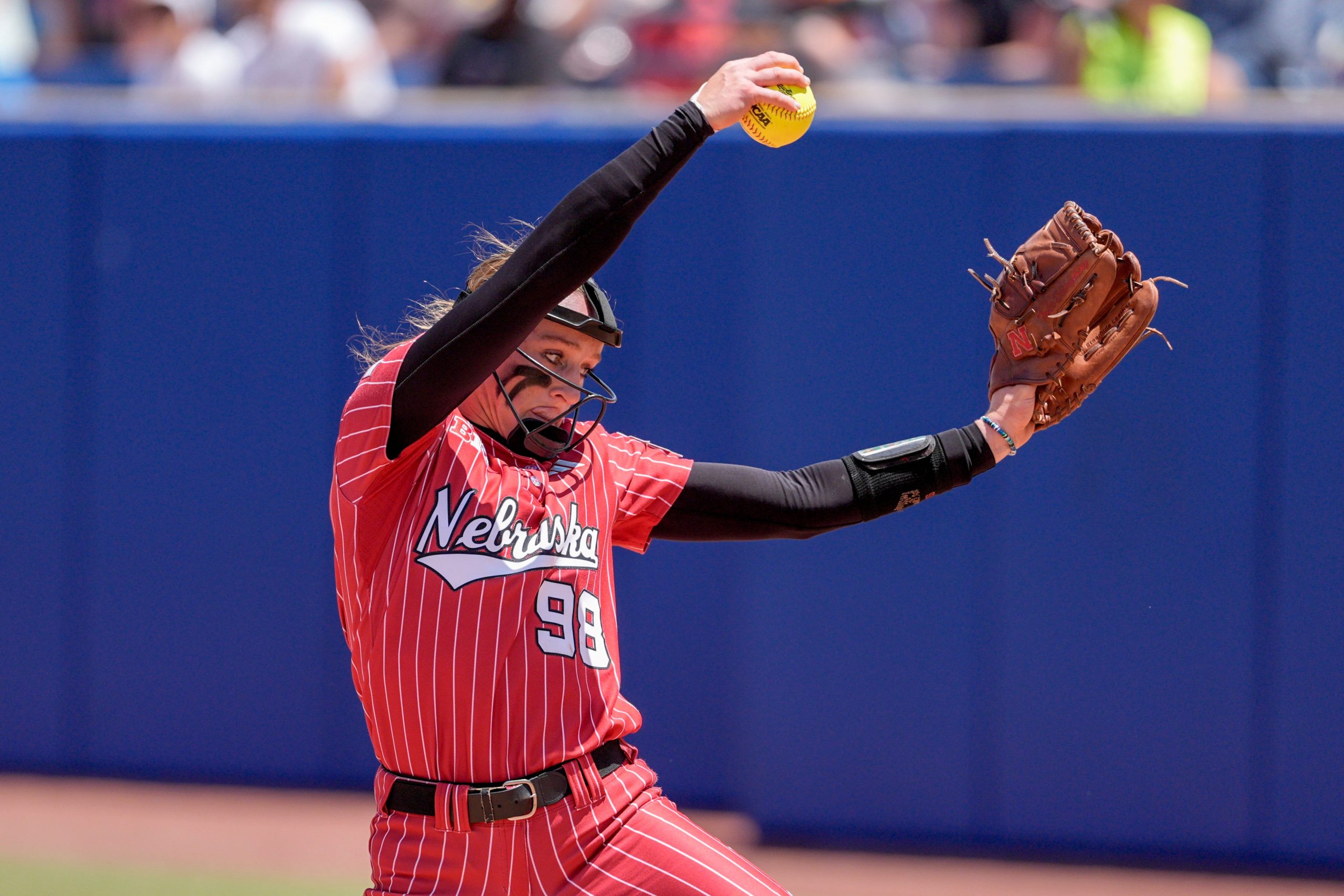
Jordy Frahm took the mound in Oklahoma City three months pregnant, her bat slung across her shoulders like it always had been, and delivered one more reminder of why she will be remembered as one of the greatest two-way athletes college softball has ever seen. The Nebraska pitcher, named the 2026 USA Softball Collegiate Player of the Year, announced her pregnancy on social media mid-tournament, posting simply: "Our greatest blessing is on the way. Baby Frahm coming December 2026."
Her decision to continue pitching while expecting speaks to something larger than individual achievement. Frahm's presence at the Women's College World Series in May carried implications for how the sport sees women athletes—not as bodies that must pause or withdraw when life happens, but as people whose lives and careers can coexist. At three months along, she pitched 18 innings across three games. In Nebraska's opening matchup against Arkansas, she delivered a complete-game shutout that lasted 10.0 innings. Two games later, facing Texas, she pitched 6.0 innings and also stepped up to the plate, launching a solo home run that led off the contest.
That home run was the capstone to a season of historic proportion. Frahm became the first NCAA player ever to hit 20 home runs and win 20 games in back-to-back seasons, cementing her status not just as a great pitcher or a great hitter, but as something rarer: a player who excelled at both with equal force. Her 2026 offensive numbers read like a video game: a .403 batting average with 20 home runs, 51 RBIs, 11 doubles, and a staggering .806 slugging percentage. On the mound, she compiled a 21-6 record with a 1.37 ERA, adding 12 saves—a Nebraska single-season record that tied the Big Ten mark and ranked sixth in NCAA history. She struck out 251 batters while walking only 33.
Yet Frahm was careful not to claim sole credit for Nebraska's success. At her final press conference, she spoke about the collective effort that built the program, acknowledging the players who arrived before her and the transfers who came with shared purpose. "I didn't come home and change this program," she said. "No one person can do that." Her voice carried the weight of someone who understood that legacies are built by communities, not individuals—even when one individual is doing something no one has done before.
She married Trey, a former Nebraska baseball player, in August 2025, and together they're expecting their child in December. The baby will be born into a story that already transcends sports: a narrative about what women can accomplish when they're allowed to live fully, to be pregnant and powerful, to pitch and hit home runs without choosing one identity over the other. Frahm's three months in Oklahoma City didn't just add another championship to her resume—though Nebraska did compete at the WCWS as a Big Ten champion. It expanded what people believed was possible. When she steps away from the game to become a mother, she'll leave behind the blueprint of an athlete who refused to make herself smaller, even as life grew bigger inside her.