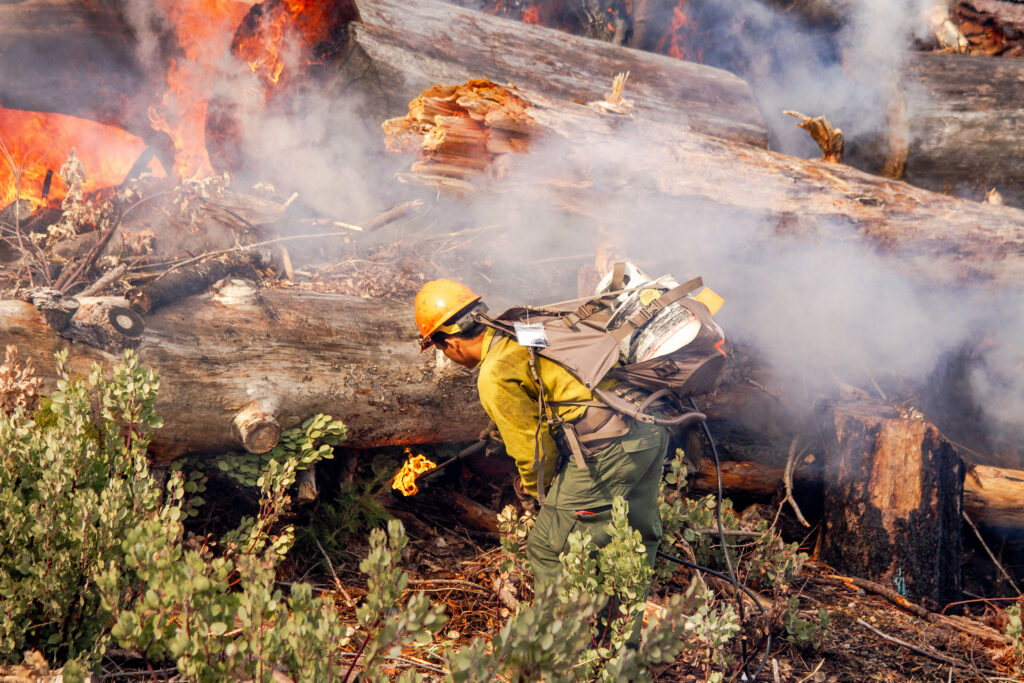
Frederik Strabo stood at a turning point in wildfire science: the moment when prevention could finally prove its worth in dollars and cents, not just ecology and virtue. A UC Davis study he led found that prescribed burns and forest thinning averted 2.7 million tons of carbon dioxide emissions and $2.8 billion in damages across 11 Western U.S. states between 2017 and 2023. For the first time, rigorous economic analysis was catching up to ecological reality.
The findings matter because they demolish a stubborn myth: that fighting wildfires costs less than preventing them. The research, published May 7 in the journal Science, showed that every dollar invested in fuel treatments—whether prescribed burns or mechanical thinning—returned $3.73 in expected benefits. Over a six-year span, these preventative measures also kept more than 25,000 tons of fine particle pollution from the air and averted nearly 60 premature deaths.
The study examined 285 wildfires across the West, analyzing places where those fires intersected with U.S. Forest Service fuel treatments. The researchers found that fuel reduction work cut total burn area by approximately 152,000 acres compared to what would have occurred without intervention. John Battles, a forestry professor at UC Berkeley and eight-year advisor to California's Wildfire & Forest Resilience Task Force, called the study's methodology "really strong" and said the findings aligned with years of place-based analysis in the field.
What makes this research urgent is context. As of May 8, 2024, more than 25,000 wildfires had burned 1.8 million acres nationwide—well above the 10-year average. Weather forecasters predicted an extremely active season driven by record-low snowpack, drought, extreme heat, and windy conditions. Yet fuel treatments remain profoundly underutilized across the region. The UC Davis researchers identified the culprit: public pressure and risk aversion systematically favor visible, immediate fire suppression over long-term prevention. "Short-term fire suppression by state and local agencies is often favored over long-term prevention because immediate response is more visible and 'politically safer,'" they noted.
Battles acknowledged the political reality plainly. Prescribed fires are often the most effective strategy but also the trickiest to implement. "It's challenging," he said. "It produces emissions. You always have the risk of escape. A lot of folks don't want to have a fire right near their houses." The tightrope between public comfort and ecological necessity has narrowed, but the stakes have only climbed.
The U.S. Forest Service appears ready to walk that line. In 2022, the agency committed to treating more than 50 million acres of forest over the next decade—an area roughly the size of Utah. The UC Davis findings suggest this ambition is not idealism but fiscal sanity. If every dollar of prevention returns $3.73 in benefits, then hesitation becomes its own form of recklessness. The research concludes what Strabo called "a step forward" for wildfire science and preparation: prevention works, costs less, and saves lives. The question now is whether the political will can catch up to the evidence.