Ana Aparicio Bahena walks through her garden in the hills above Mexico City, blackberries in hand, and shows off her avocados, lemons and potatoes. Four years ago, she could grow none of it.
"I can grow vegetables," says Aparicio Bahena proudly, holding up a small onion. "I never used to be able to grow my own food. It's wonderful."
Aparicio Bahena lives in Cristo Rey, a hillside settlement of about 45 houses above San Gregorio Atlapulco. Like many informal neighborhoods across Mexico, her metal-roofed home was never connected to the city's water pipes. For years, she trudged 30 minutes each way to a well for water. Gardening was a luxury she couldn't afford.
Then came the rain barrel.
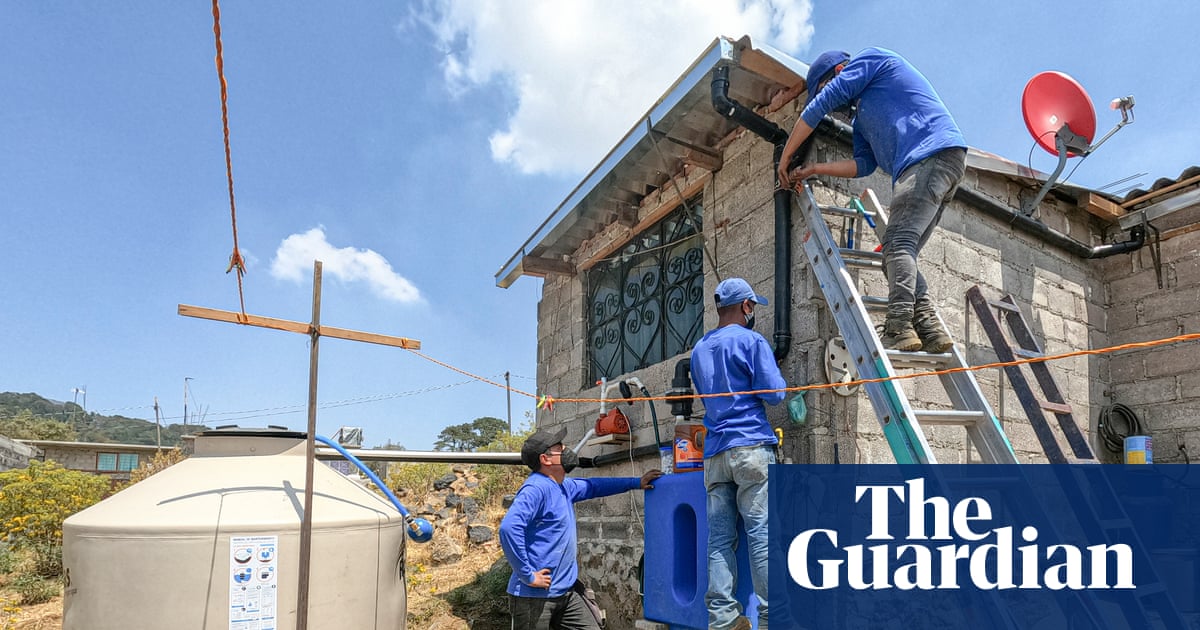
Four years ago, Isla Urbana, a nonprofit dedicated to solving water shortages, installed a rainwater harvesting system in her garden. It captures rain that falls on her roof, filters it, and stores 2,500 litres of clean water. A second, smaller tank holds 1,100 litres just for watering plants.
The change has been dramatic. "Now I can grow food for my family," Aparicio Bahena says, handing blackberries to her two young daughters.
Founded in 2009, Isla Urbana aims to reach 1 million people who lack reliable water access by next year. Most of its work is in Mexico City, Jalisco and the State of Mexico, but it has installed systems for Indigenous communities across the country — areas too remote or poor for regular water pipes to reach.
"Much of our work involves delivering water to areas that are hard to reach with conventional systems," says co-founder Enrique Lomnitz, who studied industrial design before turning to sustainable solutions for low-income families.
The organization operates as a charity when installing systems for families who can't pay, while selling them privately to fund its work. Grants and donations come from Mexico, the United States and elsewhere. Many private contracts are with the government to supply water-scarce, low-income regions.
In the past three years, Isla Urbana has shifted focus to schools, installing rainwater harvesting systems at 2,000 public schools nationwide. Children learn how to collect and store water safely at home.
"The intention is to build the foundations for a much more water-conscious and water-capable population," Lomnitz says.
Water scarcity remains severe across Mexico. Droughts have grown more frequent and severe because of the climate crisis. Nearly 17% of households struggle to meet basic water needs like drinking, cooking and handwashing. About 74 million people — 57% of the population — lack access to safe water.
But in the Mexico City neighborhood of Benito Juárez, textile artist Dora Napolitano shows another way forward. She bought a 5,000-litre rainwater harvesting system in 2018 for about 40,000 Mexican pesos (roughly £1,700), including installation. Though she has tap water, she wanted to reduce her footprint.
"I was increasingly aware that the way we were living in Mexico City was completely unsustainable," says Napolitano, who lives with her husband and four children. "Nobody took any responsibility. I felt the need to discover how much I could do."
The system saved her family during intense droughts in 2018 and two years ago, when mains water stopped flowing for several weeks. "It has got us out of trouble several times," she says. "I really wanted to show that it was viable."
For families like Aparicio Bahena's, the impact is simple and concrete: fresh food on the table, blackberries for her daughters, and the quiet pride of growing something with her own hands.