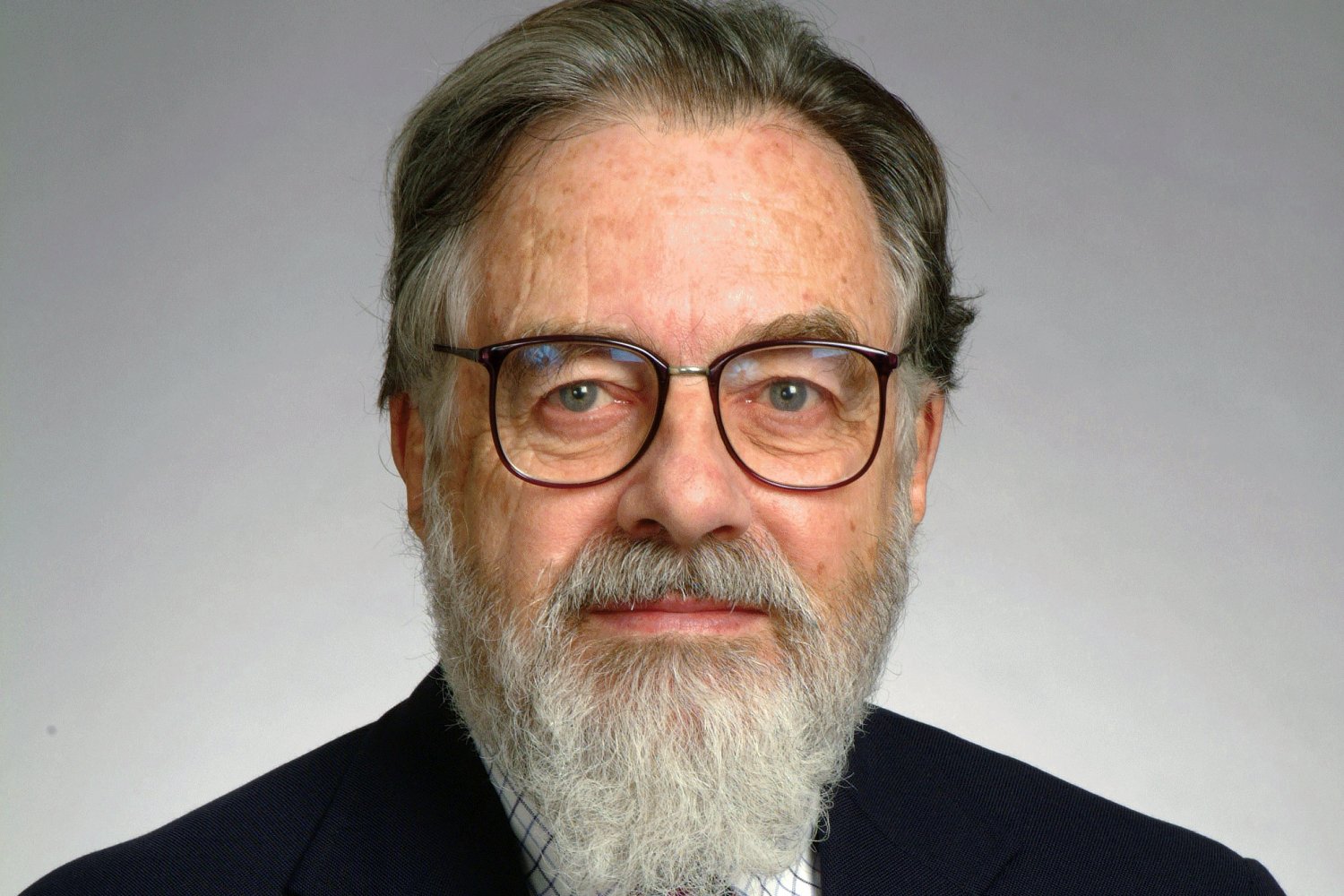
In 1954, Jack Dennis watched a room-sized computer blink and flash with vacuum tubes, programs fed on punched paper tape. Fifty years later, he would write that all of it had fit onto a tiny chip with millions of transistors. The man who helped engineer that transformation died March 14 in Cambridge, Massachusetts, at age 94, leaving behind a legacy that quietly powers the computers we use every day.
Dennis was an MIT professor emeritus who pioneered the development of dataflow models of computation—principles that fundamentally reshaped how computers process information and opened the door to the parallel processing that makes modern computing fast and efficient. As the founding leader of the Computation Structures Group within MIT's Computer Science and Artificial Intelligence Laboratory, he spent his career bridging the gap that most specialists refused to acknowledge.
"I found myself dismayed that people would consider themselves to be either hardware or software experts," Dennis recalled in a 2003 reflection. "I focused on architectural concepts that could narrow the acknowledged gap between programming concepts and the organization of computer hardware." His insistence on treating both domains as a unified whole was revolutionary at the time.
That philosophy shaped his most enduring contributions. Dennis collaborated with the teams behind Project MAC and Multics—the earliest experiments in time-shared computing, where multiple users could work with a single machine seemingly at once. He specified the segment addressing and paging mechanisms that became foundational to the General Electric Model 645 computer, work that rippled outward into the operating systems we rely on today.
His students and collaborators carried his ideas forward. Gerald Sussman, Panasonic Professor of Electrical Engineering at MIT, notes that Dennis "coupled the virtue of referential transparency in programming to the effective use of hardware parallelism" through his dataflow architecture—a connection that would prove prescient as computing moved toward multicore processors. Among Dennis's collaborators were Peter Denning, with whom he co-authored the textbook "Machines, Languages, and Computation" (1978), and Arvind, who later led computer science at MIT's Department of EECS.
Dennis earned his BS (1953), MS (1954), and ScD (1958) from MIT, joining the faculty immediately after and achieving full professorship in 1969. His early doctoral work on analogies between electrical networks and mathematical optimization hinted at the cross-disciplinary thinking that would define his career.
The honors accumulated over decades: IEEE Fellowship, the prestigious ACM/IEEE Eckert-Mauchly Award in 1984, ACM Fellowship in 1994, and election to the National Academy of Engineering in 2009. Yet perhaps his greatest legacy is the insight that the most powerful advances come not from specialists working in isolation, but from thinkers willing to hold hardware and software in their hands at once—and imagine what they might become together.