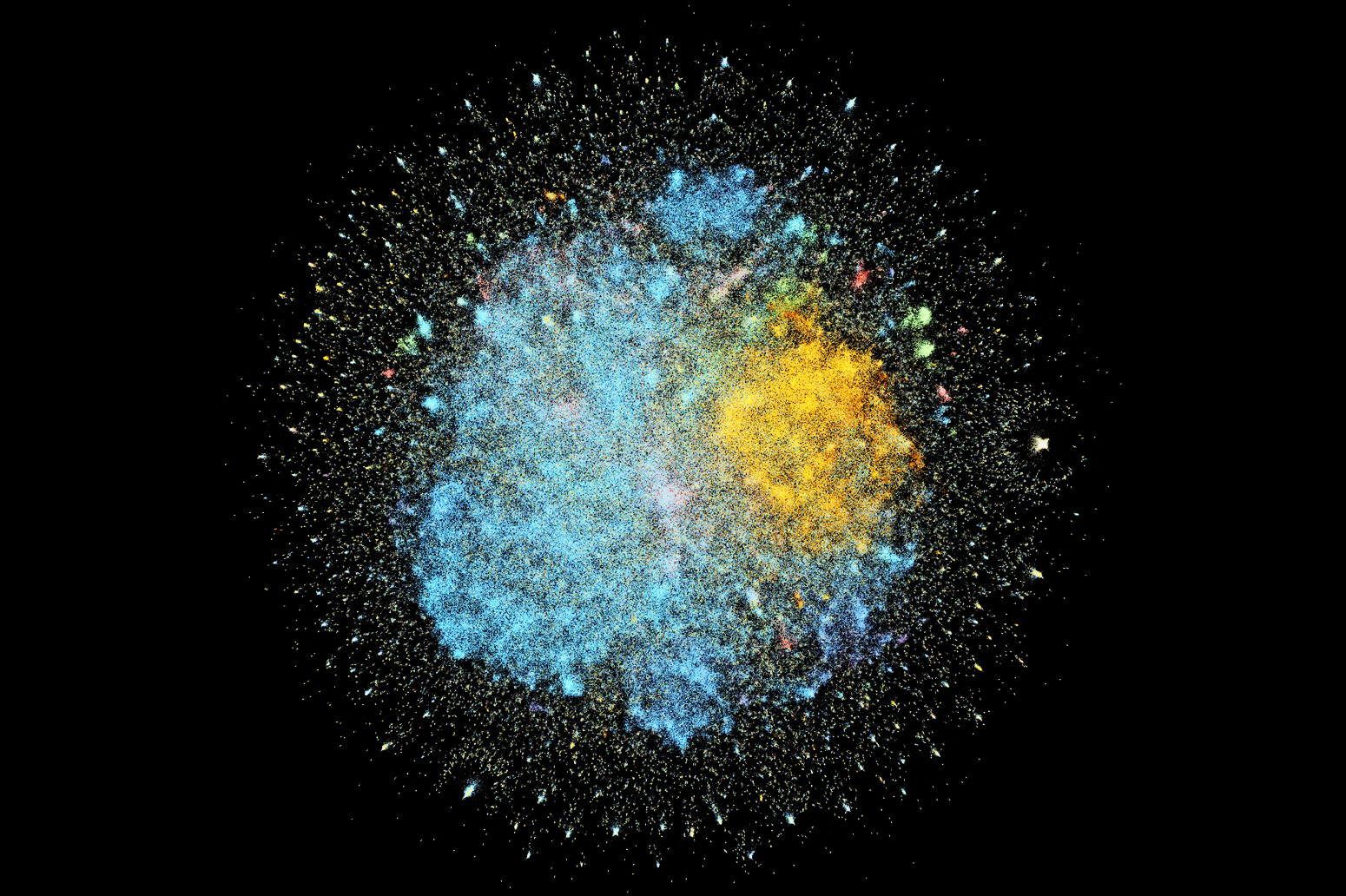
Dr. Elena Márquez first encountered a paper from 1983 that predicted today’s warming trends with eerie precision—unearthed not by chance, but through a vast digital constellation of climate knowledge called Project Cosmos. Launched by Carbon Brief in June 2026, after an intensive 18-month development period, this groundbreaking initiative has stitched together 1.8 million scientific publications into the most comprehensive map of climate change understanding ever created. For researchers, educators, and policymakers, Cosmos isn’t just a database—it’s a living archive of human awareness, tracing how we’ve studied, debated, and responded to a warming planet across decades.
What makes Cosmos revolutionary is its web of 40 million citation links, connecting studies across time, geography, and discipline. This network allows users to follow the evolution of ideas—from early atmospheric models to modern climate justice frameworks—with unprecedented clarity. The database doesn’t just store knowledge; it reveals how knowledge grows. By mapping who cited whom, when, and in what context, Cosmos exposes the intellectual scaffolding of climate science, highlighting pivotal studies and uncovering overlooked voices.
Among its many tools, the Cosmos 500 rankings have drawn particular attention, spotlighting the most cited authors, journals, and institutions in climate research. These rankings offer more than prestige—they reveal patterns in influence and collaboration, showing which universities and countries are shaping the global conversation. A team at the University of Oslo used Cosmos to identify 120 under-cited papers from the Global South, work that is now being re-evaluated for inclusion in upcoming IPCC assessments. Meanwhile, educators in Nairobi and Jakarta are using Cosmos to design curricula rooted in locally relevant, globally connected science.
The impact extends beyond academia. Journalists have leveraged Cosmos to trace the origins of climate misinformation, identifying how a handful of discredited studies were disproportionately cited in media outlets. Policymakers in Scotland and New Zealand have consulted the database to ground new legislation in the most robust, widely supported research. And students from Bogotá to Bangkok can now explore climate science not as isolated facts, but as a dynamic, interconnected story.
Project Cosmos is not static. It updates weekly, ingesting new studies and citation data, ensuring it evolves alongside the science it maps. As climate change accelerates, so too does our understanding of it—and now, for the first time, that understanding is fully navigable. In a world often overwhelmed by uncertainty, Cosmos offers a rare gift: clarity born not from simplification, but from connection.