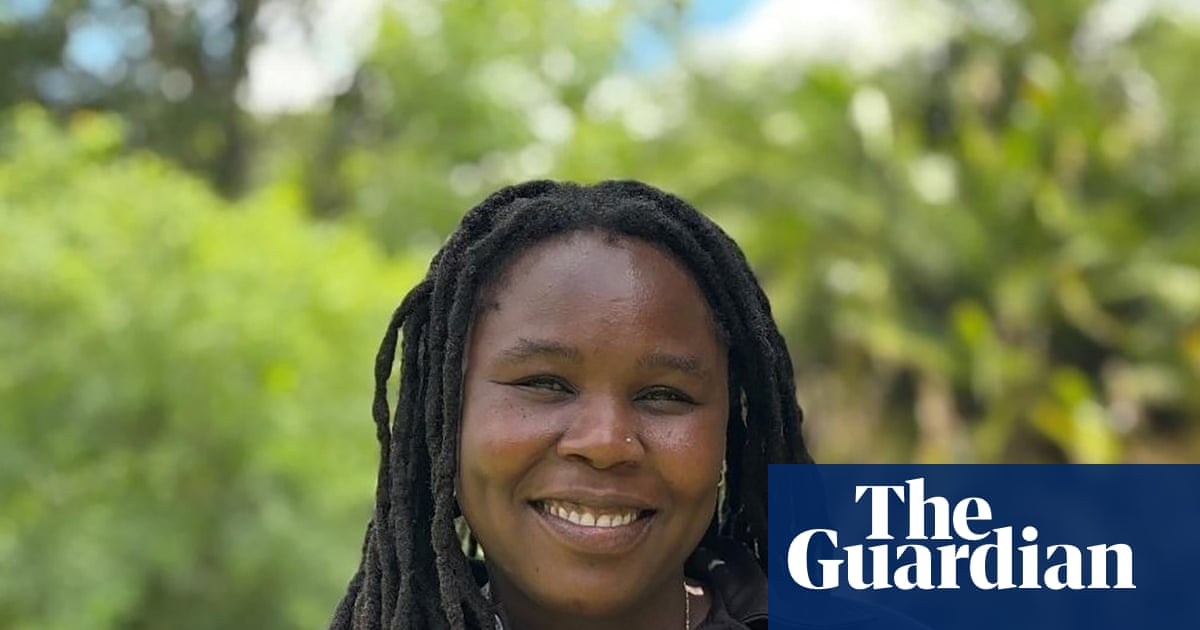
In 2014, conservation biologist Moreangels Mbizah watched helplessly as a lion killed a seven-year-old boy in a village near Hwange National Park in Zimbabwe—a tragedy that would reshape her entire career. She had been tracking the animal as part of her PhD research, monitoring its GPS signals across the savannah, when the data revealed it had strayed from its habitat. By the time she and her team arrived at the village, about 30 people stood in a helpless standoff around a bush, watching the lion guard the child's body between its paws. The wildlife authority killed the animal so the boy could be retrieved. "That was a punch in the gut," Mbizah recalls.
Until that moment, she had believed the path to protecting Zimbabwe's dwindling lion population lay in focusing on the animals alone. But standing in that village, she realized she had been solving only half the problem. The real crisis was not lions or people in isolation—it was the collision between them, and the catastrophic losses on both sides when that collision happened.
This insight led Mbizah to found Wildlife Conservation Action (WCA), an organization that reimagines conservation not as a choice between protecting wildlife or people, but as a shared challenge of coexistence. The work has earned her a Whitley award and positioned WCA as a beacon in addressing one of Africa's most intractable problems: human-wildlife conflict in Zimbabwe's Mbire district.
The numbers tell the story of why this matters. Across Africa, lions have lost up to 90 percent of their historic range, with fewer than 20,000 remaining in the wild. As human populations expand and habitats shrink, lions increasingly move beyond protected areas in search of food. For rural communities in Zimbabwe's mid-Zambezi valley, a vast biodiverse corridor linking Zimbabwe, Zambia, and Mozambique, the stakes are personal and economic. A cow is worth $300; a goat, $30. When these animals are killed by predators, or when elephants trample crops, communities often retaliate by killing the wildlife. "In that case, we have losses on both sides," Mbizah explains. "People lose, wildlife loses—and that's what HWC looks like."
WCA's solution centers on community leadership rather than top-down intervention. The organization has trained local people as community guardians who monitor GPS signals indicating when predators are nearby, allowing villages to safeguard their herds before conflict occurs. Equally innovative is the mobile boma—a livestock enclosure wrapped in opaque plastic. "When the lion comes, it won't see the cattle. They can smell them, they can hear them—but because they can't see, they won't attack," Mbizah says. "We have seen that these mobile bomas have been 100% effective in protecting livestock."
The results have been striking. Human-wildlife conflict incidents in Mbire have fallen by as much as 98 percent. WCA's work now spans 2.6 million hectares of the Zambezi valley, protecting nearly 18,000 livestock worth an estimated $2.3 million.
Mbizah, 42, grew up in Chiredzi, a small town in southeast Zimbabwe, far from wildlife. Her breakthrough came at 25, watching impalas jump and zebras graze—a moment that felt like awakening. She recognized a gap that needed filling: no Black African woman had founded a conservation organization in Zimbabwe. Today, part of WCA's mission includes mentoring young female African conservationists, ensuring that the loneliness of her journey need not be replicated. "This has been my story," she says, "but it doesn't have to be the story of everyone coming after me."