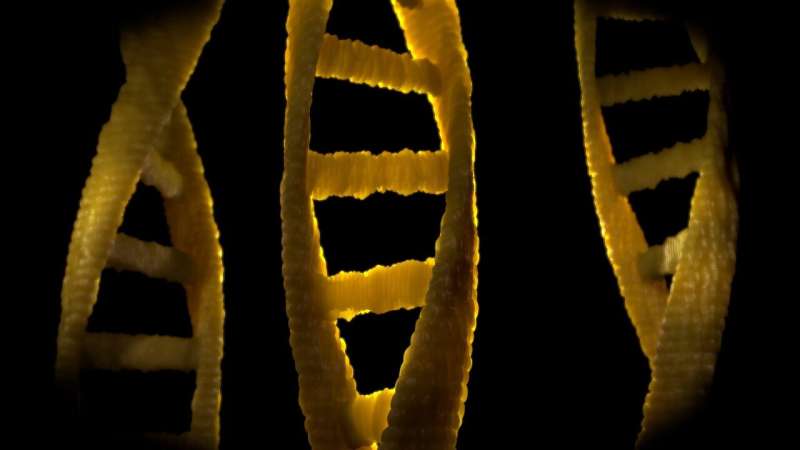
Every time a cell in your body divides, the protective caps on the ends of your chromosomes wear down a little more—a biological clock that ticks toward aging itself. These caps, called telomeres, are among the most fascinating and consequential structures in human biology, and researchers like Julia Cooper, Ph.D., at the University of Colorado Anschutz's Department of Biochemistry and Molecular Genetics, are uncovering why this process matters for our health and longevity.
Think of your DNA as important paperwork that needs copying, and telomeres as protective folders keeping those copies safe. But just as folders get frayed at the edges from years of use, telomeres gradually degrade. Yet this wear and tear isn't random—it's the inevitable consequence of how cells copy themselves.
The culprit is what scientists call the "end replication problem." During cell division, DNA's two strands unzip so each can be copied. But the molecular machine that creates new DNA can't start from nothing; it must latch onto the tip of an existing strand to begin the process. This leaves a small portion of DNA at the chromosome's end uncopied where the machine latched on. With each cell division, that gap accumulates, and telomeres—which sit at chromosome ends—shrink by a few base pairs. It's a trade-off that protects the genetic information deeper inside: the telomeres sacrifice themselves so the truly vital DNA gets copied faithfully.
Telomeres are far more than simple wearing surfaces, however. These repeated DNA sequences act as a sophisticated security system, working alongside special telomere-binding proteins to shield chromosomes from multiple threats. They hide chromosome ends so the cell's repair machinery doesn't mistake them for broken DNA requiring fusion or degradation. That distinction matters enormously. When cells detect broken chromosome ends, they attempt repairs that can scramble genetic information or disable genes. Telomeres create an invisibility cloak, preventing these well-intentioned but potentially catastrophic repairs.
The system works beautifully—until it doesn't. Once telomeres become too short, they can no longer protect the chromosome ends. The cell stops dividing entirely, halting its own replication rather than risk copying damaged genes. This cellular shutdown is part of normal aging. But when telomeres are defective or depleted prematurely, something more sinister emerges: chromosomes can fuse together or degrade, destabilizing the genome. This genomic chaos can accelerate cellular aging and, alarmingly, drive the development of cancer.
Some cells have an escape route. They produce an enzyme called telomerase, which performs a trick no other enzyme in the body can pull off—it reverses the central dogma of biology itself. While normal cells use DNA to create RNA to create proteins, telomerase copies RNA back into DNA, earning it the name "reverse transcriptase." Telomerase carries its own template of RNA and uses it to rebuild telomeric sequences lost during division, essentially resetting the biological clock.
This remarkable adaptation raises profound questions that Cooper's team and other researchers continue exploring: Which cells produce telomerase and why? How does telomerase activity connect to cancer, where rogue cells often activate it to divide indefinitely? Can understanding telomere biology help us address aging and disease? The answers may reshape how we understand both the promise and peril of our cells' relentless division.