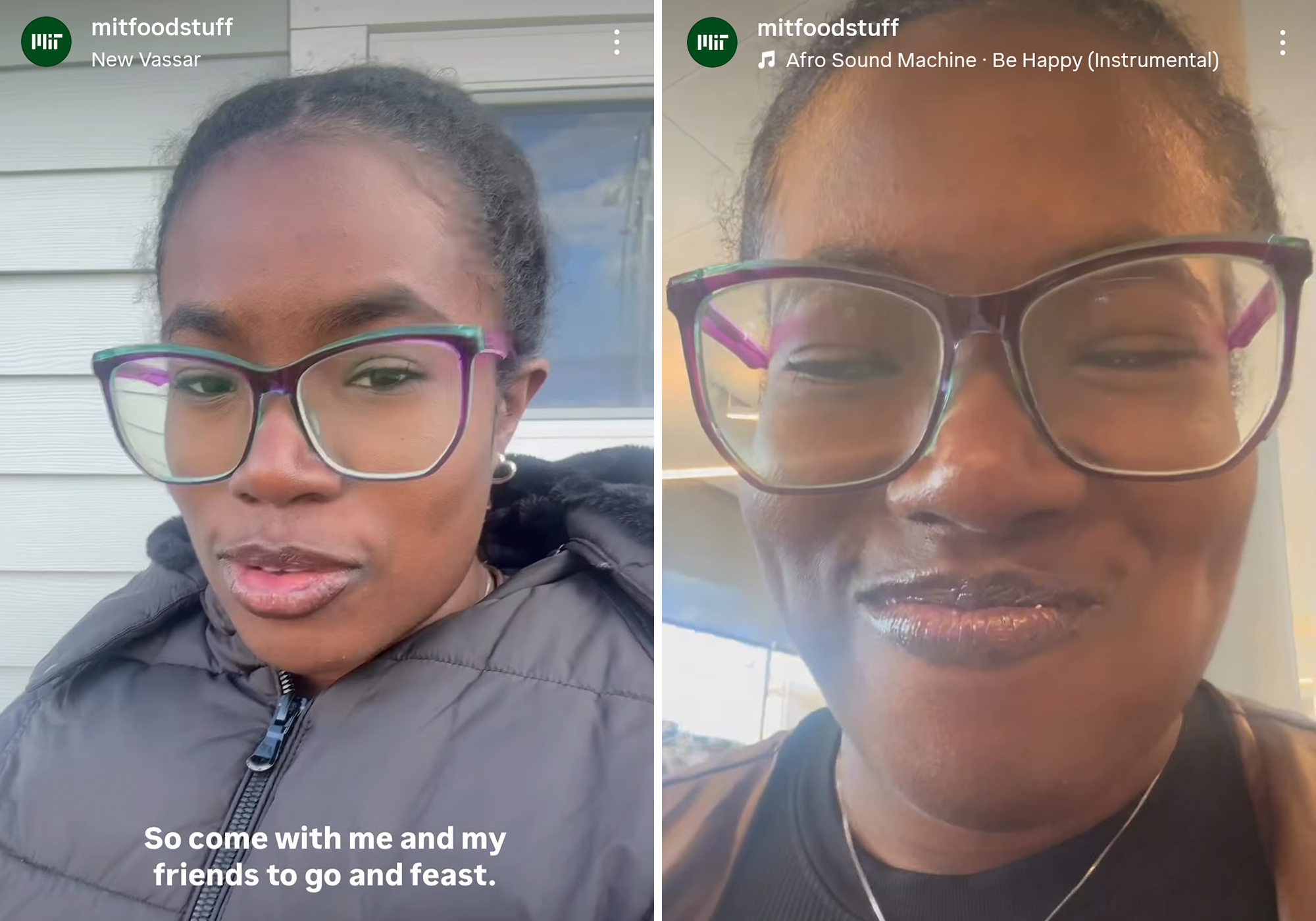
Michaela Brown scrolls through the MIT dining halls with her phone up, capturing short videos of mashed potatoes and turkey, curry rice and plantains, and she's getting paid to do it. Last fall, MIT Campus Dining launched the Dining Ambassadors program, recruiting students like Brown to make short videos and share their experiences on Instagram — a straightforward but clever move to get students talking about campus food services and, more importantly, helping to improve them. For a biochemical engineering major from Kingston, Jamaica, the role seemed obvious. "This involves food, and talking to people, and posting on Instagram? That's literally what I do every day," Brown recalls thinking when she first saw the job description. "Plus — getting paid to eat food and talk? That is good money."
The program has two clear goals: encourage students to use the dining halls and identify genuine issues that MIT can work on. Brown embraced both. She wanted to be part of making things better, even if the food at MIT was "OK." What she brought to the role, though, was something harder to measure — a genuine perspective on what it means to arrive on campus far from home, navigating new food cultures while missing the ones you grew up with.
Her first major project was a video about Thanksgiving, MIT's dining staff pulling out all the stops with mashed potatoes, turkey, ham, and jelly. Brown was genuinely excited; she had only ever seen American Thanksgiving on Nickelodeon and in school lessons back in Jamaica. She brought friends with her to eat together, deliberately framing the experience not as an outsider looking in, but as a bridge. "I wanted to show that I came here and liked it. Even while I was missing home, I was being introduced to other cultures — like the one in America — and MIT was helping me appreciate it through food," she explains. Her mom loved watching the video too.
But perhaps Brown's most ambitious ambassadorial work came during the Global Olympics, a two-week dining event where each hall took on a regional cuisine. New Vassar handled Latin American food. Simmons focused on East Asian. McCormick offered African dishes. And Baker House — where Brown conducted interviews with students and staff — celebrated North American and Caribbean cooking. Brown felt right at home there. Many of the cooking staff at Baker are Haitian, she knew they wouldn't miss on the details of Caribbean flavors. She interviewed two Haitian students and a Jamaican friend, asking how the special meals compared to regular dining hall offerings. The response was overwhelmingly positive; students appreciated the change.
What emerges from Brown's account is a portrait of a student using her position to do more than post pretty food photos. She's creating a space where international students see their cultures represented on campus, where homesickness becomes an occasion for connection rather than isolation, and where the dining hall itself becomes a tool for building community. It's easy to dismiss a "dining influencer" as superficial, but Brown's work suggests something quietly important: that how a campus feeds its students matters, that authenticity in food storytelling can create belonging, and that sometimes the best way to improve a system is to invite students to see and share it honestly. The Ambassadors program is still young, but if Brown's enthusiasm is any indication, MIT's dining halls may soon become spaces where food does what food does best — brings people together.