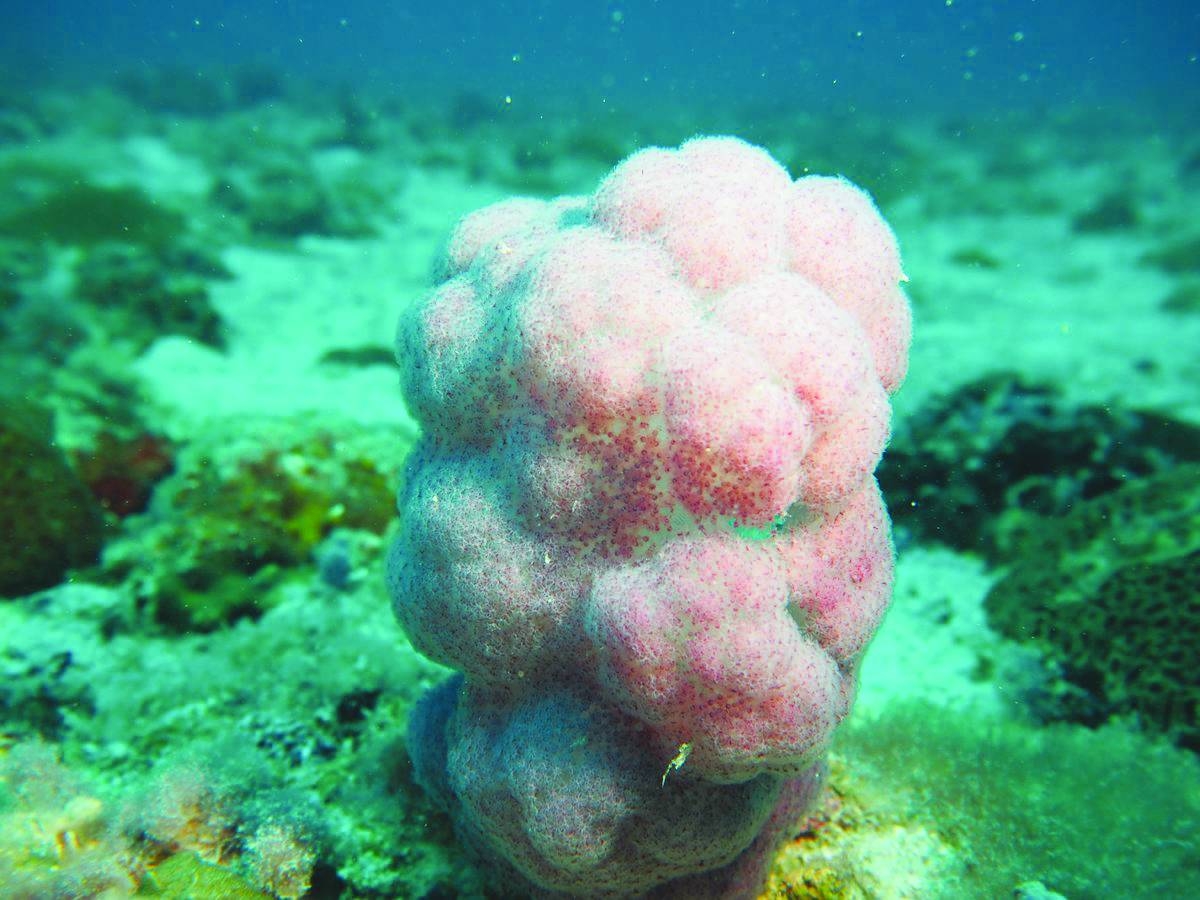
Across 22 marine sites in Qatari waters, researchers diving beneath the Gulf's surface are cataloguing a hidden world of resilience: 49 species of hard and soft corals thriving in waters many assume too warm and stressed to sustain such life. This summer, as the world marked World Coral Reef Day on June 1, Qatar's Ministry of Environment and Climate Change unveiled the results of a national project that reveals not just the scale of coral diversity in the region, but also a tangible pathway to protecting it.
Coral reefs seem distant to most of us, abstract ecosystems easy to ignore from landlocked vantage points. Yet they sustain roughly one-quarter of all marine fish species while protecting coastlines, anchoring entire food webs, and storing carbon. In the Gulf, where warming waters and human pressure pose serious threats, the question is whether reefs can be preserved at all. Qatar is answering that question with science, active restoration, and a commitment to measure what matters.
Between 2024 and 2026, marine research teams conducted extensive field surveys across Qatari waters, documenting which reefs were healthiest and which were most vulnerable. The work was painstaking but essential—without baseline data, restoration becomes guesswork. Dr Ibrahim al-Maslamani, Assistant Undersecretary for Protection and Natural Reserves, framed it plainly: the project represents "a national effort grounded in scientific monitoring and habitat restoration," aligned with Qatar's broader sustainability goals and efforts to build ecosystem resilience against climate change.
What the surveys revealed was encouraging. Rather than finding dead zones, researchers identified coral communities robust enough to serve as reference areas for future conservation work. These high-performing sites now function as blueprints, showing that if conditions are right, Gulf corals can thrive. The project has moved beyond documentation into action: marine teams are conducting active coral transplantation, moving healthy specimens from thriving sites to degraded areas, rehabilitating reef structures, and employing modern marine engineering techniques to support growth and stability.
But restoration work only succeeds if knowledge is transferred. Qatar's initiative includes specialised training programmes for divers and volunteers, building national capacity in conservation monitoring and restoration practices. This matters more than the headlines suggest. A single well-trained technician can inspire a generation of environmental stewards and ensure that coral protection becomes woven into daily practice, not just policy.
The work connects directly to the UN Sustainable Development Goal 14—life below water—a commitment Qatar takes seriously as a marine nation. Officials have been explicit that continued scientific monitoring and data collection are essential for sound environmental decision-making. In other words, this is not a one-time restoration campaign; it is the foundation of a long-term commitment to know, protect, and restore.
Coral reefs in warming waters face an uncertain future globally. In Qatar, at least, that uncertainty is being met not with resignation but with rigour, with teams in the Gulf measuring, transplanting, training, and building a future where coral diversity is not a relic of the past. On World Coral Reef Day and beyond, that work offers something too rare in environmental news: a concrete example of protection backed by science and sustained by will.