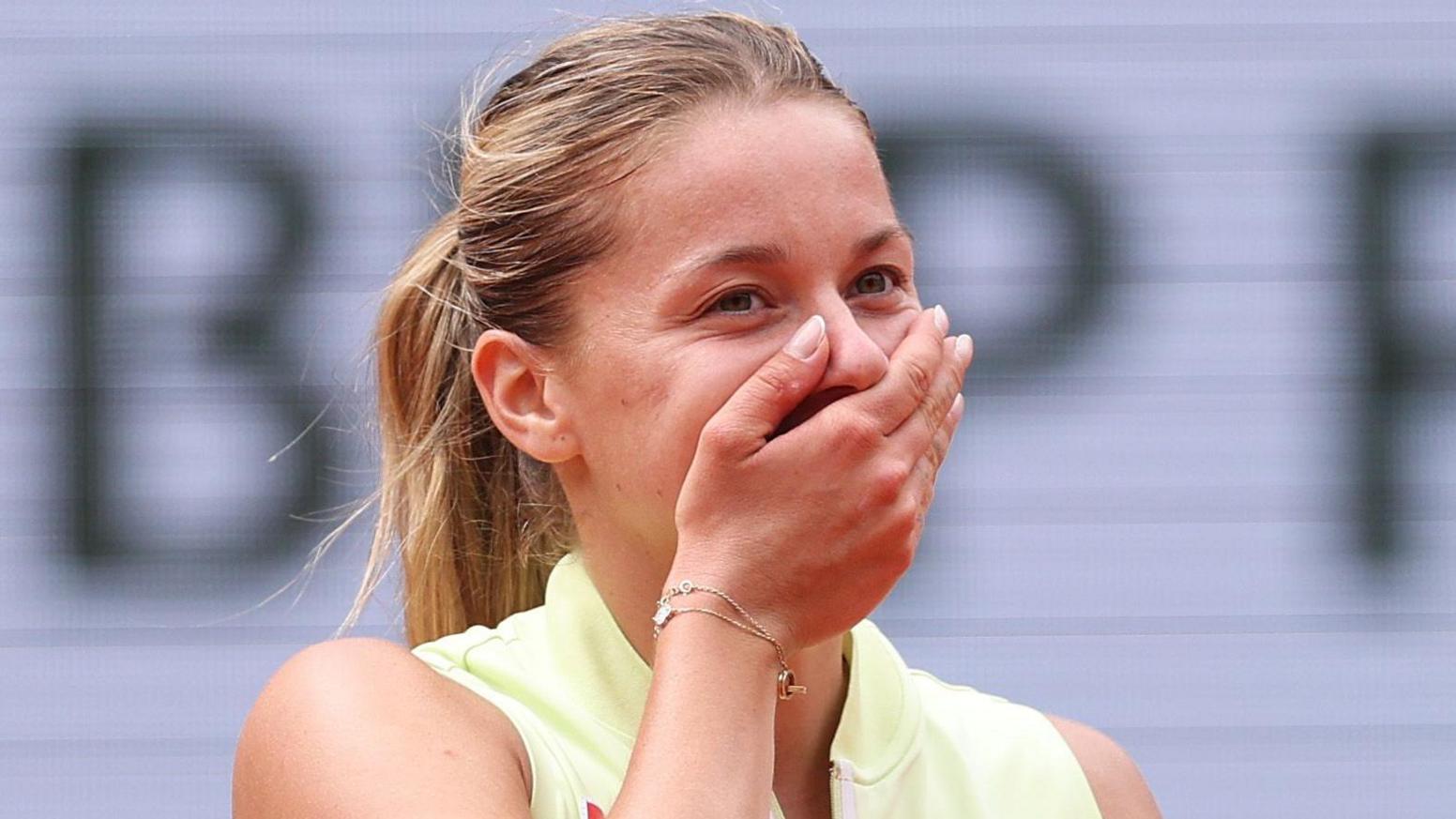
From a qualifying draw to the semi-finals of the French Open in just ten days, Maja Chwalinska's remarkable run through Paris has rewritten what's possible at tennis's grandest stage. The Polish qualifier's defeat of Anna Kalinskaya on Tuesday was the latest chapter in an improbable journey that has already toppled two seeded players and Olympic champion Zheng Qinwen, played out with what onlookers have described as infectious freedom and joyful creativity.
The semi-final appearance matters because it represents something increasingly rare in modern tennis: a qualifier breaking through at a Grand Slam. Chwalinska's run offers a reminder that the sport's biggest stages can still reward precision, nerve, and an ability to thrive when the pressure should feel unbearable.
Against Kalinskaya, Chwalinska's composure was tested repeatedly. She let slip a 5-1 lead in the first set and found herself needing to reset mentally. In the tie-break that followed, she trailed 3-2 before reeling off five straight points to seize control. The second set brought another moment of vulnerability when Kalinskaya broke her serve as she pressed for victory, but Chwalinska steadied herself and claimed victory on Kalinskaya's serve, converting her first match point when it mattered most.
When asked about her mindset in these moments, Chwalinska spoke with the clarity of someone who has learned to manage enormous pressure. "I was definitely nervous. I am stressed, of course, but I try to focus on my job and my games," she said. "I am not focusing on confidence. I am playing against the best players in the world, so I will not compare myself to them."
That perspective—meeting her opponents at their level without being overwhelmed by the magnitude of facing them—has been the quiet foundation of her success in Paris. It's a mental approach that allowed her to beat seeded players and one of the world's most dominant athletes, moving through a tournament that could easily have intimidated someone who entered through the qualifying rounds.
The financial dimension of her run underscores both how far she has come and how transformative this fortnight has been. By reaching the semi-finals, Chwalinska has secured £647,700 in prize money alone—more than double her entire career earnings of £642,400 accumulated over years of professional play. In the space of ten days, she has earned more than she made in her entire previous career. Even if she loses her semi-final match, that financial security will reshape her ability to compete at the sport's highest level.
Beyond prize money, the rankings impact promises to be equally significant. Chwalinska is now projected to leap into the world's top 30, a boundary that had seemed distant just weeks ago. That ranking placement itself brings access: better seedings at future tournaments, placement in stronger draws, and the kind of recognition that attracts sponsorships and opportunities.
What unfolds in her semi-final remains uncertain, but Chwalinska has already secured something more durable than any single match result. She has proven—to herself, to the tennis world, and to everyone watching—that a qualifier can compete with and defeat the sport's elite. Whatever happens next, her name is now written into French Open history, and she has given thousands of young players without prestigious rankings or guaranteed tournament spots a reason to believe their own breakthrough might be possible.