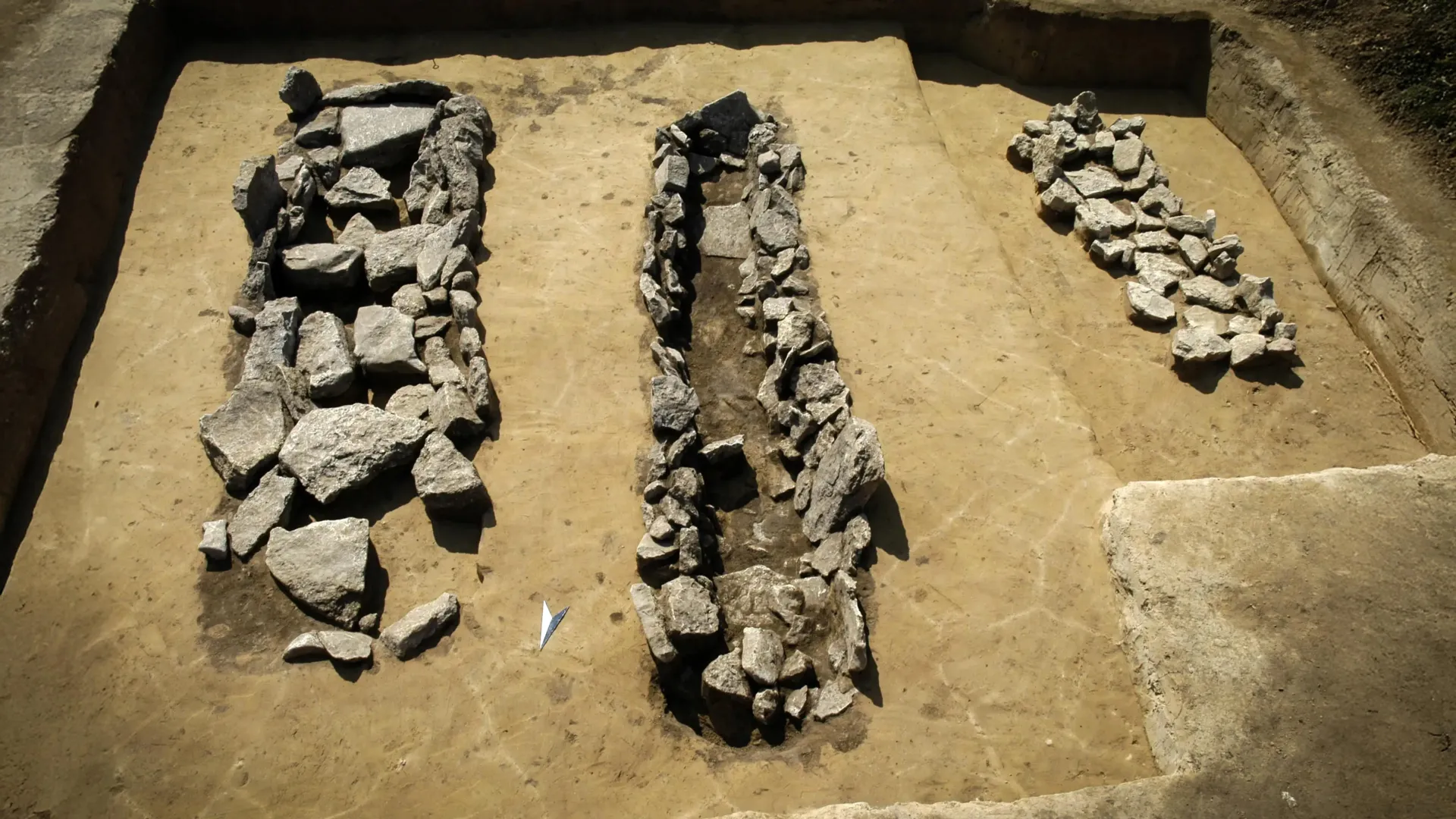
In Germany, Czechia, and Poland, archaeologists have pieced together the intimate details of everyday life 3,000 years ago by studying the rare skeletons that survived the Late Bronze Age's most distinctive practice: cremation. A major new study published in Nature Communications reveals how ancient DNA, chemical fingerprints preserved in bone, and skeletal scars tell the story of communities that were far more connected, adaptable, and intentional than previously understood.
The Late Bronze Age—roughly 1300 to 800 BCE—was a period of profound shifts across Central Europe. It's known as the Urnfield culture because cremation became widespread, destroying much of the biological material that scientists normally use to reconstruct the past. By focusing on the rare non-cremated burials discovered in Germany, Czechia, and Poland, and comparing them with cremated remains from sites like Kuckenburg and Esperstedt in Central Germany, an international team led by Eleftheria Orfanou at the Max Planck Institute for Evolutionary Anthropology in Leipzig found something surprising: change happened slowly, locally, and by choice.
The genetic evidence shows no sudden population replacement. Instead, ancestry shifted gradually and unevenly across regions. In Central Germany, these changes became noticeable mainly during the later stages of the period, and communities grew increasingly connected to areas south and southeast of the Danube while keeping their local traditions strong. This wasn't invasion or upheaval—it was people staying put, adapting, and trading ideas with neighbors.
The isotope analysis, which uses chemical signatures in bone to pinpoint where people grew up and whether they moved, revealed something equally striking: most people never left home. Both cremated and non-cremated individuals showed they were local to the areas where they were buried. This suggests that cultural practices and innovations spread through contact, trade, and social relationships rather than through waves of migration. Ideas moved; people mostly stayed.
Food tells part of this story too. Around the early Late Bronze Age, broomcorn millet—a crop that had recently traveled from northeast China—began appearing in Central European diets. The researchers believe it may have offered practical advantages under environmental or economic pressure. Yet this agricultural experiment didn't coincide with genetic upheaval. Local populations simply adopted a new crop on their own terms. Intriguingly, later in the period, millet consumption declined as people shifted back to wheat and barley. This wasn't a one-directional march toward progress but genuine experimentation and course correction.
The skeletal remains spoke of physically demanding lives: childhood stress, joint wear, occasional injuries, signs of dental disease. Yet there was no evidence of widespread epidemics. People were resilient, working hard, enduring hardship, but largely healthy.
Perhaps most revealing was the diversity of burial practices that coexisted within communities. Cremation, traditional inhumation, skull-only depositions, and complex multi-stage rituals all happened sometimes within the same settlements. These weren't marginal practices but part of a deliberate repertoire people could choose from—expressions of identity and memory shaped by each community's understanding of what it meant to be human.
Late Bronze Age Europe emerges not as a time of chaos or inevitable change, but as a dynamic world where communities thoughtfully wove innovation into tradition, where stability and adaptation moved in tandem.