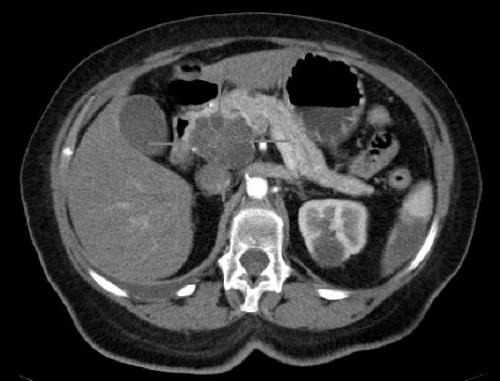
Brian Wolpin walked to the podium at the American Society of Clinical Oncology Annual Meeting in Chicago on May 31, 2026, and delivered news that oncologists have pursued for decades: a drug that fundamentally changes how metastatic pancreatic cancer is treated. Daraxonrasib, a targeted RAS inhibitor developed by Revolution Medicines, doubled median overall survival in patients who had already failed one line of chemotherapy—13.2 months compared to 6.7 months with standard second-line chemotherapy.
For context, pancreatic cancer remains one of the deadliest malignancies precisely because patients typically discover it after it has already spread. The disease has claimed lives with brutal efficiency, and a second round of chemotherapy has traditionally offered modest benefits. But pancreatic cancer also harbors a vulnerability: more than 90% of patients carry cancer-driving mutations in the KRAS gene, part of the RAS family. For years, this mutation seemed untouchable. Now, daraxonrasib—an oral drug taken daily without intravenous infusions—can inhibit mutant RAS proteins in ways that were not previously possible.
The Phase III RASolute 302 trial enrolled 500 patients across North America, Europe, and Asia, all of whom had received one prior line of chemotherapy for metastatic disease. Those randomized to daraxonrasib showed not just survival improvements but meaningful reductions in cancer progression. Their median progression-free survival stretched to 7.2 months versus 3.6 months with chemotherapy. Among patients with a specific RAS G12 mutation, 33.2% experienced substantial tumor shrinkage or disappearance on daraxonrasib, compared to just 11.8% on chemotherapy. Across the entire study population regardless of RAS mutation status, the objective response rate was 31.6% with daraxonrasib and 11.2% with chemotherapy.
Wolpin, director of the Hale Family Center for Pancreatic Cancer Research at Dana-Farber Cancer Institute, emphasized the significance at the simultaneous New England Journal of Medicine publication: "This is the first RAS inhibitor evaluated in a large, randomized trial for patients with pancreatic cancer, and it demonstrates how important an impact these novel medicines are likely to have on the treatment of the disease." What makes daraxonrasib particularly notable is its broad applicability. Because it can inhibit both mutant and non-mutant RAS proteins, it is expected to be relevant to all patients with metastatic pancreatic cancer—not just a narrow subset. Traditional chemotherapy is indiscriminate and toxic. This represents a shift toward precision medicine.
The safety profile supports clinical use. The most common side effects were rash, mouth inflammation, nausea, and diarrhea—manageable toxicities that are far less brutal than the cumulative damage of repeated chemotherapy cycles. No unexpected safety signals emerged compared to earlier Phase I/II data. In May 2026, the FDA had already granted Revolution Medicines permission to launch an expanded access program, allowing patients with previously treated metastatic pancreatic cancer to receive daraxonrasib outside of formal trials.
Wolpin's closing words capture the magnitude: "Were this drug to be approved by the FDA, it would mark a dramatic shift in how pancreatic cancer is treated." For thousands of patients diagnosed each year with a disease that has historically offered few good options, daraxonrasib represents not just incremental progress but a fundamental change in what becomes possible.