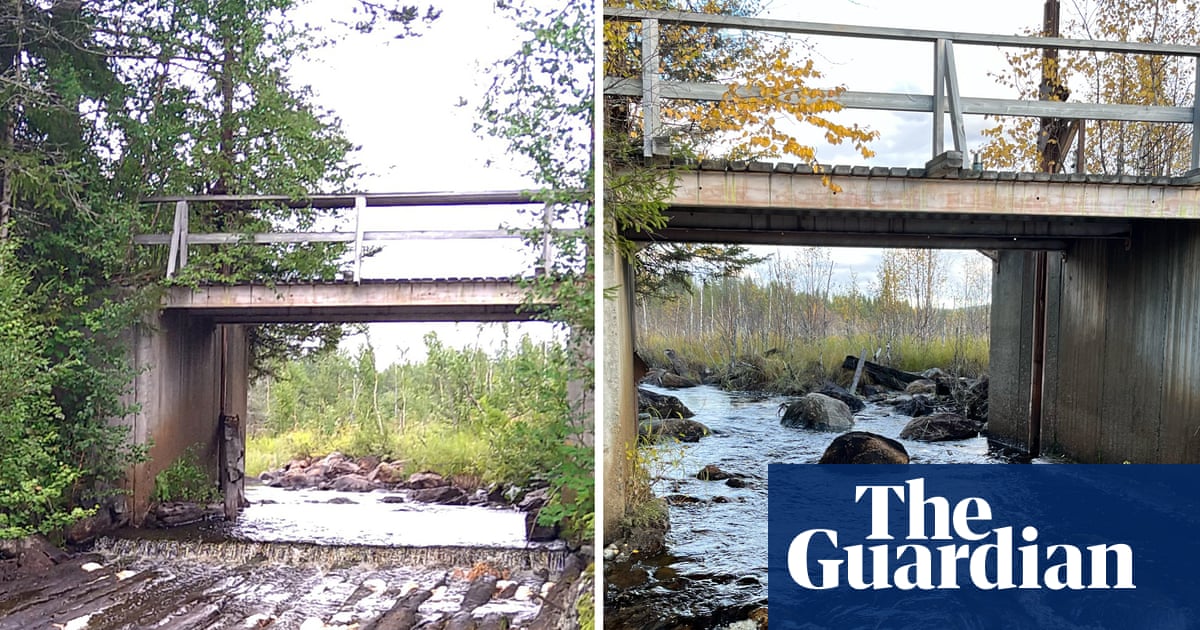
A few miles downstream from a lava field in western Iceland, a river engineer named Hamish Moir watched hydraulic peckers methodically dismantle a crumbling dam on the River Melsá—a structure that had spent decades blocking fish migration long after it stopped serving any purpose. The old power house had become a shelter for sheep. When the water flowed freely again in December, it was Iceland's first river dam removal ever, a symbolic moment in a continent-wide reckoning with how Europeans built their prosperity by fragmenting their waterways.
The numbers tell the story of a transformation accelerating at an almost startling pace. Across Europe in 2025, a record 602 river barriers were removed—dams, weirs, culverts, and sluices—reconnecting 2,324 miles of waterways to their natural course. That represents an 11% increase from the year before and a sixfold jump since the first official count in 2020. Sweden led the way with 173 removals, followed by Finland with 143 and Spain with 109. The UK removed 35. For the first time, Iceland and North Macedonia took down barriers, bringing the movement into new corners of the continent.
These numbers matter because Europe's rivers have been profoundly wounded. Centuries of damming for mills and hydropower, of straightening channels for navigation, of burying waterways beneath cities—all of it came at an ecological cost that is only now being reckoned. Chris Baker, director of the European branch of Wetlands International, put it plainly: "For centuries, Europe treated rivers as engines for economic growth. We built our prosperity by fragmenting our rivers, but the ecological price has been enormous." That price is visible in a 75% decline in the continent's freshwater migratory fish population since 1970.
What makes the current momentum particularly significant is that most barriers being removed are small and obsolete. More than three-quarters of the 602 barriers demolished last year were less than 2 metres tall—structures that often no longer serve any purpose yet continue to obstruct ecosystems and the natural transport of sediment. They are also relatively cheap and easy to remove, which explains why the pace is accelerating. More than a million barriers still fragment Europe's waterways, with tens of thousands thought to be entirely obsolete. When Finland's Ritakoski Dam came down, rapids flowed once again on the Hiitolanjoki River for the first time in decades.
The European Union is channelling this momentum through its nature restoration law, which entered force in 2024 and explicitly calls for barrier removal so rivers and lakes can be reconnected. The 2,324 miles of waterways restored in 2025 brings the EU measurably closer to its goal of restoring 15,500 miles to their natural state by 2030.
Yet the picture is not uncomplicated. Researchers have cautioned that reconnecting fragmented rivers can present new risks. A study found that artificial barriers may slow the spread of invasive species, creating what one biologist called a "connectivity conundrum." Ellen Donovan of Queen's University Belfast, the study's lead author, emphasizes that "with careful preparation, monitoring and long-term management, these risks can be minimised"—but they cannot be ignored. What Europe is undertaking is not simply nostalgia for pristine rivers, but a careful negotiation between reconnecting ecosystems and managing new threats that connectivity may bring.