Roberto Lopes was sitting at his desk in a Dublin bank in 2017, the hum of fluorescent lights and spreadsheets his daily soundtrack, when a message arrived on LinkedIn that would reroute his life. A Portuguese note from Rui Aguas, then coach of Cape Verde’s national team, sat unread for months—Lopes assumed it was spam. But when Aguas followed up nine months later, curiosity turned to revelation: his Cape Verdean father made him eligible to play for a nation 3,000 miles from where he was born. 'I copied the message into Google Translate,' Lopes recalls. 'It said, “We’re looking at getting new players into the Cape Verde squad—would you be interested?” I was absolutely buzzing. Yep, 100% I’d love to be a part of it.'
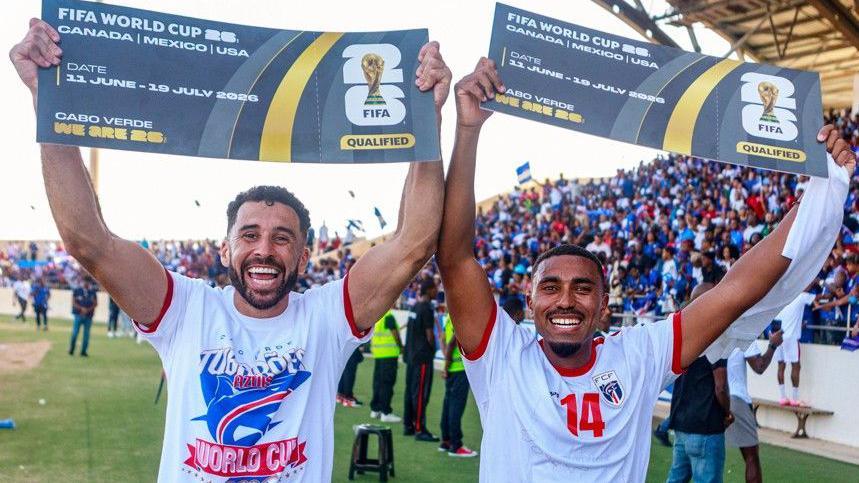
That moment sparked a journey from part-time footballer and mortgage adviser to a key defender for the Blue Sharks, Cape Verde’s national team, now preparing to face Spain in their historic World Cup debut. The 33-year-old, nicknamed 'Pico,' has been a regular starter since his first cap in 2019. Just days after helping secure qualification, he became a father—his son Diego’s arrival mirroring the birth of a new chapter for Cape Verdean football. Once dismissed as underdogs with 'no chance,' the Blue Sharks have ignited pride across the diaspora, especially in Dorchester, Massachusetts, where Thony’s Barbershop has transformed into a shrine of blue, white, and red. Owner Antonio Alves, a Cape Verdean immigrant, hangs an inflatable shark from the ceiling and plans a 1,000-mile trip to Atlanta—while hosting the entire neighborhood for free snacks, drinks, and live coverage of the match.
Cape Verde’s qualification is more than a sporting triumph; it’s a cultural earthquake. With FIFA expanding the World Cup to 48 teams, co-hosted by the U.S., Canada, and Mexico, smaller nations like Cape Verde now have a shot at the global stage. In Massachusetts alone, between 70,000 and 90,000 Cape Verdeans call home—a community built by generations of seamen and whalers who crossed the Atlantic in the 1850s. Alves and his wife Neuza have funded tickets for children in Praia to attend international matches, nurturing the dream that every barefoot kid on every island corner might one day follow in Lopes’ cleats.
As kick-off approaches in Atlanta, Lopes carries more than a jersey—he carries a legacy. 'Being able to represent my family playing for the national team and being able to put our family name out there at one of the biggest sporting events in the world fills me with great pride,' he says. From LinkedIn message to World Cup pitch, his story proves that sometimes, the most improbable paths lead to the grandest stages.