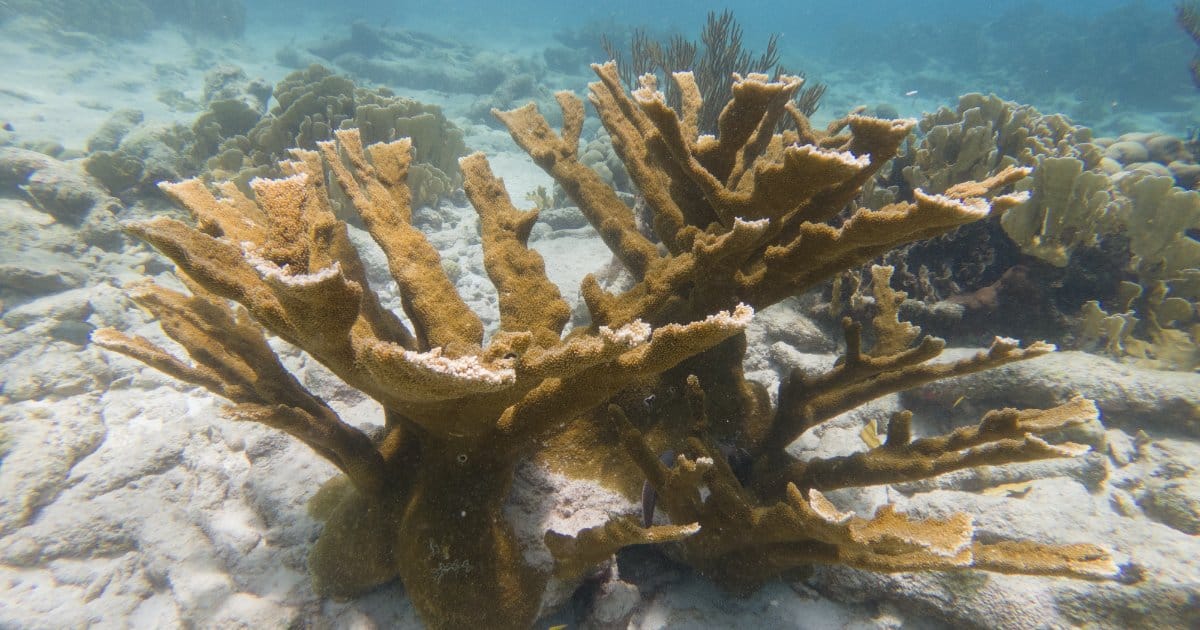
Off the coast of West Palm Beach, Florida, scientists are preparing for one of nature's most fleeting moments. For just a few nights each August, elkhorn coral releases its eggs and sperm into the ocean all at once — a synchronized spawning event that happens only once a year. This summer, from August 1 to 4, 2026, researchers will catch those tiny coral cells and fertilize them in labs, essentially performing what experts call "IVF for corals."
The Reef Institute, a nonprofit dedicated to coral conservation through education, research, and restoration, is leading the effort alongside partners including Reef Renewal USA, Mote Marine Laboratory, the University of Miami, The Florida Aquarium, SECORE International, and the Smithsonian Marine Station. The project is funded through NOAA's Resilient Reef Research, Rescue and Restoration (Re5) initiative.
The work matters because elkhorn coral was once the dominant species on many shallow Caribbean reefs. These branching corals create complex structures that shelter fish, lobster, and other marine animals. They also absorb wave energy, helping protect coastlines from storms and erosion. But over recent decades, warming oceans, disease, and climate change have wiped out much of the species throughout Florida and the wider Caribbean.
In 2023, an unprecedented global coral bleaching event struck reefs across the Atlantic, Pacific, and Indian Oceans. Heat stress pushed corals to the brink worldwide. In response, The Reef Institute in West Palm Beach became one of only two facilities in the country serving as a biobank — a living library of elkhorn coral genetics — to help ensure the species survives.
Leneita Fix, Executive Director of The Reef Institute, described the annual spawning as a rare gift. "Elkhorn coral is one of the most important reef-building corals in the Caribbean, but it is also one of the most vulnerable," she said. "This annual spawning event gives scientists a rare opportunity to help secure the species' future. By collecting and fertilizing gametes, we're creating the next generation of corals that may one day help restore and strengthen reefs throughout Florida."
The fertilized coral offspring will be raised in tanks at partner facilities before eventually being planted back onto degraded reefs. By preserving genetic diversity in the lab, scientists hope to build stronger, more resilient coral populations capable of withstanding future heat waves and disease outbreaks.
It is painstaking work, but the scientists involved see it as an investment in the ocean's future — one tiny coral baby at a time.