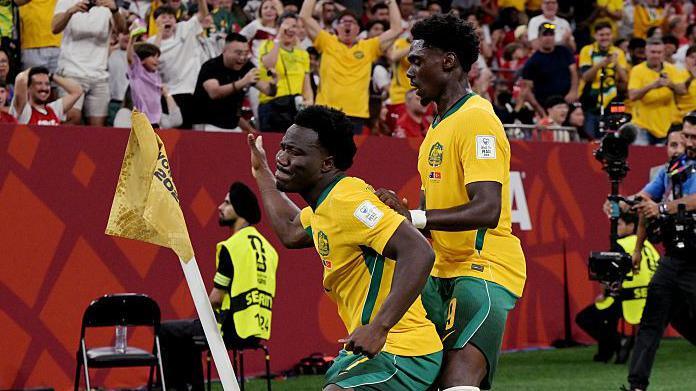
Nestory Irankunda punched the corner flag at the 27th minute of Australia's World Cup match against Turkey in Qatar, not in frustration, but in pure joy—and in homage to his hero, Tim Cahill. What made that moment historic was not just the clinical finish, delivered with pace and power that even drew praise from the watching Ange Postecoglou for its speed alone, but what Irankunda's goal represented: the first time a player born outside Australia had ever scored a World Cup goal for the Socceroos.
The 20-year-old's journey to that moment reads like a testament to refusing to let circumstance define destiny. Born a refugee in Tanzania, Irankunda has spent his football career chasing minutes—and a dream. He joined Bayern Munich's academy in Germany, training regularly with world-class players including England striker Harry Kane, but first-team appearances never materialized. When those minutes dried up, he knew his World Cup ambitions were slipping away. A loan to Swiss club Grasshopper followed, but it wasn't enough. In the summer of 2024, with the 2026 World Cup approaching, Irankunda faced a crossroads.
Walking away from Bundesliga prestige is not a casual decision for a young player. Yet Irankunda made it anyway, transferring to Watford in the English Championship for an undisclosed fee. His reasoning was clear and unsentimental: "The 2026 World Cup is around the corner and I have to play minutes, I wasn't playing minutes," he told Sky Sports. He had been dropped from the Australia squad, and he knew that training with Kane and the Bayern elite meant nothing without the chance to prove himself on the pitch. Watford gave him that chance, and he seized it with both hands.
Over 42 games for the Championship club, Irankunda scored four goals and created five assists—solid performances that secured his selection for Australia's World Cup campaign. His debut for the Socceroos came in a qualifier against Bangladesh in June 2024, and he wasted little time making an impression, becoming the second-youngest scorer in the country's history with a goal against Palestine in just his second appearance.
But it was that moment in Qatar—the goal, the punch to the corner flag, the nod to Cahill—that changed everything. Postecoglou, the former Tottenham manager watching from the commentary box, called it "a massive moment" and suggested that sometimes "in World Cups, you just need a good couple of weeks and your whole world can change." He was right to sense the significance. Irankunda has already captured the imagination of his teammates. Mohamed Toure, a Watford colleague, compares him to Jude Bellingham's impact on England and speaks of a talent that could exceed its own considerable promise. "If he puts in the work and stays grounded I think he'll go beyond the potential many people already say he has."
Irankunda has always been someone who channels his heroes. He once celebrated a goal against Curacao in a white glove, channeling Michael Jackson. But when he scored against Turkey, he chose to honor Cahill—the player he calls "Australia's greatest" and second only to Lionel Messi in his admiration. It was a moment of inheritance, a young refugee turning first-generation immigrant showing respect to those who paved the way. That corner flag punch may yet prove to be the punch that opened a door to something far bigger than a single World Cup goal.