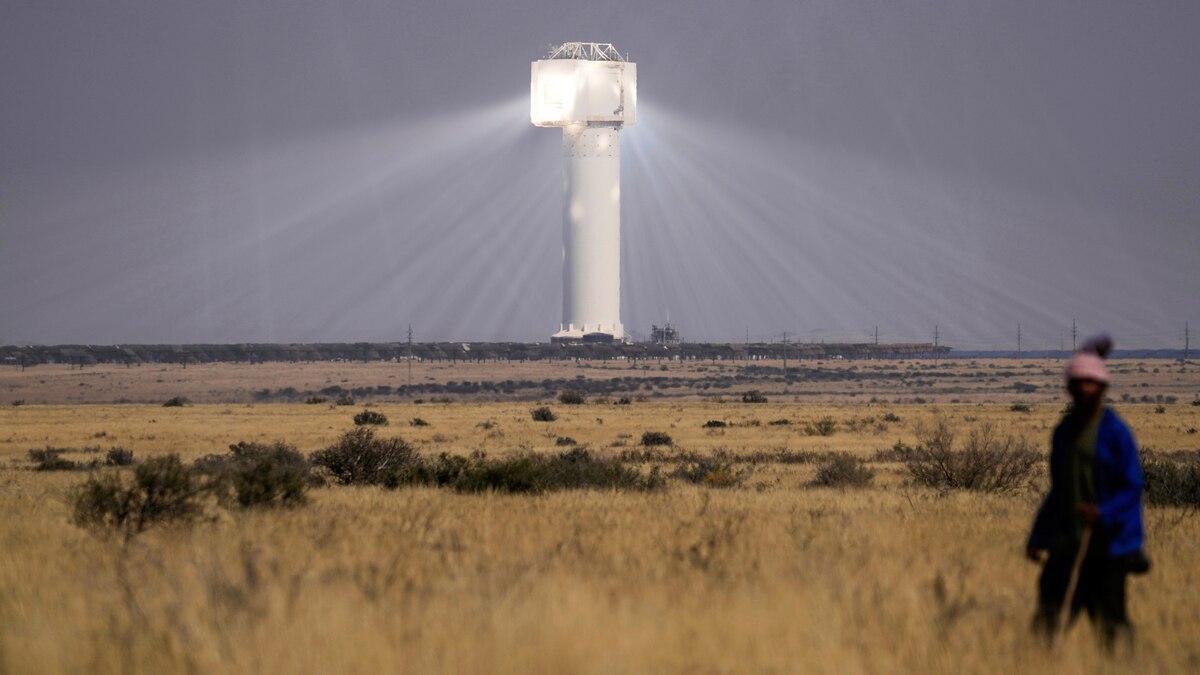
Inside the Kamoa-Kakula copper complex in the Democratic Republic of Congo, a solar and battery project is racing toward completion at a speed that would have seemed impossible a decade ago — moving from signing to over 80% finished in just one year. This acceleration captures something larger happening across Africa: a decisive pivot toward renewable energy that is reshaping the continent's entire power landscape.
The shift reflects hard economics. Utility-scale solar costs have plummeted nearly 90% globally since 2010, while onshore wind has fallen around 70%, making renewables the cheapest source of new electricity in many African markets. For governments grappling with rising fuel import bills, unreliable grids and surging industrial demand, the choice is becoming obvious. Of the 322 energy projects announced across Africa in 2025, 173 were solar projects — more than half the total. Hydropower came next at 46 projects, wind at 34, gas at 22, and hybrid systems at 14.
The sheer scale of deployment underscores how radically the economics have shifted. Africa added a record 11.3 gigawatts of renewable energy capacity in 2025, triple the previous year, with South Africa, Egypt and Ethiopia driving much of the growth. Yet official statistics may be dramatically understating the real transformation. Data from the Africa Solar Industry Association tracked 23.4 gigawatts of operational solar projects by the end of 2025 — but Chinese export figures show 58.1 gigawatts of solar panels have been shipped to African countries since 2017, suggesting adoption is racing far ahead of what governments are officially counting.
Much of this invisible surge comes from distributed solar and battery systems installed directly at mines, factories, telecom towers and homes. These systems don't need connection to national grids, and they're transforming how businesses and communities access electricity. The Kamoa-Kakula project exemplifies the appeal: a 233-megawatt solar and battery installation to power one of Africa's largest copper mines. Coal-fired plants take up to 12 years to build; major hydropower projects often need a decade. This solar project, by contrast, moves from signing to revenue generation within 18 months — a timeline that fundamentally changes investment calculations.
For lenders and developers, the speed and cost advantage cuts against traditional risk calculus. "Solar and wind projects are especially attractive at this moment because they combine strong commercial fundamentals with relatively lower investment risk," said Olamide Niyi-Afuye, CEO of the Africa Minigrid Developers Association. Investors deploy capital and see assets generating revenue within 18 months, transforming the financial case for African energy infrastructure.
Policy changes are accelerating the trend. Ethiopia became the first country to ban internal combustion engine imports, spurring electric vehicle adoption. South Africa's decision to relax limits on private power generation has unlocked a surge in industrial renewable projects. Yet significant barriers remain. Many African utilities face financial strain, making lenders cautious about long-term power purchase agreements. Financing costs for renewable projects in Africa can be triple those in developed economies due to perceived country risk, according to the International Energy Agency. Development finance institutions, including the African Development Bank and International Finance Corporation, are helping bridge this gap with concessional loans and risk-sharing structures.
The bottleneck is no longer technology or cost. As Mugwe Manga, climate finance lead at FSD Kenya, puts it: "What remains is not a question of technology or cost. It is a question of finance, political will and preparing bankable projects."