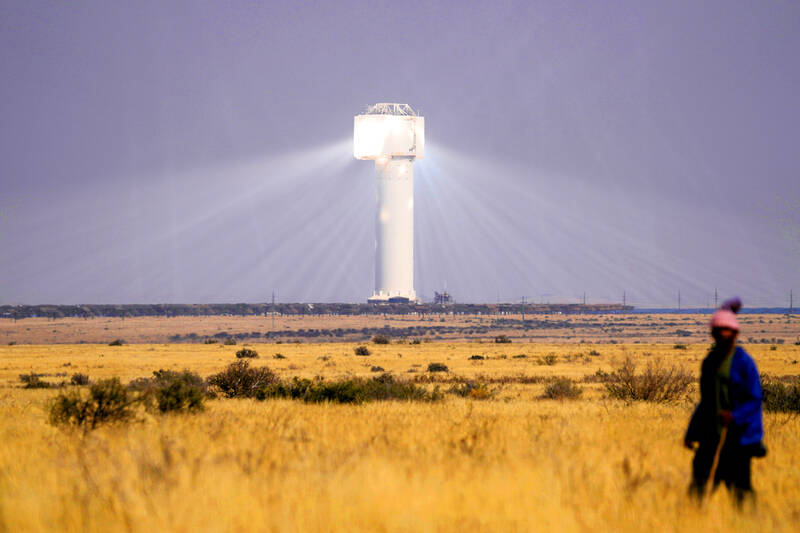
When the Kamoa-Kakula copper mine in the Democratic Republic of Congo needed power, its operators didn't turn to coal or hydroelectric dams—they built a 233-megawatt solar and battery complex instead. That project moved from contract signing to 80 percent completion in just one year, a speed unimaginable with traditional energy infrastructure. This single mine illustrates the seismic shift now reshaping Africa's energy landscape, as governments and investors across the continent turn decisively toward solar and wind power.
The numbers tell the story with clarity. According to the International Renewable Energy Agency, Africa added 11.3 gigawatts of renewable energy capacity last year—three times as much as the year before. Of 322 energy projects announced across the continent, 173 were solar projects, dwarfing the 46 hydropower projects and 34 wind projects that followed. The growth is concentrated in the continent's biggest markets: South Africa, Egypt, and Ethiopia have accounted for much of the expansion, though smaller nations are rapidly catching up.
This acceleration reflects a fundamental economic calculation. Utility-scale solar power costs have plummeted by nearly 90 percent globally since 2010, while onshore wind has dropped around 70 percent, making renewables the cheapest source of new electricity across many African markets. Battery storage technology, once prohibitively expensive, has become increasingly affordable and flexible. For investors, the financial logic has shifted entirely: solar and wind projects can generate returns within 18 months, compared to coal plants that require up to 12 years to complete or major hydropower projects needing a decade or more.
Beyond official statistics, solar adoption is likely accelerating far faster than conventional measurements suggest. While Africa's Solar Industry Association tracked 23.4 gigawatts of operational solar projects by the end of last year, Chinese export data reveals 58.1 gigawatts of solar panels have been shipped to African countries since 2017—a staggering gap that reflects the explosion of distributed, off-grid solar installations. Small rooftop arrays powering mines, factories, telecom towers, and homes are transforming energy access without waiting for central utilities or government infrastructure upgrades. As Matt Tilleard, CEO of CrossBoundary Energy, noted: "Solar and batteries don't need central utilities."
Policy is accelerating the shift. Ethiopia became the first country to ban imports of internal combustion vehicles, spurring faster adoption of electric transport. South Africa has relaxed restrictions on private power generation, opening space for businesses and households to generate their own electricity. Meanwhile, a US$1.5 billion energy agreement between China and Zambia announced this month includes three separate 300-megawatt renewable projects alongside limited coal capacity, signaling how even transitional investments now center renewables.
Experts emphasize that Africa is not merely adopting global energy trends—it is becoming central to them. Mugwe Manga, climate finance lead at Financial Sector Deepening Kenya, observed that "Africa holds the world's best renewable resources, and the economics have now decisively turned in favor of clean energy." Rising fuel import bills, unreliable grids, and growing industrial demand create urgent pressure to deploy power quickly and affordably. Renewables deliver exactly that combination, along with protection against volatile global fuel prices. For a continent with abundant solar and wind resources but limited access to capital for decades-long megaprojects, this energy transition isn't a burden—it's an opportunity arriving at precisely the right moment.