In Pakistan, a quiet revolution is happening on rooftops and open fields. In just four years, the country has gone from generating 3% of its electricity from solar power to 22%. Behind-the-meter and off-grid solar capacity has exploded from 2.1 gigawatts in 2021 to 23.4 gigawatts today — a tenfold increase. The change was driven by soaring electricity prices in 2022, an aging power grid, and a key factor: Pakistan charged no tax on solar panel imports. So dramatic was the shift that the government cancelled planned purchases of liquefied natural gas cargoes and started renegotiating long-term energy contracts.
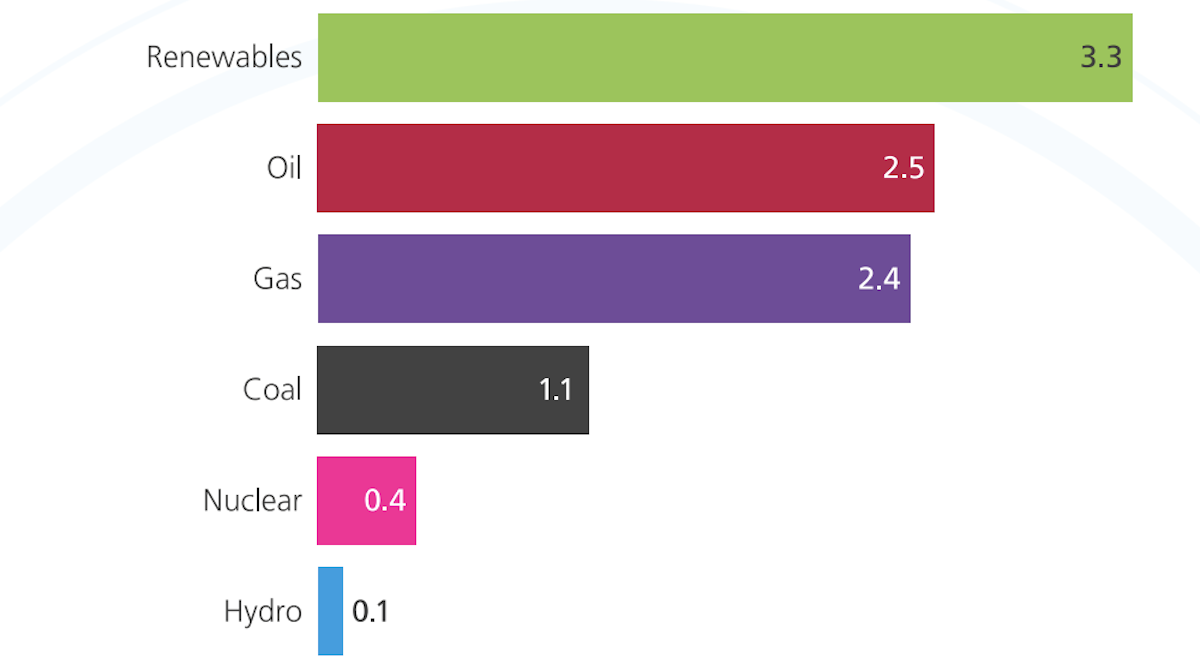
This is part of a much larger story playing out around the world. According to the 2025 Statistical Review of World Energy, renewables became the largest source of growth in global energy supply for the first time outside of an economic recession. Total energy use hit over 600 exajoules — a 1.7% jump from 2024 — and solar power alone accounted for 71% of that renewable growth.
Solar had a breakthrough year in another way too. It grew by 30% in 2025 and now makes up 8.7% of total power generation worldwide. That officially puts it ahead of wind power (8.4%) for the first time, and within striking distance of nuclear (8.8%).
Meanwhile, the European Union has made particularly dramatic progress. Following Russia's invasion of Ukraine in 2022, EU countries rushed to build more wind and solar farms. By 2025, those two clean sources provided 30% of the bloc's electricity, up from just 19% in 2021. Gas power dropped 15% and coal power fell a striking 38%. Wind and solar together generated 852 terawatt-hours of electricity — more than coal, gas, and oil combined. An analysis by the research group Ember found this buildout saved the EU roughly 72 billion euros in imported fossil fuels between 2022 and 2025, with Germany, Spain, and Italy seeing the biggest savings.
China also showed a significant shift: its use of oil and diesel declined for the second year running, and its coal consumption stayed flat. India, meanwhile, saw coal use grow by just 0.6% — far below its 10-year average of 3.6%.
Of course, there's still a long way to go. Fossil fuels still supply 86% of the world's total energy, and global CO2 emissions grew by 1.1% in 2025. But the direction is changing. From rooftops in Pakistan to wind farms on the North Sea, clean energy is no longer a niche player — it's the main engine of growth.