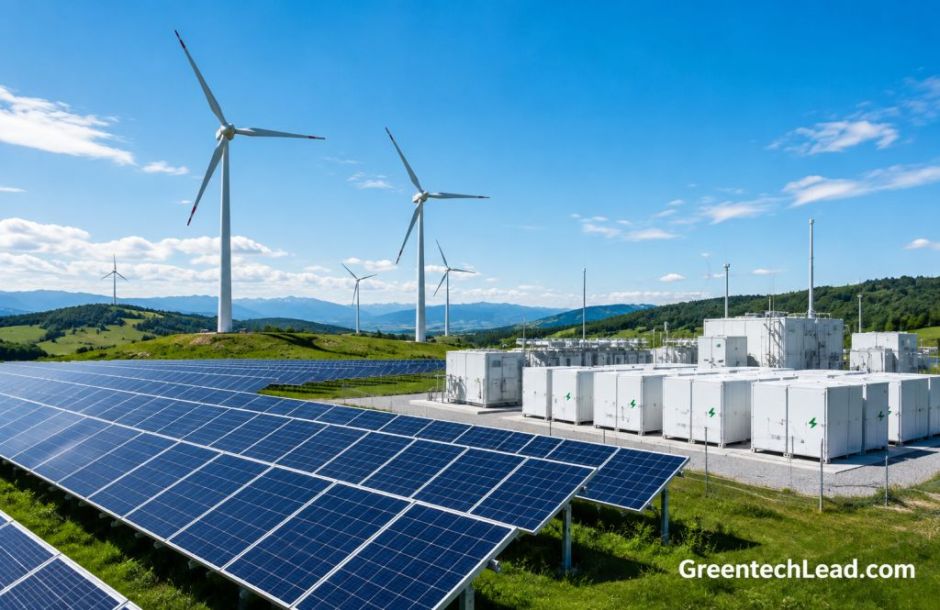
On the site of an old nuclear power plant in Germany, a two-hour battery the size of a small neighborhood is quietly starting its first charge. That's just one of three big clean-energy projects that kicked into motion this week across three countries — proof that the world's power grid is being rebuilt, one turbine and one storage unit at a time.
The most striking project is a solar farm built for a giant copper mine in the Democratic Republic of the Congo. CrossBoundary Energy switched on a 233 MW solar plant paired with a battery that can hold 526 MWh of electricity — enough to keep the mine's lights on even when clouds roll in. The system is built to deliver at least 30 MW of steady power with 95 percent reliability around the clock, replacing the diesel-driven baseload that mines have always depended on. It's a joint effort between Ivanhoe Mines, Zijin Mining and the Congo government, with help from partners including Soventix and DHybrid. The project reached commercial operation on August 12, 2026, following a power-purchase agreement signed in April 2025)Skip. For energy-hungry mining companies scattered across Africa, this shows that large-scale solar-plus-storage can now do the heavy lifting.
Meanwhile, out in the Dutch North Sea, RWE drove the first steel piles into the seabed for a wind farm called OranjeWind. Located about 53 kilometers off the coast, the 795 MW project will use 53 giant Vestas turbines, each rated at 15 MW. But OranjeWind isn't just a wind farm — RWE plans to hook the turbines up to flexible demand and battery storage so the whole system puts less strain on the Dutch grid. Pounding in that first monopile marks the shift from planning to real construction, a big step toward adding nearly 0.8 GW of clean power.
Back on land at Philippsburg, Germany, EnBW has broken ground on a 400 MW/800 MWh battery at the former site of a nuclear station. When finished, it will be able to deliver 400 MW of power for two full hours. The clever part: it's reusing the high-capacity grid connections the old plant already had, turning a retired power station into a hub for storing wind and solar energy.
These three projects share a common thread. As renewables spread, the new challenge is storage — holding onto energy when the sun shines and the wind blows, and releasing it when they don't. From a copper mine in Congo to the German coast, that's exactly what's being built.