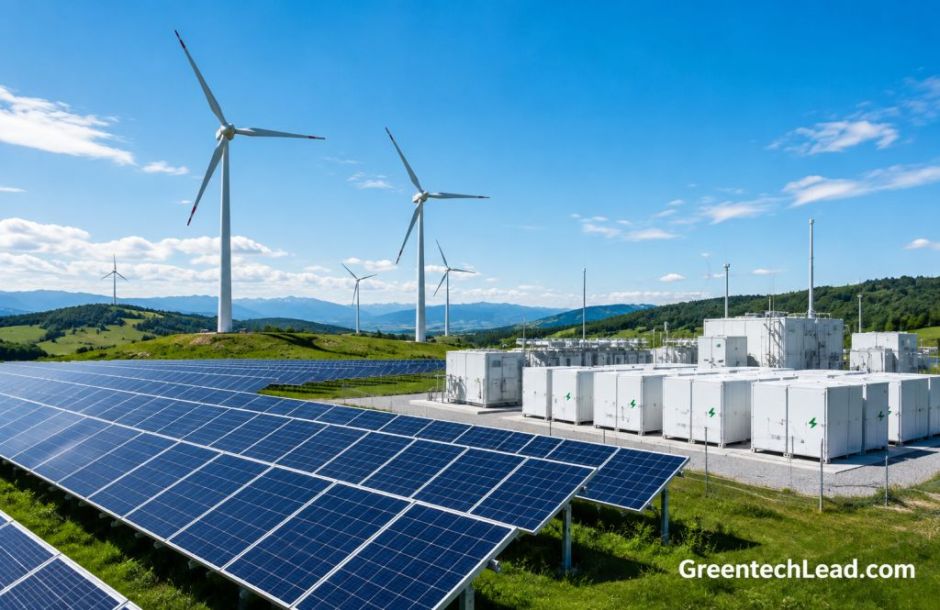
Tucked into the Indian Ocean, the island nation of the Comoros just took a big step toward cleaner power — and it all started with three solar plants and a strip of battery storage. The country switched on solar projects totalling about 20 megawatts (MW) across its three main islands, together with 16 megawatt-hours (MWh) of batteries to hold that sunshine for later. For a small nation home to around 850,000 people, it is a giant leap into the age of renewable energy.
Here is why this matters. The Comoros, made up of Grande Comore, Anjouan and Mohéli, has long leaned on imported diesel to keep the lights on. Fuel is expensive, pollutingcars and the power supply is fragile. This new clean-energy push changes the picture, giving households a steadier flow of electricity while cutting the country's carbon footprint.
The numbers tell the story. The largest chunk of solar, 12.86 MW, sits on the main island of Grande Comore. Anjouan received 4.05 MW elbow, and Mohéli the smallest at 3.1 MW. Around 30 kilometres of new 20-kilovolt (kV) transmission lines, the cables that carry electricity from the plants to homes, were built alongside the projects)Skip that technical bit. All together, the installations are expected to pump out roughly 33.75 gigawatt-hours (GWh) of electricity every year — enough to power the equivalent of 17,500 households. And because they replace fossil-fuel generation, they will avoid about 20,900 tonnes of carbon dioxide (CO2) emissions each year. That is like taking thousands of cars off the road.
The project was a team effort backed by the United Arab Emirates. The Abu Dhabi Fund for Development chipped in about $23 million (roughly 84.4 million UAE dirhams), while the clean-energy company Masdar built the installations. Another firm, Global South Utilities, now runs and maintains them.
The Comoros is not the only place racing ahead on storage. Across the world, the story of clean energy is becoming a story of batteries — the technology that saves power when the sun shines or the wind blows and releases it when it is needed most. In Belgium, energy giant Engie began construction in August on a massive 74 MW/296 MWh battery at its Coo site, a four-hour system able to release power steadily for hours, not just minutes. In Malaysia, Blueleaf Energy and Universal Peak reached a financial milestone on a 100 MW/400 MWh battery, part of the country's brand-new MyBeST battery programme, with commissioning targeted for mid-2027.
From a tiny island nation flipping on solar panels to continent-spanning battery projects, the message is clear. Renewable power is not just a dream for the future; it is being built right now, one plant and one battery at a time. For the Comoros, the sunshine was always there — now it finally counts.