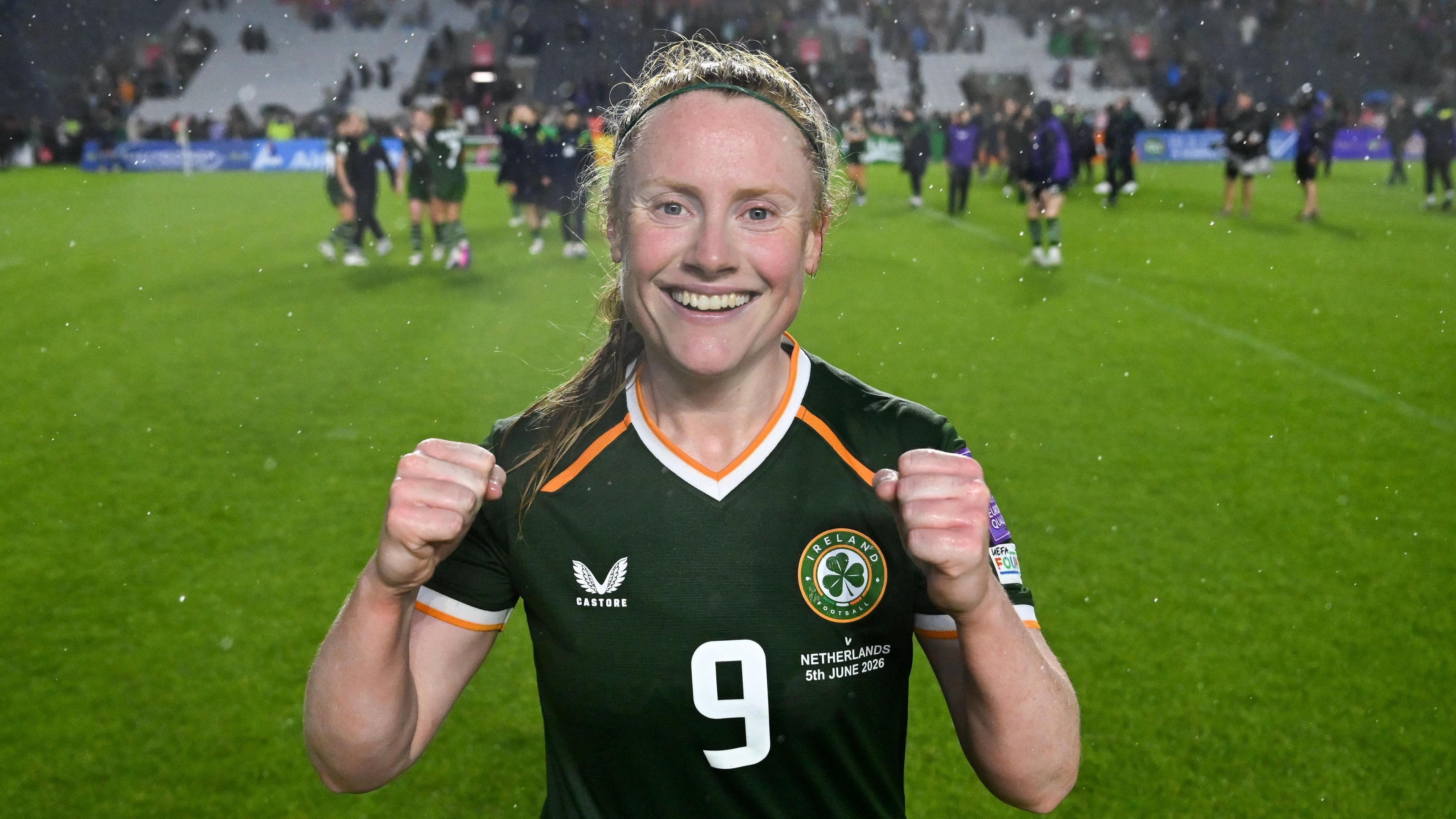
Amber Barrett, her kit still damp from the night air, spoke with the kind of clarity that comes from knowing exactly what lies ahead. The Ireland striker had just walked off a pitch in Cork where over 12,000 supporters had watched her step off the bench in the 76th minute and score the winning goal against the Netherlands, a moment that shifted everything. Now, as Carla Ward's team prepares to travel to Grenoble on Tuesday to face France—the group leaders—the calculus has changed entirely. What once felt like a desperate fight for qualification has become something rarer in sport: a match where the pressure lifts because, mathematically, Ireland has already secured their safety.
That shift is precisely why Barrett's words carry such weight. "We do not have anything to lose," she said into the RTE microphone, her voice steady. "When we started the group, what everyone was looking at was not finishing fourth. We avoided that tonight and we have nothing to lose on Tuesday, we are going to give everything we have." It is the kind of statement that sounds simple until you realise what it means: Ireland's women's football team has transformed from underdogs clawing for survival into competitors who can play with freedom.
The context matters. When Laurent Bonadei's France beat Ireland 2-1 at Tallaght Stadium in March, it looked like a statement of superiority from the group's top side. That loss weighed on the group through qualifying. But the victory against the Netherlands—coming in front of one of the largest crowds to watch Irish women's football in years—changed the narrative entirely. Win on Tuesday in Grenoble, and Ireland secure automatic qualification for back-to-back World Cups, a threshold few women's teams reach. Lose or draw, and they still have the safety net of a seeded playoff spot in October and December, a luxury most teams never get.
What makes this moment distinctive is how Ward's team has reframed it. Barrett spoke of the upcoming match as a "cup final," but without the suffocation that usually comes with that designation. Instead, there is permission to be aggressive, to genuinely try to win rather than manage the result. "Before, if you were 2-2 against the Netherlands, you would probably be rubbing your hands together and saying 'we will take this', but Carla said from the start of the week, let everyone know we will be going to win the game," Barrett explained. The shift from relief to ambition is complete.
Yet there is respect threaded through the Irish camp's confidence. Barrett acknowledged that France, despite sitting atop the group, remains "an unbelievable side"—a team not to be underestimated simply because the arithmetic has moved in Ireland's favour. The warning was gentle but real: recover from Cork, prepare properly, and approach Grenoble with the intensity of a knockout match, even if the stakes have softened.
For a women's football programme that has spent much of its recent history climbing out of obscurity, this is the sound of a team that has grown into something formidable. The loss of pressure is not the loss of hunger.