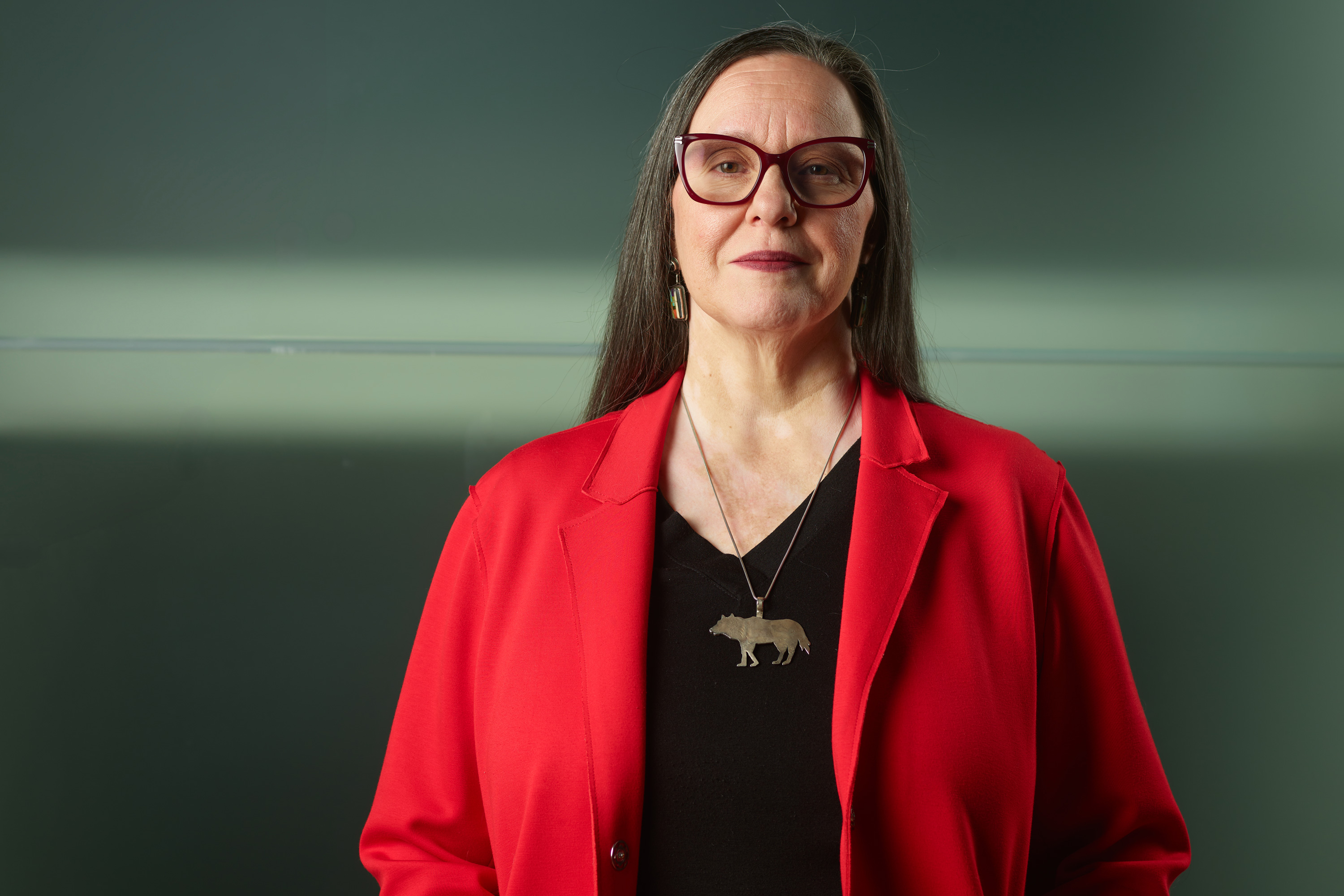
Sonya Atalay was bartending her way through the University of Michigan when she sold her motorcycle to buy a plane ticket to Rome—a sacrifice that would set her on a path to reimagine the entire field of archaeology. Today, as a tenured professor at MIT and director of the Center for Braiding Indigenous Knowledges and Science, Atalay is leading a quiet revolution that asks a deceptively simple question: Why aren't the people living on or near ancient archaeological sites included in the research about them?
The answer reveals a deep flaw embedded in how Western archaeology has traditionally operated. When Atalay first went to a dig site near Rome as an undergraduate, she noticed something that bothered her immediately. "When I started doing archaeological work, the local people were labor," she recalls. "They came, they cleaned your clothes, they cleaned the dig house, they weren't thought of as having important connections with the archaeology." It was a pattern she would later observe again while researching pottery at Çatalhöyük, one of the world's earliest known urban settlements in Turkey, flourishing by at least 7000 B.C.E. And it repeated itself in the treatment of Indigenous communities in North America—people whose own heritage was being studied by researchers who treated them as peripheral to the process.
The shift in Atalay's thinking was gradual but profound. During her doctoral work at UC Berkeley, which she completed in 2003, she began examining what archaeology could look like if it centered local voices. Her thinking was crystallized by the North American Graves Protection and Repatriation Act (NAGPRA), passed in 1990, which requires federal institutions to return human remains, sacred objects, and cultural materials to Native Americans. Watching Indigenous advocates fight for sovereignty and ethical research practices made Atalay realize something essential: progress requires trust and genuine partnership.
Since joining MIT in 2024, Atalay has formalized this vision through community-based archaeology—an approach that treats local residents not as laborers or subjects of study, but as holders of irreplaceable place-based knowledge. As director of the NSF-backed Center for Braiding Indigenous Knowledges and Science, she trains scholars in these methods while helping implement research practices that honor community participation at every stage.
What makes Atalay's work significant extends far beyond archaeology. She is convinced that the principle—involving community members meaningfully in the research process—applies across disciplines. "A community-based approach is highly applicable beyond archaeology and anthropology, outside of the social sciences," Atalay says. "I think there's a lot for engineers or designers or folks in a lot of different fields to learn by involving community members in the research process."
Atalay's path to this realization was shaped by chance—a fourth-grade teacher named Barbara Eisman who handed her a book about ancient Greece and Rome—and determination. The first in her family to attend college, she transformed her initial dream of becoming a pediatrician into something equally healing: a career spent rebuilding trust between researchers and the communities whose stories they tell. In doing so, she's proving that archaeology, when done right, isn't about extracting knowledge from the past. It's about building relationships in the present.