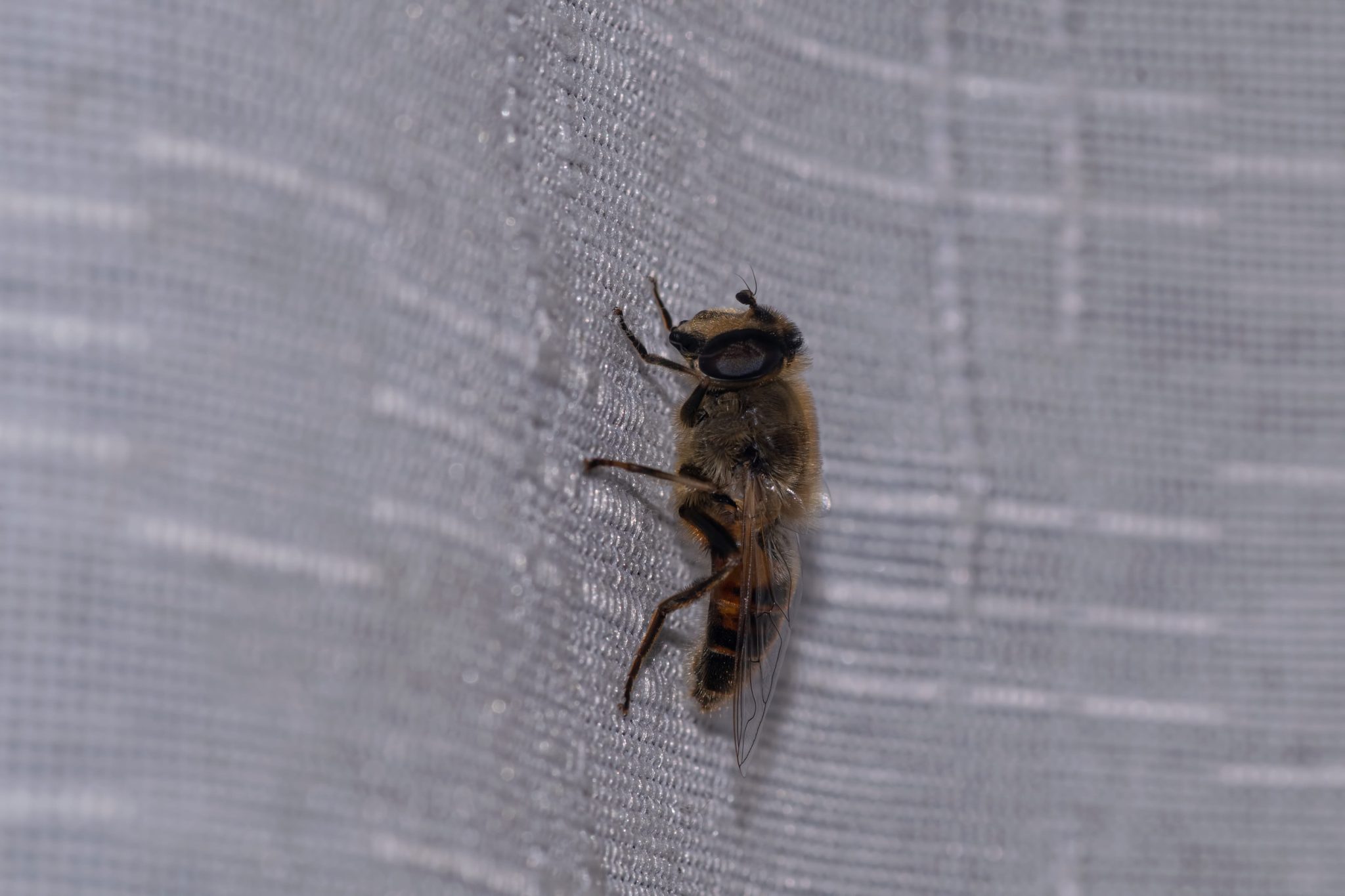
When Adi the honeybee hovers before a screen showing two human faces, she doesn’t just see shapes—she sees difference. One face means sugar. The other means quinine, a bitter taste she avoids. Within hours, Adi learns to land only on the sugar-linked face, recognizing it among dozens of near-identical options with up to 90 percent accuracy. This is no simple feat: her brain contains just one million neurons—roughly the same number as a single cubic millimeter of human cortex—and yet she performs a task long believed to require a primate-sized brain.
For decades, scientists assumed that recognizing human faces required specialized neural machinery, like the fusiform face area in our own brains. But research spanning over 20 years has shown that honeybees, despite lacking such structures, can not only distinguish individual faces but do so using configural processing—the same strategy humans use. That means they don’t memorize eyes, nose, and mouth as separate parts. Instead, they perceive the spatial relationships between features, like the distance between eyes or the placement of a mouth relative to the nose. It’s the difference between recognizing a face and recognizing a pattern—and bees are mastering the former.
The breakthrough began with Adrian Dyer’s 2005 study, which first demonstrated that bees could be trained to differentiate faces using reward-based conditioning. Since then, experiments led by researchers like Martin Giurfa at Université Paul Sabatier in Toulouse have confirmed that bees retain this ability for at least two days and apply the same cognitive shortcuts we do. When shown inverted faces—a trick that disrupts human recognition—bees also struggle, further evidence they’re using holistic processing, not rote memorization. Even more astonishing, they transfer what they’ve learned to new images of the same person, suggesting true facial recognition, not mere image matching.
The implications ripple far beyond the hive. If a brain smaller than a grain of sand can perform complex visual analysis once thought exclusive to mammals, then our understanding of intelligence must expand. This challenges long-held assumptions in neuroscience about the minimum requirements for advanced cognition. It also opens the door to asking: what other animals might be quietly recognizing faces, solving problems, or interpreting patterns in ways we’ve never tested?
As researchers continue to probe the cognitive edges of the animal kingdom, the honeybee stands as a tiny, winged reminder that brilliance doesn’t always come in large packages. The next breakthrough in artificial vision or machine learning might not come from mimicking the human brain—but from watching how a bee sees the world.