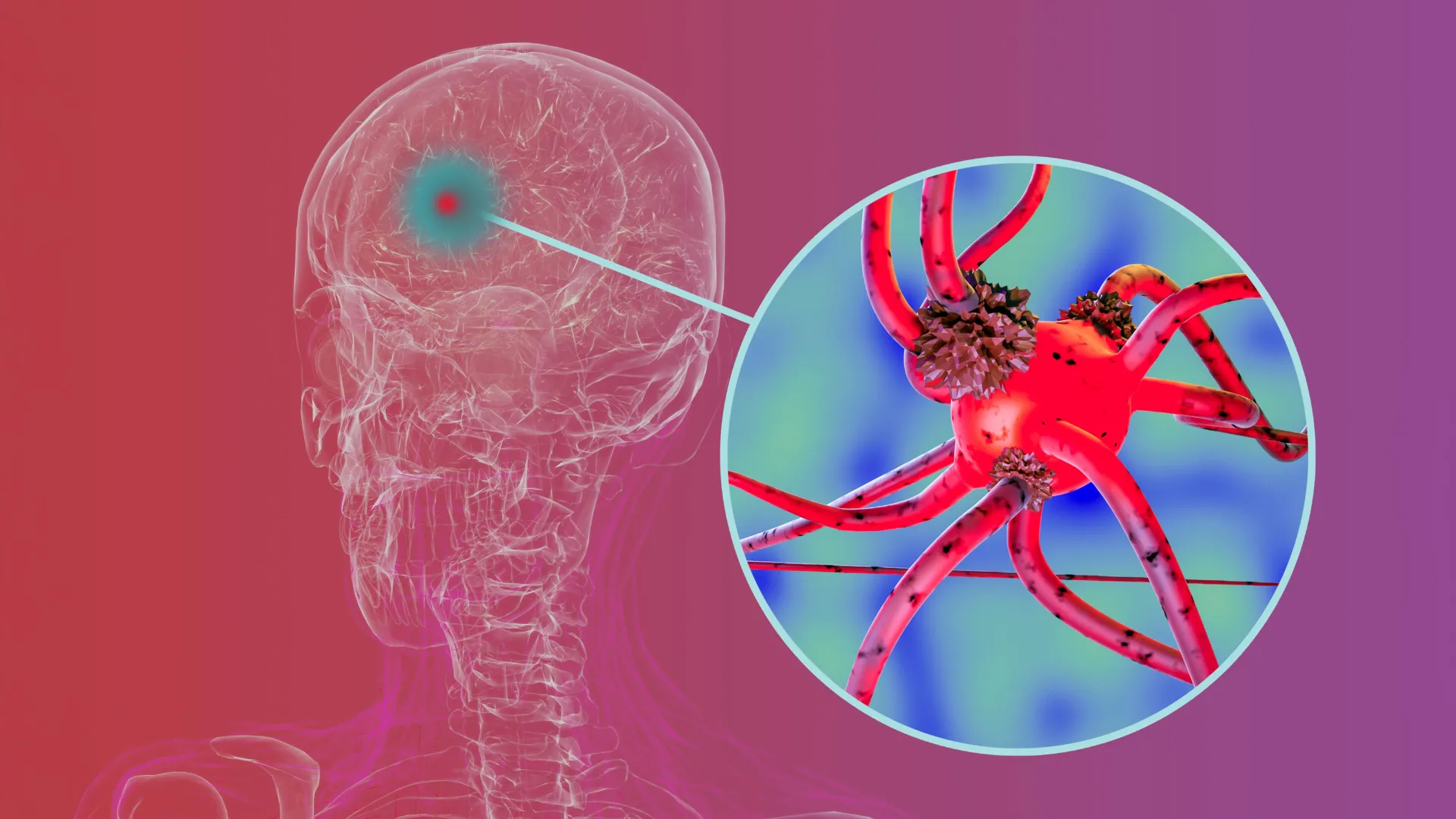
At the Perelman School of Medicine at the University of Pennsylvania, researchers have found a crucial chink in Parkinson's disease's armor—a protein that acts like a facilitator, ferrying destruction from one brain cell to the next. This discovery, published in Neuron, could reshape how doctors approach a condition that affects more than one million Americans and strikes approximately 90,000 new patients each year.
The protein is called GPNMB, shorthand for glycoprotein nonmetastatic melanoma B, and it appears to be the middleman in a process that allows Parkinson's damage to spread through the brain like a chain reaction. Dr. Alice Chen-Plotkin, the study's lead author and Parker Family Professor of Neurology, has spent years tracking how Parkinson's progresses, and her team's latest work offers something that patients desperately need: a potential way to actually slow the disease down, not just manage its symptoms.
Here's the crux of the problem. Parkinson's disease centers on a rogue protein called alpha-synuclein, which forms abnormal clumps inside neurons, damaging them and eventually migrating to neighboring brain cells. As more regions of the brain become compromised, patients develop tremors, difficulty walking, balance problems, and trouble swallowing. Current medications like levodopa and treatments such as deep-brain stimulation can ease these symptoms, but they don't address the underlying spread itself—a reality that has frustrated neurologists for decades.
The Pennsylvania researchers discovered something new: microglia, the brain's own immune cells, produce large quantities of GPNMB when neurons are stressed or dying. The protein then detaches from cell surfaces and drifts freely between cells, essentially acting as a courier for alpha-synuclein's destructive path. In laboratory experiments with cultured neurons, the team developed monoclonal antibodies designed to block GPNMB. The result was striking—blocking the protein prevented alpha-synuclein from spreading between cells.
To verify whether this pattern holds in human brains, the research team analyzed tissue samples from 1,675 brains stored in the Penn Brain Bank. They found that people carrying genetic variants linked to higher GPNMB production showed more extensive alpha-synuclein damage—strong evidence that this protein genuinely drives Parkinson's progression in real people, not just in laboratory dishes. Importantly, elevated GPNMB levels showed no connection to other neurodegenerative diseases like Alzheimer's, suggesting that blocking this protein might be specifically effective for Parkinson's.
Chen-Plotkin describes the mechanism as a self-reinforcing cycle: alpha-synuclein accumulates and damages neurons, injured neurons release GPNMB, and GPNMB accelerates the spread of more alpha-synuclein. Break that cycle, and you might slow or even halt the neurodegeneration that follows.
The findings are genuinely promising, though Chen-Plotkin is candid about the distance between laboratory success and human medicine. Much work remains before these antibodies become therapies that patients can receive. Still, for families facing Parkinson's diagnosis—especially in those early stages when symptoms are mild but progression is inevitable—this research offers something the field has lacked: a clear direction toward a treatment that doesn't just manage symptoms but addresses the disease itself.