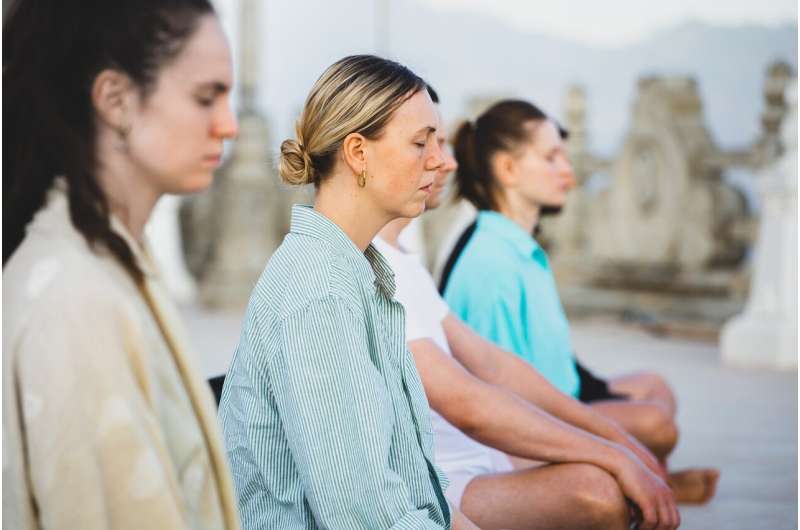
More than 500 people who finished cancer treatment walked into a study and got to choose their own medicine — not a pill, but a practice. Some picked mindfulness, a mix of meditation, breathing, and gentle stretching. Others chose tai chi and qigong, ancient Chinese mind-body disciplines built on slow, flowing movements tuned to the breath. Both worked. That is the finding of the MATCH study — short for Mindfulness and Tai Chi for Cancer Health — published in the Journal of Clinical Oncology, a team effort among the University of Calgary, the University of Toronto, and Mass General Brigham in Boston.
Here is why this matters. Cancer survivors are living longer than ever, but treatment often leaves a trail of long shadows. Many struggle for years with crushing fatigue, stubborn pain, and restless sleep — side effects that are hard to treat and easy to overlook. "More people with cancer are surviving longer term, but they often struggle with long-term side effects that can be difficult to manage," said Linda E. Carlson, Ph.D., a professor at the University of Calgary and the study's lead investigator.
The results, published in 2026, were encouraging. After taking part, survivors reported less pain, fatigue, and sleep trouble. Pierce a bit deeper and the picture gets more interesting. Pain was measured two ways: how intense it felt, and how much it interfered with daily life. Neither practice did much to lower pain intensity — the raw sting — but both steadily improved pain interference, the more psychological side of suffering, the part that keeps you from doing the things you love. That makes sense, the researchers say, because these practices don't try to erase pain. They teach people to notice it, breathe through it, and respond to it with more skill and less fear.
There was a bonus discovery. Fatigue, sleep problems, and pain interference tended to travel together like old friends. When one improved, the other two usually did too. The authors think this is proof that mind-body practices work on the whole person at once, not just one symptom in isolation. "The strong relationships among improvements in these symptoms suggest that mind-body interventions may help support health and well-being in an integrated way," said senior author Peter Wayne, Ph.D., director of the Osher Center for Integrative Health at Mass General Brigham.
The MATCH study was different in a thoughtful way: it let participants choose the practice they preferred. Only those without a preference were assigned one. Everyone was compared against survivors on a waitlist, who got no mind-body training until later. This "patient-preference" design reflects the real world, where people do better with approaches they actually want to try.
The hope now is that cancer care teams start seeing survivorship as a lifelong chapter, not a finish line. "This study highlights that the cancer experience doesn't just end for survivors after active treatment is done," Carlson said, "and we hope it starts a conversation among medical teams about how to incorporate these mind-body therapies into overall cancer care." For the millions living with the quiet aftermath of treatment, that conversation might be the best medicine of all.