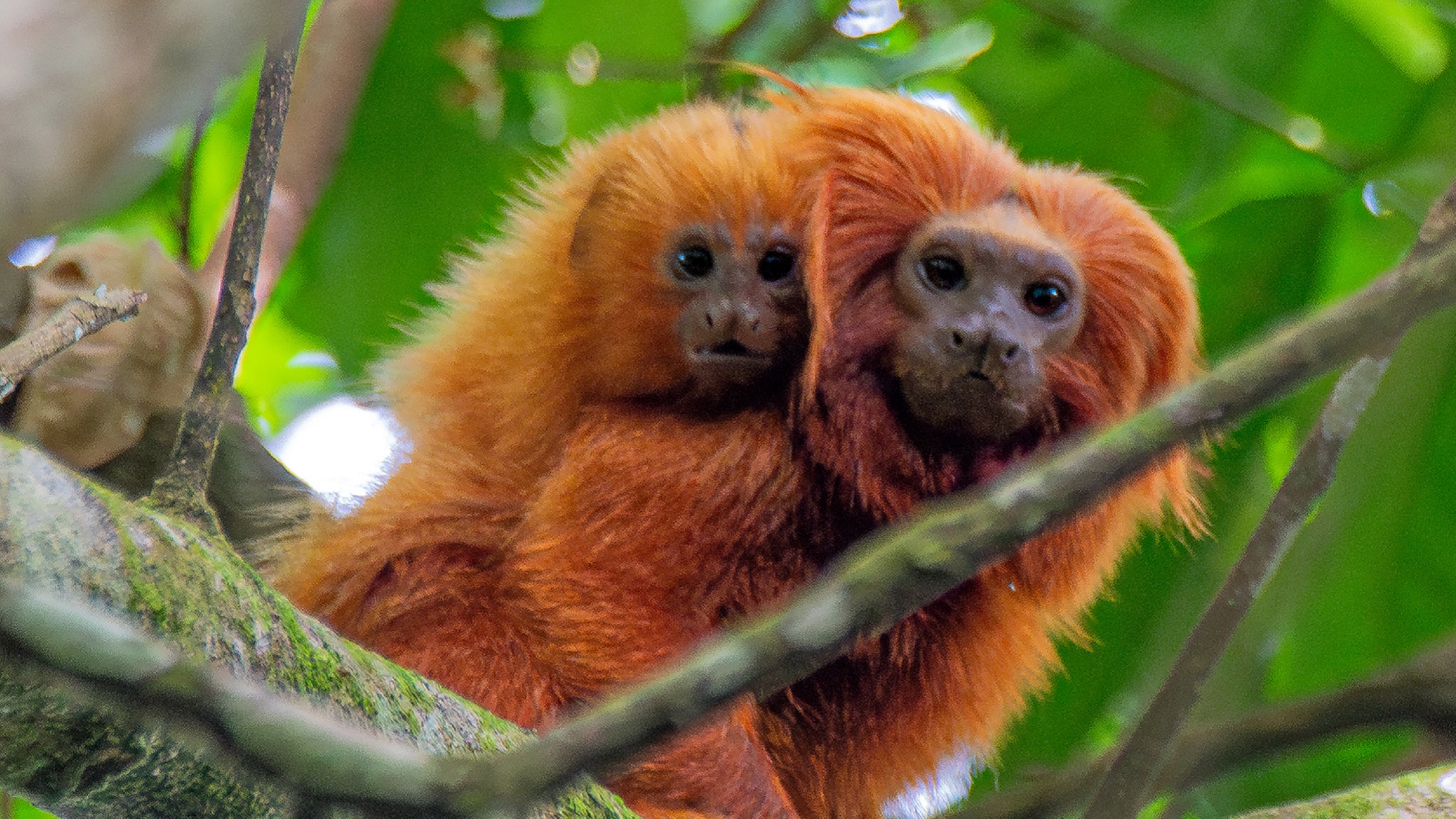
In Brazil's Atlantic Forest, about two hours from Rio de Janeiro, a small orange monkey with a magnificent mane has fought its way back from near-extinction — twice.
Golden lion tamarins, among the world's most endangered primates, nearly disappeared in the 1970s. After careful conservation work, their numbers climbed to around 3,500 by 2017. Then disaster struck: a yellow fever epidemic swept through their forest homes between 2017 and 2019, killing roughly 30 percent of the population and leaving only 2,500 monkeys alive.
But scientists just found a way to help protect them.
A new study published this year identified specific forest areas where tamarins face the highest risk of catching yellow fever. These "priority zones" could guide conservation groups in deciding where to focus vaccination efforts if another outbreak occurs. The research, led by ecologists including Maxime Pierron from the University of Strasbourg, compared forest conditions before and during the epidemic using death records gathered by the Golden Lion Tamarin Association.
The scientists discovered that two factors made the outbreak deadlier: more people living nearby and forests that were better connected to each other.
Yellow fever spreads through mosquito bites, and it can infect both humans and primates. "We can both get it, so it's easy to share it," Pierron explained. Areas with more humans meant more mosquitoes carrying the virus, which then passed it on to the monkeys.
Connected forests helped tamarins survive threats like finding food and avoiding predators. But during an epidemic, those same connections let infected mosquitoes spread the disease more easily between forest patches. Paradoxically, the habitat that usually protects tamarins made the outbreak worse.
Even so, conservationists say connected habitat remains essential. "The more connected the habitat is, the faster or more likely the recovery and recolonization," said Carlos Ruiz-Miranda, a study co-author and board president of the Golden Lion Tamarin Association. If another outbreak strikes, well-connected forests would help the remaining monkeys bounce back more quickly.
Pierron stressed that the findings should not stop reforestation efforts, which are urgently needed worldwide. Instead, he said, conservation planners should combine habitat restoration with disease monitoring.
The tamarins' recovery gives reason for hope. Their population has climbed back to roughly 4,800 individuals as of 2023, up from the low of 2,500 during the epidemic. They now live in fragmented forests across Rio de Janeiro State — just 2 percent of the territory they once occupied. But with the new priority zone maps in hand, scientists have a clearer roadmap for keeping these golden-haired monkeys safe from future outbreaks.