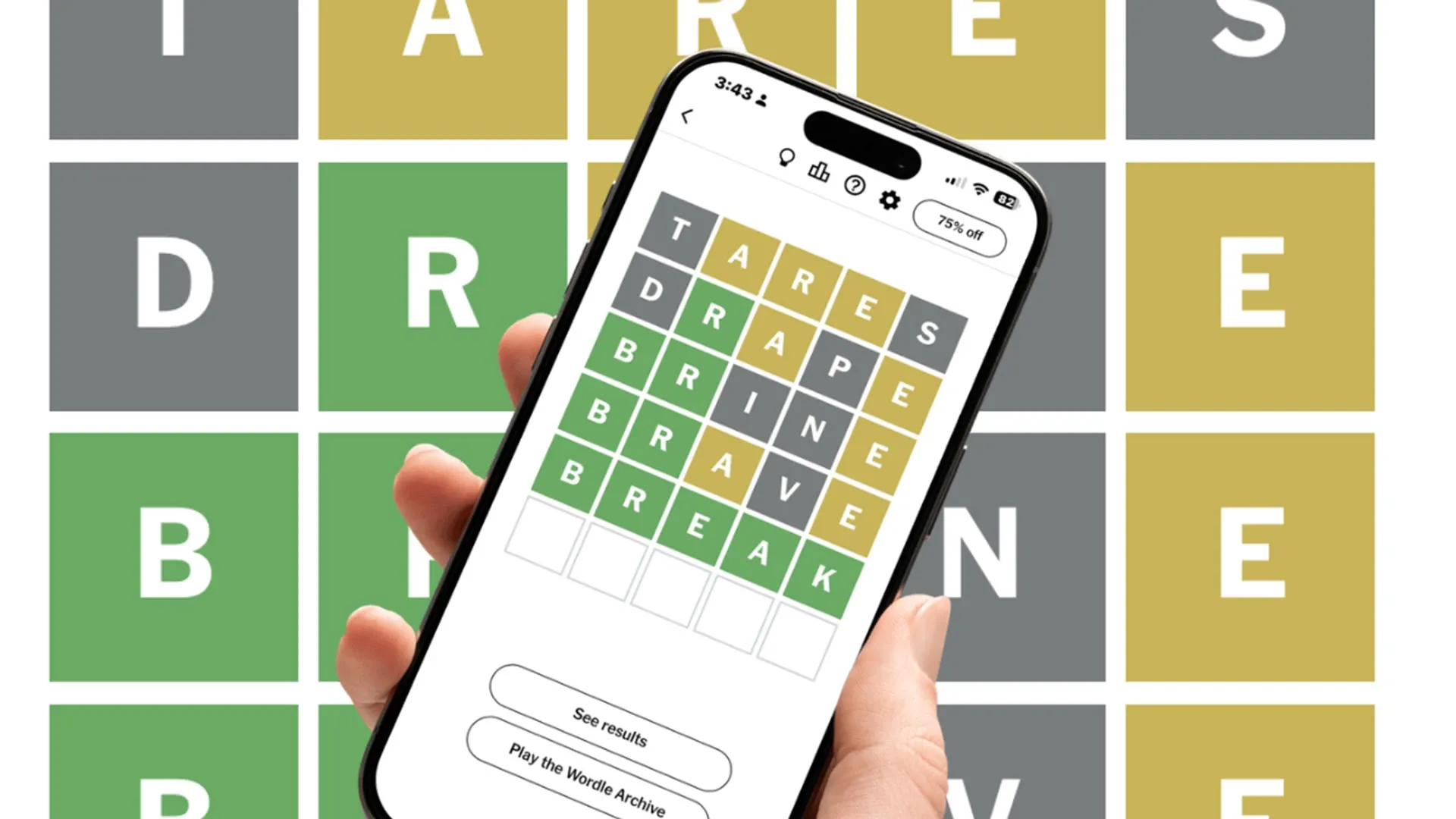
When Talal Aladaileh typed "CRANE" into a custom script during a class assignment at Binghamton University, he wasn’t just playing Wordle—he was helping crack it. What began as a classroom exercise in information theory has now become a scientifically backed strategy that solves the New York Times’ beloved word puzzle with a 99% success rate. For millions who start their mornings squinting at five empty boxes, this breakthrough offers more than just bragging rights—it reveals how a decades-old mathematical concept can outsmart human intuition in one of the internet’s favorite games.
The secret lies in Shannon entropy, a framework developed by Claude Shannon in the 1940s to quantify uncertainty in information systems. Instead of guessing words that seem plausible—like "SLATE" or "CRANE," which many seasoned players favor—this method selects guesses that maximize information gain. Assistant Professor Congyu "Peter" Wu, who led the research at Binghamton’s School of Systems Science and Industrial Engineering, explains that the best move isn’t always the one most likely to be correct. "A guess doesn't have to be the most likely answer; it simply has to be informative," said Donald Stephens, a doctoral student on the team. By narrowing down the pool of possible words as efficiently as possible, the algorithm often takes a path that feels counterintuitive—but works.
In computer simulations, the entropy-driven strategy solved 99% of Wordle puzzles within six attempts, significantly outperforming traditional approaches that rely on common letters and word frequency. The conventional method, often recommended in online guides, succeeded in only about 90% of cases. The new approach frequently starts with less obvious words—ones that might seem odd to casual players—because they split the remaining possibilities more evenly, like a masterful chess move that sacrifices a piece to control the board.
What makes this achievement remarkable is its origin: it began as a homework assignment. Wu challenged his students to apply information theory to real-world problems, and the Wordle project emerged from that prompt. From there, it evolved into a full-fledged study, eventually published in the Northeast Journal of Complex Systems. Co-author Aladaileh reflected on the journey, noting that Binghamton’s curriculum pushes students to turn theory into tangible solutions. The team’s success isn’t just about winning a word game—it demonstrates how engineering principles can enhance everyday experiences, even in spaces we think of as purely recreational.
As artificial intelligence and data science reshape how we interact with games, tools, and decisions, this research stands as a reminder that sometimes, the smartest move isn’t the obvious one. For Wordle lovers, the future might not be about vocabulary—but about information.