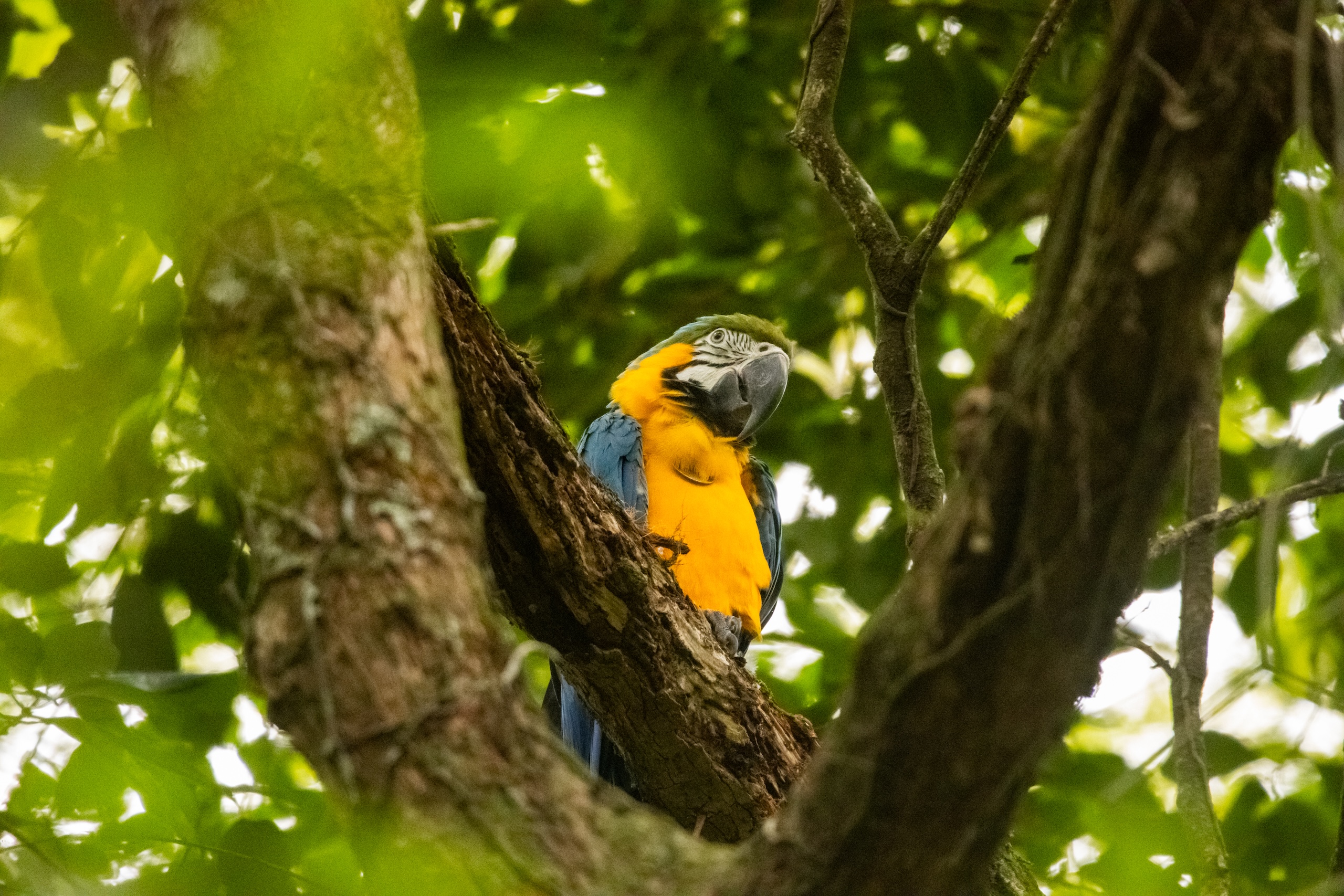
When biologist Alexandra Pires learned in 2008 that red-rumped agoutis had vanished from Tijuca National Park, she stared at the forest floor in disbelief—littered with undispersed seeds of the cutieira tree, a species that once relied on the rodent for regeneration. "How can there be no agoutis in Tijuca?" she recalls asking. That question sparked a 15-year rewilding revolution now transforming one of the world’s most iconic urban forests. Nestled in the hills of Rio de Janeiro, Tijuca was once stripped bare for coffee plantations, then painstakingly replanted under Emperor Pedro II in 1861. But a forest without animals is a forest in crisis—what scientists call "empty forest syndrome." Though the trees grew back, the vital links between flora and fauna were broken. Enter Refauna, a conservation initiative co-founded by Pires and biologist Marcelo Rheingantz, working with Brazil’s Chico Mendes Institute for Biodiversity Conservation (ICMBio). Their mission: restore not just trees, but the living web that sustains them. Starting with agoutis, then brown howler monkeys and yellow-footed tortoises, Refauna has methodically reintroduced species essential for seed dispersal. The results are tangible: agoutis are once again burying seeds, howler monkeys echo through the canopy, and the forest is beginning to regenerate on its own. In January 2024, blue-and-yellow macaws—absent from Rio for 200 years—soared above Tijuca for the first time in centuries. Though some had to be recaptured for retraining, their return marks a bold step in ecological healing. The precedent was set decades earlier, when biologist Adelmar Coimbra Filho released 46 channel-billed toucans in 1970. A 2026 study confirmed their success: these birds now interact with 76% of the plant species in their original diet, including rare trees like the juçara palm and bicuíba, whose hard seeds only toucans can crack. This legacy of careful science and long-term monitoring defines Refauna’s approach. Animals undergo acclimatization in forest enclosures before release, and researchers track their survival, diet, and movement. The goal isn’t just survival—it’s full ecological integration. "One of the main symptoms of the syndrome is precisely fruits rotting on the forest floor," says Rheingantz. But today, that’s changing. With every seed carried, every call echoing through the mist, Tijuca is proving that even forests shaped by centuries of loss can begin to breathe again.
← News
Rewilding Rio: Conservationists restock an ‘empty forest,’ one species at a time
5 (Agoutis, Howlers, Toucans, Tortoises, Macaws) Species reintroduced
18 Years of rewilding work
2026 Study published
46 (In 1970) Toucans released
9 Out Of 10 Plant Species Seeds rotting