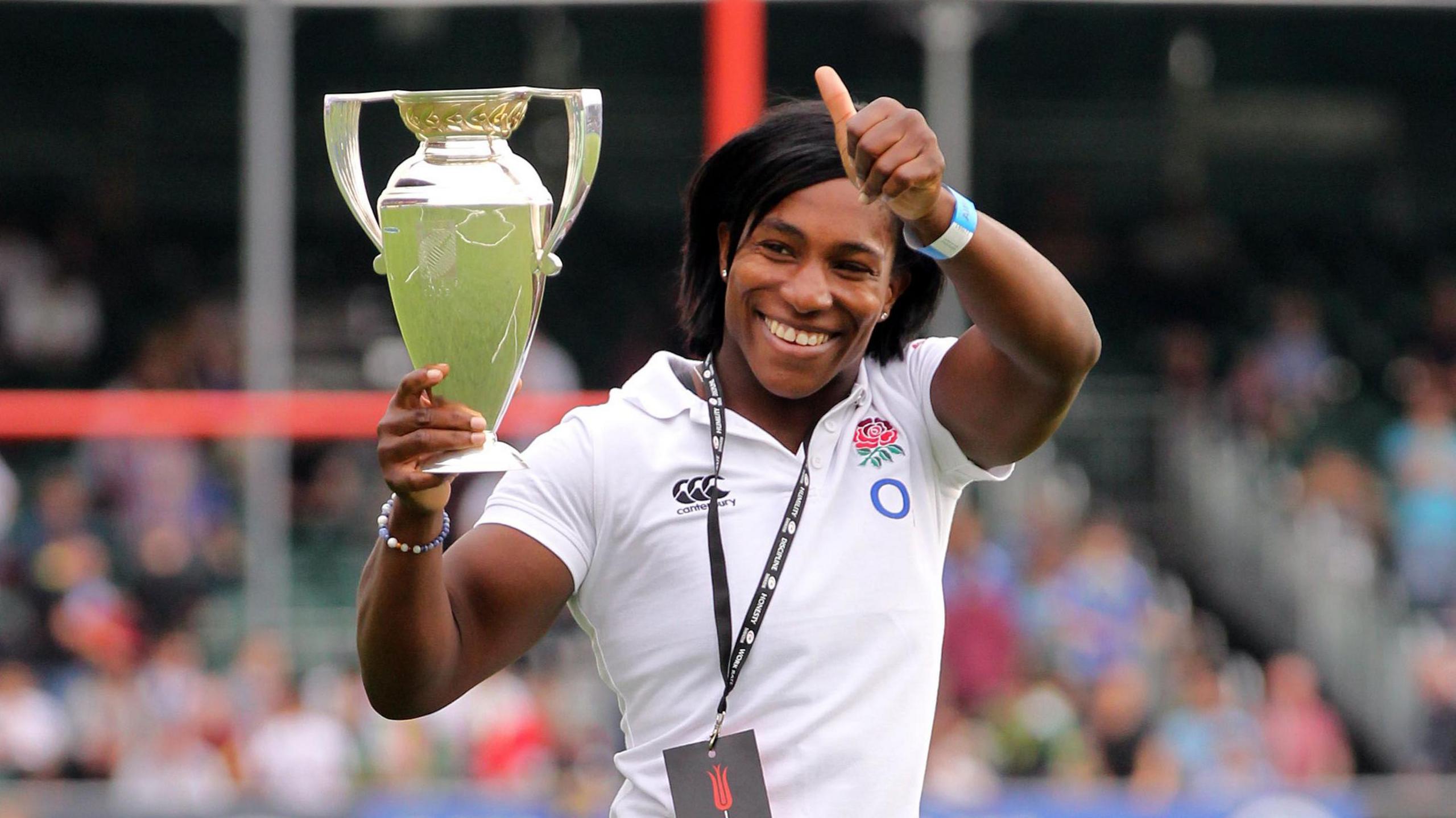
Matthew Smith clicked send on a Facebook post during March's France-England rugby match—a match that saw France score 48 points to England's 46—and didn't realize he was about to set off a reckoning about who gets to speak about rugby and whose voice matters in the sport.
"Can someone please explain to me WTF does Maggie Alphonsi know about men's rugby?" Smith, who represents Warwickshire on the Rugby Football Union's 62-person council, wrote in the moment. It was a question posed publicly, in his profile picture wearing an England-branded shirt, about a woman who had played for England 74 times and won the Rugby World Cup with the team in 2014.
A three-person disciplinary panel found that Smith had breached the RFU council's code of conduct, which demands "zero-tolerance" toward discrimination and harassment and forbids public comments that could damage the game or the union's reputation. His punishment was tangible but limited: seven months stripped of the perks that came with his position—tickets to England games, free meals, travel expenses. For unpaid council seats, these hospitality benefits are worth several hundred pounds per fixture.
Smith removed the post, accepted the charges, and eventually sent Alphonsi a letter of apology. "I can assure you that I had no intent of causing any offence and that unfortunately I made an error of judgement which was hampered by personal stress and anxiety," he wrote, later explaining he hadn't contacted her sooner because he believed the proceedings were confidential.
But Alphonsi, who became the first female former player to work on men's Test rugby in the UK when she joined ITV Sport's 2015 Rugby World Cup coverage, saw the punishment differently. She was deeply disappointed—not because Smith escaped entirely, but because he escaped with so little.
"He is now not allowed to attend Allianz Stadium and access his privileges, but can still actively serve as a council member," she said. The deeper harm, she explained, was not what happened to him, but what happened to her. She had to publicly defend herself, knowing it would likely invite more sexism, more misogyny from people who shared Smith's view. She had to relive the incident all over again, dragging it back into the light just when she wanted to move past it. And going forward, she would likely face further criticism initiated by Smith's words, while he received nothing more severe than being kept out of the hospitality box.
"This incident has had greater ramifications on myself," she said. "I am extremely disappointed with this. It shows sexism and misogyny still exists within the game and it's important it is stamped out and called out."
This was not Alphonsi's first time having to defend her right to speak about rugby. In 2021, after being trolled online during coverage of a Six Nations game, she wrote that her accolades "far surpassed what any of those sexist individuals have achieved." She had served on the RFU council herself from 2016 to 2025, becoming the first female former player elected to it—a distinction that meant she was uniquely positioned to witness the gap between what the institution says it stands for and what it actually tolerates.
The RFU council itself is undergoing reform, with chief executive Bill Sweeney pushing a governance review to slim it down and reduce its power to advisory only. But as Alphonsi's experience shows, structural change means little if the people within those structures are not held to account in ways that actually matter.