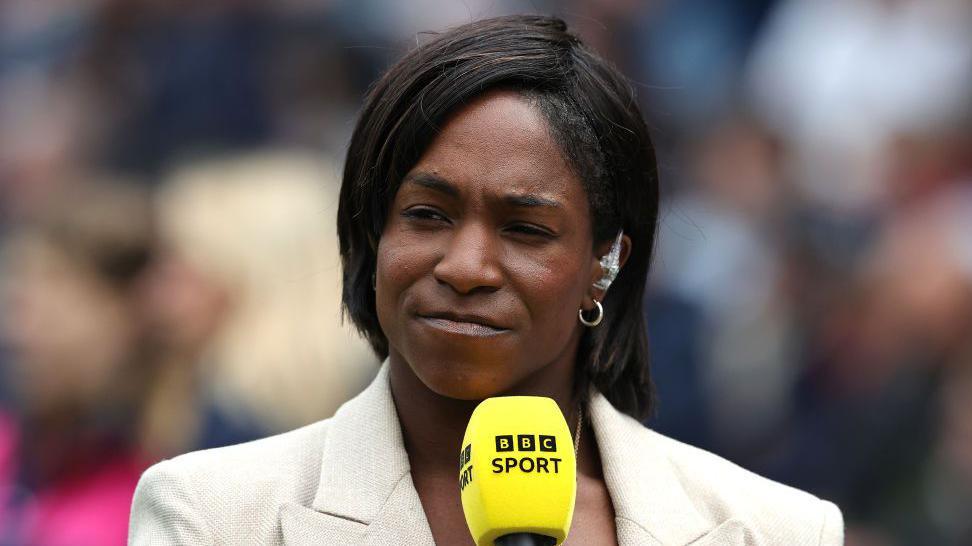
Matt Smith stepped down as chair of Warwickshire RFU following disciplinary action over comments about England rugby legend Maggie Alphonsi, marking a rare moment of accountability in one of sport's most traditional institutions. The resignation comes after a three-person disciplinary panel found Smith had made discriminatory remarks—though the specifics remain undisclosed—that prompted swift calls for his removal from within the RFU's own ranks.
Alphonsi, who earned 74 caps for England and stands as one of the game's most decorated players, said she felt let down by what she described as insufficient punishment. Her disappointment resonated deeply with the RFU's women in leadership collective, which responded with an open letter to the union demanding not just Smith's dismissal but a complete overhaul of how discrimination cases are handled. The letter cut to the heart of the issue: there exists "a significant disconnect between the RFU's stated commitment to zero tolerance of discrimination and the perception of how those principles are applied in practice."
The timing is particularly significant. The RFU, an institution famous for its insularity—England captain Will Carling once infamously called its council "57 old farts" in 1995—is undergoing its most substantial reform in decades. Chief executive Bill Sweeney is pushing a governance review designed to shrink the council and strip away much of its decision-making power, reducing it to an advisory role. The council, which includes representatives from England's counties, the military, and Oxbridge universities, has long been an old boys' network offering unpaid positions that nonetheless come with hospitality benefits worth several hundred pounds per England men's Test.
The women in leadership collective's statement revealed the deeper frustration: "We had hoped this case would demonstrate the RFU's leadership in addressing sexism and misogyny within rugby. Instead, it has highlighted areas where further development of policy and process may be required." Their words suggest that while Smith's resignation might appear to resolve the immediate crisis, the underlying systems that allowed such comments to be made—and then inadequately addressed—remain intact.
The RFU itself maintains that it stipulates a "zero-tolerance approach" to discrimination and harassment, and forbids public comment that could damage the game or the union's reputation. Yet the gap between stated policy and lived experience, which the women's collective highlighted, points to implementation failures rather than a lack of rules. Warwickshire RFU's own statement acknowledged this tension, reading: "We want to be clear that we take issues of sexism and misogyny seriously," a declaration that rings somewhat hollow given the events that prompted it.
What emerges is a portrait of an organization at a crossroads. The resignation itself represents progress—a council member held accountable in a sport where such accountability has historically been rare. But the women in leadership collective's call for systemic change suggests that isolated cases of resignation, however welcome, will not suffice. As rugby continues to expand its women's game and courts a younger, more diverse fanbase, the gap between the RFU's progressive rhetoric and its traditional power structures has become impossible to ignore. Smith's departure may be a beginning, but the real test lies in whether the ongoing governance review will produce the kind of fundamental change the women's collective is demanding.