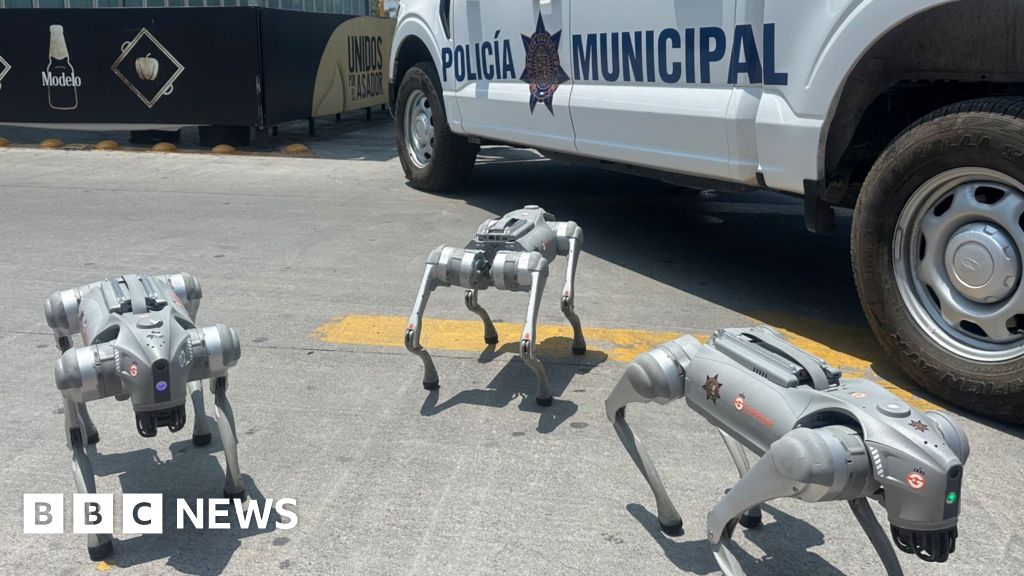
Robotic dogs will pad through the streets around Monterrey's stadium this summer, their electronic eyes scanning for threats while helicopter rotors thump overhead and armoured vehicles line the perimeter. It's a vision of security that could seem like science fiction—except it's being assembled right now, in real time, as Mexico prepares to host the 2026 FIFA World Cup.
Monterrey, Mexico's third-largest city, is gearing up to welcome the world's most watched sporting event, and security officials are deploying some of the most advanced technology at their disposal to keep fans safe. The city will host four matches during the tournament, and the stakes are correspondingly high: ensuring that hundreds of thousands of visitors can watch world-class football without fear.
The security apparatus is strikingly comprehensive. Monterrey's police department will have two Black Hawk helicopters circling above the stadium and its surroundings, providing aerial surveillance and rapid-response capability. On the ground, they'll have 90 armoured vehicles positioned throughout the city—a force designed to respond quickly to any incident and create a visible, reassuring presence. But perhaps the most eye-catching element is the deployment of robotic dogs that will patrol the streets around the stadium, their sensors and cameras providing continuous, tireless monitoring of the public spaces where fans will gather before and after matches.
The technological backbone of this operation is an integrated command centre that will serve as Monterrey's nerve centre during the World Cup. Personnel stationed there will monitor activity across the stadium and the city simultaneously, with real-time feeds allowing them to spot potential problems and coordinate responses across multiple agencies and deployment zones. It's the kind of centralized coordination that turns individual security assets into a unified system.
Mexico is hosting 13 matches across the 2026 World Cup, meaning Monterrey's security operation will be one of several such efforts unfolding simultaneously across the country. But the city's particular focus on technology reflects a broader shift in how major events are policed: rather than relying entirely on human officers, modern security operations layer in robotics, aerial platforms, and integrated data systems to extend visibility and responsiveness.
For Monterrey, these preparations represent both a challenge and an opportunity. The World Cup will bring economic benefits—tourism revenue, global attention, and infrastructure investments that extend beyond the tournament itself. But it also brings responsibility: the eyes of the world will be watching how the city manages its security operations, and any incident would overshadow the sporting spectacle. The robotic dogs, helicopters, and armoured vehicles are Monterrey's answer to that responsibility—a declaration that safety is being taken seriously, backed by concrete resources and forward-thinking technology.
The tournament is still months away, but the security architecture is already taking shape. Fans arriving in Monterrey this summer will find themselves in one of the most technologically sophisticated security environments ever assembled for a sporting event in Latin America.