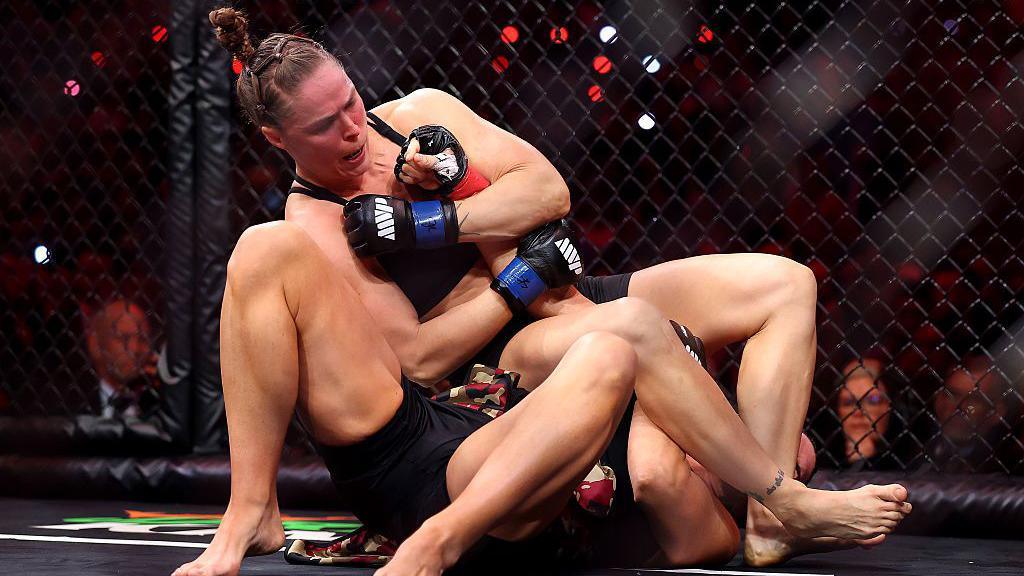
Ronda Rousey stepped into the cage at Intuit Dome in Los Angeles and, in exactly 15 seconds, rewrote the ending she had long dreamed of—submitting Gina Carano with a signature armbar to seal a perfect comeback after a decade away from MMA. At 39, Rousey showed no rust whatsoever, executing the type of explosive takedown and technical dominance that once made her one of the world's biggest sports stars before painful defeats and a ten-year absence from the sport.
The event, hosted by Most Valuable Promotions and broadcast on Netflix, marks more than just a triumphant final fight for Rousey. It represents a watershed moment in professional fighting, a potential challenger to the UFC's near-total dominance of the sport. Rousey has called it a "landscape-shifting" moment, and the stakes feel genuine—two pioneering women who opened doors for female fighters worldwide, meeting again under a new promotional banner that promises to fundamentally reshape how fighters are paid.
Rousey's victory was her 13th in 15 fights, with a remarkable 10 of those wins coming via armbar submission. She rose to prominence in 2012 as the first woman signed to the UFC, followed by a dominant bantamweight championship run that included a then-record six title defences. But her career had ended in disappointment: crushing losses to Holly Holm and Amanda Nunes, leading her to retire in 2016 after repeated concussions. The MVP-Netflix event offered what seemed impossible—a redemptive final chapter.
Carano, now 44, had been away from professional MMA for 17 years, yet she carried her own pioneering legacy. In 2009, she became the first woman to headline a major event, opening the door for women's MMA alongside Cris Cyborg. Before the fight, she spoke movingly about how the bout "saved her life" after years of struggling with her physical and mental health. When the bell rang, Rousey's instincts took over. She shot immediately for the takedown, transitioned to the armbar with surgical precision, and Carano had no choice but to submit. The pair embraced in tears afterward, a moment that transcended sport.
What makes this victory resonate beyond the octagon is what it signals about the future of MMA itself. The fighter pay disparity that has long simmered beneath the sport's surface erupted into focus at this event. The MVP-Netflix card guaranteed a minimum of £28,800 to every fighter on the card—far above the UFC's typical entry-level purse of £8,960 to £14,900. Rousey herself collected £1.7 million, while heavyweight contender Francis Ngannou earned £1.1 million. Under the UFC's model, fighters receive less than 20% of revenue, while boxing fighters can expect as much as 60%.
"I would not be here if the UFC paid their fighters better," Rousey said bluntly before the fight. During the broadcast, former UFC heavyweight champion Jon Jones also highlighted how restrictive UFC contracts have become, noting that a bout with Ngannou remains unlikely because Jones remains tied to the organisation despite retiring last year.
The UFC clearly felt the pressure. The organisation announced Conor McGregor's return after five years away, positioning his comeback to compete with Rousey's headlines. For Rousey, the message was clear: this victory is just the beginning. "This is the takeover," she declared, her perfect ending now a starting gun.