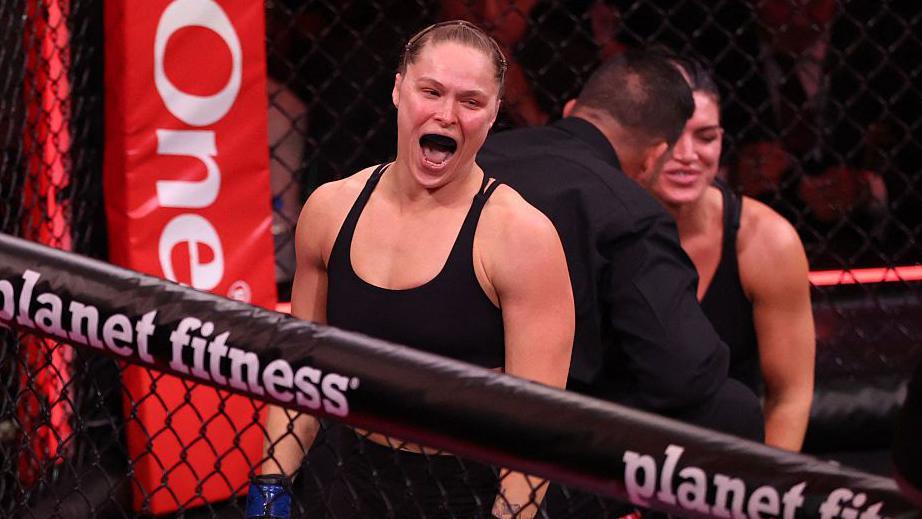
On a Saturday night in California, Ronda Rousey reminded the world why she once ruled mixed martial arts—and did it in 15 seconds flat. The former UFC champion's demolition of Gina Carano at the Intuit Dome didn't just make headlines; it shattered the viewership record for MMA, drawing 17 million global viewers on Netflix and fundamentally shifting how the sport reaches audiences.
The significance of this moment extends far beyond one knockout. For years, MMA's biggest audiences came through traditional pay-per-view channels, where UFC 329 in 2018—headlined by Khabib Nurmagomedov versus Conor McGregor—set the standard with 2.4 million buys. The 2011 UFC on FOX 1 event held the previous most-watched record with 8.8 million viewers. Rousey v Carano nearly doubled that benchmark overnight, and it happened on a streaming platform, not cable or pay-per-view. This wasn't just a sporting upset; it was proof that mainstream audiences will engage with MMA when it's accessible and free.
The fight itself was vintage Rousey. At 39 years old and returning to competition for the first time in a decade, she executed with surgical precision, submitting Carano in the opening seconds. The victory carried special weight—it came on the very first live MMA event Netflix has ever broadcast, and it generated £1.64 million ($2.2 million) at the gate. The main card also featured heavyweight Francis Ngannou and Nate Diaz, contributing to a "minute audience" peak of 12.4 million concurrent viewers, though the fight itself was the main draw.
What makes this even more remarkable is what happened after. Most Valuable Promotions (MVP), the company co-founded by Nakisa Bidarian and Jake Paul that organized the event, is already signaling plans to bring more MMA events to Netflix. The viewership numbers speak louder than any marketing pitch could—there's clearly hunger for combat sports on streaming, especially when fights are delivered live and without the traditional paywall.
Carano's response after losing has become its own story. The 44-year-old athlete, fighting her comeback after a decade away from competition, showed the humility of a true competitor. She described the rapid defeat with unflinching honesty: her arm had begun to crackle as Rousey applied the submission, and she tapped to prevent a break. Rather than accepting defeat as final, Carano suggested this was merely a beginning. "Now I feel like this is just the beginning," she said, noting that the speed of her loss had paradoxically given her clarity about where her body and skills could go next.
Rousey, by contrast, has closed the door. She insists this will be her final fight—a full stop to one of combat sports' most storied careers. Whether Carano returns to fight again remains her call, but one thing is certain: this Saturday at the Intuit Dome proved that when the right fighters meet on the right platform, MMA can captivate an audience that dwarfs anything the sport has seen before. For a discipline that's spent two decades building legitimacy, that 17 million viewer number might matter more than any championship belt.