Mikel Arteta walked into the Emirates Stadium in December 2019 as an untested manager with a half-finished résumé—just 18 months of experience at Manchester City's academy—and Arsenal's faithful held their breath. Two decades had passed since the club last lifted a Premier League title, and the patience required to rebuild a fallen giant seemed almost quaint in a sport obsessed with immediate gratification. Yet the Gunners' leadership chose to trust a vision that wouldn't flower overnight. That decision, measured and methodical, has now transformed Arsenal into champions once again.
The turnaround wasn't instantaneous. Arsenal's early years under Arteta were marked by struggle: an eighth-place finish in 2020–21, then fifth place the following season. Critics circled. But the manager and the club stayed the course, and the investment—both in youth development and strategic recruitment—began to compound. By 2023–24, Arsenal came agonizingly close, finishing second. Last season, they refused to blink. When Manchester City drew 1–1 with Bournemouth, the mathematical certainty of Arsenal's first Premier League title in 22 years crystallized into reality, delivering a trophy that validated the club's unusual commitment to patience in an impatient age.
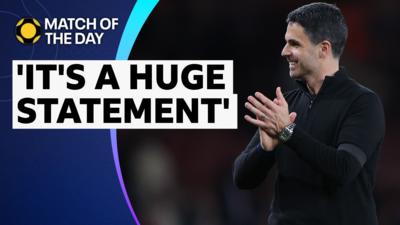
What made this victory resonate beyond London was not merely the prize itself, but the philosophy it vindicated. Football's conventional wisdom demands quick wins and rapid turnarounds. A manager gets 18 months to prove himself or faces the axe. Yet Arsenal's owners and board gave Arteta not one season, not two, but several years to implement a coherent plan. Danny Murphy and Joe Hart, speaking on Match of the Day, underscored this rarity when analyzing the title triumph. In their assessment, the Gunners' willingness to stick with a manager through the lean years—through the disappointments and the whispers of doubt—had proven itself the smartest strategy available.
The title win represents something deeper than tactical acumen or fortunate fixtures. It speaks to the value of institutional faith, to the power of allowing a vision to mature at its own pace. Arteta inherited a club in disarray, with fractured relationships between players and management, inconsistent performances, and a culture that had grown stale. His early work involved clearing out deadwood, rebuilding trust, and establishing a new identity. This took time. It took years of missed Champions League football and early cup exits. It took a coach willing to communicate his blueprint clearly enough that supporters could see the scaffolding rising, even when the building itself remained incomplete.
The payoff now arrives not as a surprise but as the inevitable conclusion of a long argument, finally won. Arsenal's title—secured with characteristic dignity once the mathematics became impossible for rivals—stands as a monument to an unfashionable belief: that sometimes the fastest way to get somewhere is to refuse to rush. In an era when panic selling and short-term thinking dominate, the Gunners proved that patience, strategy, and faith in a coherent vision can still deliver glory. Young players developed under Arteta's stewardship have matured into champions. The club's careful spending has yielded depth and resilience. The manager's tactical flexibility has solved problems that once seemed intractable. After 22 years of heartbreak and near-misses, Arsenal's drought is over—and the world's watchful eye now turns to see if this patience-born dynasty can sustain itself.