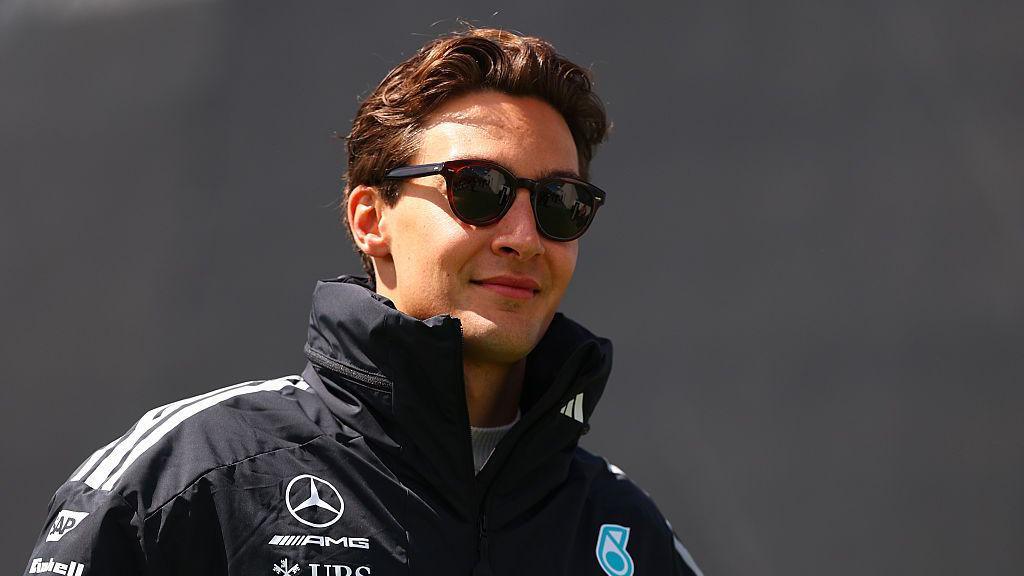
George Russell finished fourth in Miami, behind teammate Andrea Antonelli and McLaren's Lando Norris and Oscar Piastri, and now he's determined to prove it was a learning moment, not the shape of things to come. The Mercedes driver arrives at the Circuit Gilles Villeneuve in Montreal for the Canadian Grand Prix carrying hard-won insights from a three-week break spent dissecting the fundamentals his team had nearly lost sight of.
This season has scrambled the usual blueprint for success in Formula 1. The new power units introduced this year split energy generation almost evenly between internal combustion and electrical systems, demanding constant focus on energy management. That intensity has pushed teams—and drivers—to neglect the foundational elements that have always separated champions from the rest: tire temperature management, precise setup, and the discipline of keeping rubber in its optimal working window. Russell's Miami result, disappointing as it was, served as a sharp correction. "All of the basics; they've almost been put on the back burner because we've all been so focused on energy management," he explained. "Miami was a really great reminder for my side of the garage and myself that you still need to focus on those fundamentals that make or break the weekend."
The 28-year-old won the season opener in Australia and had competitive pace in China and Japan before bad luck intervened. But Miami marked the first race where his teammate had a clear advantage—a rare occurrence that stung. Yet Russell's response has been methodical rather than defensive. He reframes his competitor not as Antonelli, but as himself, measuring success by whether he has brought all his skills to bear. "I see my competitor as myself because I know if I take all of my boxes, I can be at the top, and in Miami that didn't happen," he said.
Montreal offers something Miami did not: cooler weather and a fundamentally different track character. The Circuit Gilles Villeneuve, situated on the Île Notre-Dame in the St. Lawrence Seaway alongside downtown Montreal, keeps tires in their natural temperature window rather than perpetually teetering on the edge of overheating. This is precisely where Russell has historically found his rhythm. A driver who has spent recent seasons refining his craft against Lewis Hamilton knows how to extract maximum performance when conditions are in his favor. The street circuit's unique demands suit his methodical approach to setup and tire management.
Mercedes arrives with a major car upgrade—a package the team hopes will match the substantial improvements that brought McLaren, Red Bull, and Ferrari closer to the championship-leading squad in Miami. Russell cautiously acknowledged the potential. "We hope (it's) as big as the upgrade was for the likes of McLaren and Ferrari in Miami," he said, "but as we know there are no guarantees." Still, he sees no reason the upgrade shouldn't deliver on paper. Mercedes has won all four races held so far this season, a dominance that speaks to the team's fundamental competitiveness even as rivals close the gap.
What Russell appears to have grasped—and what his quiet determination in Montreal will test—is that setbacks in modern Formula 1 can reverse as quickly as they arrive. One difficult weekend doesn't define a season or a driver. The work between races, the refocus on fundamentals, the trust in a team's upgrade pipeline: these are the levers that separate the champions who persist from those who fade. Russell is banking on Montreal to prove Miami was merely a reset, not a decline.