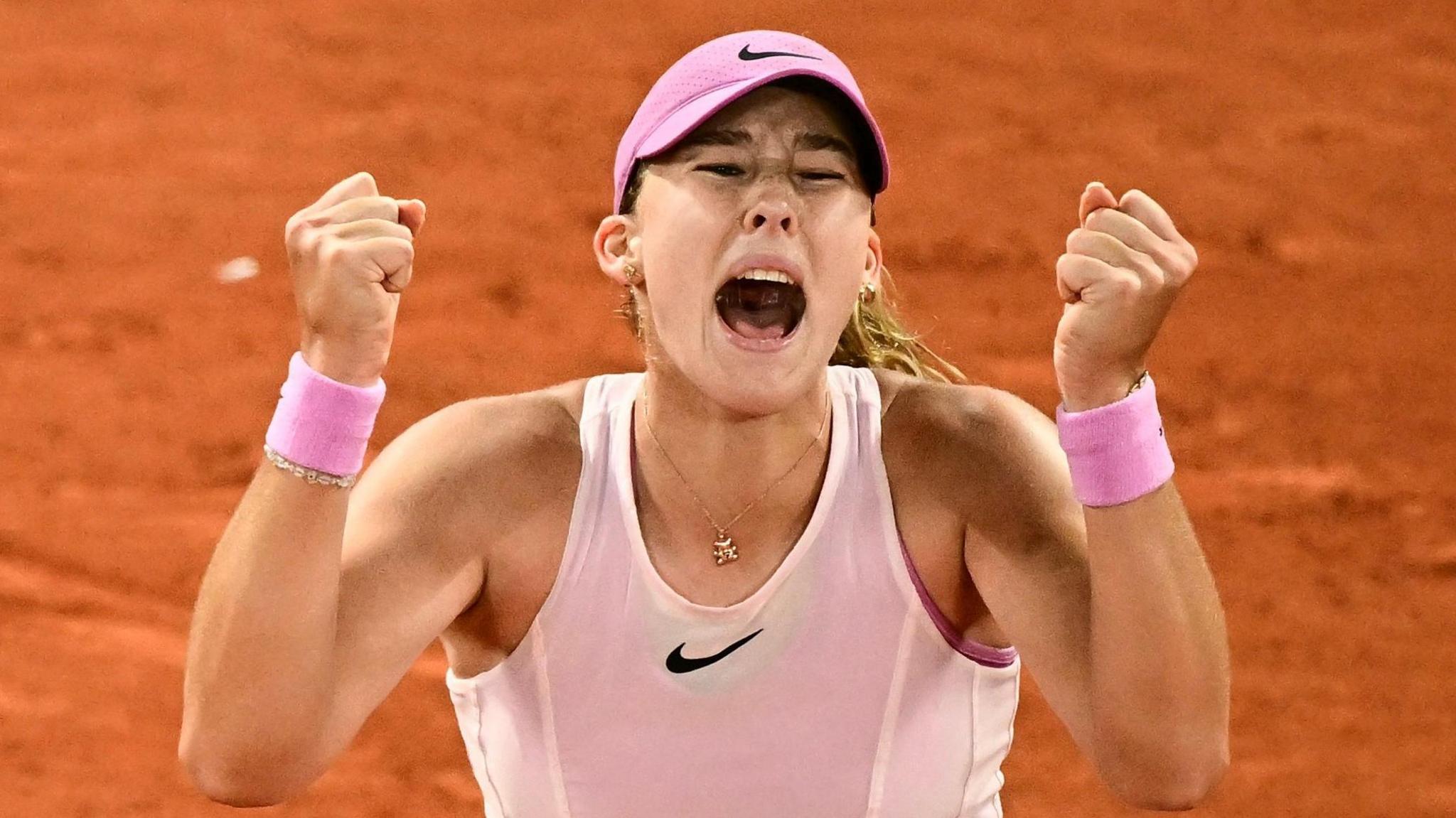
At 19 years old, Mirra Andreeva has just rewritten the script of her own career. The Russian teenager defeated Ukraine's Marta Kostyuk 6-1 6-3 in the French Open semi-final on Thursday, storming into her first Grand Slam final with a performance so dominant that she committed just 22 unforced errors to Kostyuk's 34. Now she stands on the brink of history—the first player born since 2005 to reach a major singles final, and one victory away from becoming the third-youngest first-time Grand Slam champion this century.
The stakes of this match extended far beyond the tennis court. Russia's invasion of Ukraine has cast a long shadow over the sport for nearly three years, and Kostyuk, one of the most vocal Ukrainian athletes, has consistently called out Russian competitors who have not denounced the war. In keeping with Ukraine's stance over the past four years, she did not pose for a pre-match photograph with Andreeva, and the players did not shake hands after the match. Yet the on-court narrative belonged entirely to Andreeva: solid from the baseline, stubborn in defense, and seemingly unaffected by the emotional weight of the moment.
What makes Andreeva's breakthrough all the more striking is the company she now keeps. She is the fourth-youngest woman to reach the Roland Garros final in the past 30 years, following only Martina Hingis, Kim Clijsters, and Coco Gauff. This is her second semi-final appearance at Roland Garros—she lost in the same round in 2024—but this time she came prepared. Awaiting her in Saturday's final will be either Diana Shnaider, the 25th seed and her Russian compatriot, or Polish qualifier Maja Chwalinska.
The eight seed had an obvious reason for confidence coming into this match: Kostyuk, the in-form player on the WTA Tour, had beaten Andreeva in both of their previous meetings this year and carried an unrivalled 17-match unbeaten streak on clay into the semi-final. Yet no player has amassed more wins on clay than Andreeva in 2026—21 victories—and she holds an even more impressive 35 total wins this season. With world number one Aryna Sabalenka's shock exit on Wednesday, the draw had opened up. Andreeva had lost only one set across her six matches so far, and despite the blustery conditions at Roland Garros, her baseline game was unshakeable.
When it was over, Andreeva sat courtside visibly emotional. "I am still very, very nervous," she said, her voice wavering. "All of these feelings combined, it is amazing—I have never felt anything like this before." Yet even in her nervousness, she articulated a clarity of purpose that belies her youth. "I told myself to accept everything that happens on the court and no matter what happens, I am going to fight and give my best. With this kind of mindset, I ended up winning the match."
Saturday's final will test whether that mindset can hold. But at 19, with 35 wins already banked this season and a performance this assured when it mattered most, Andreeva has already signaled that she belongs among tennis's next generation of champions.