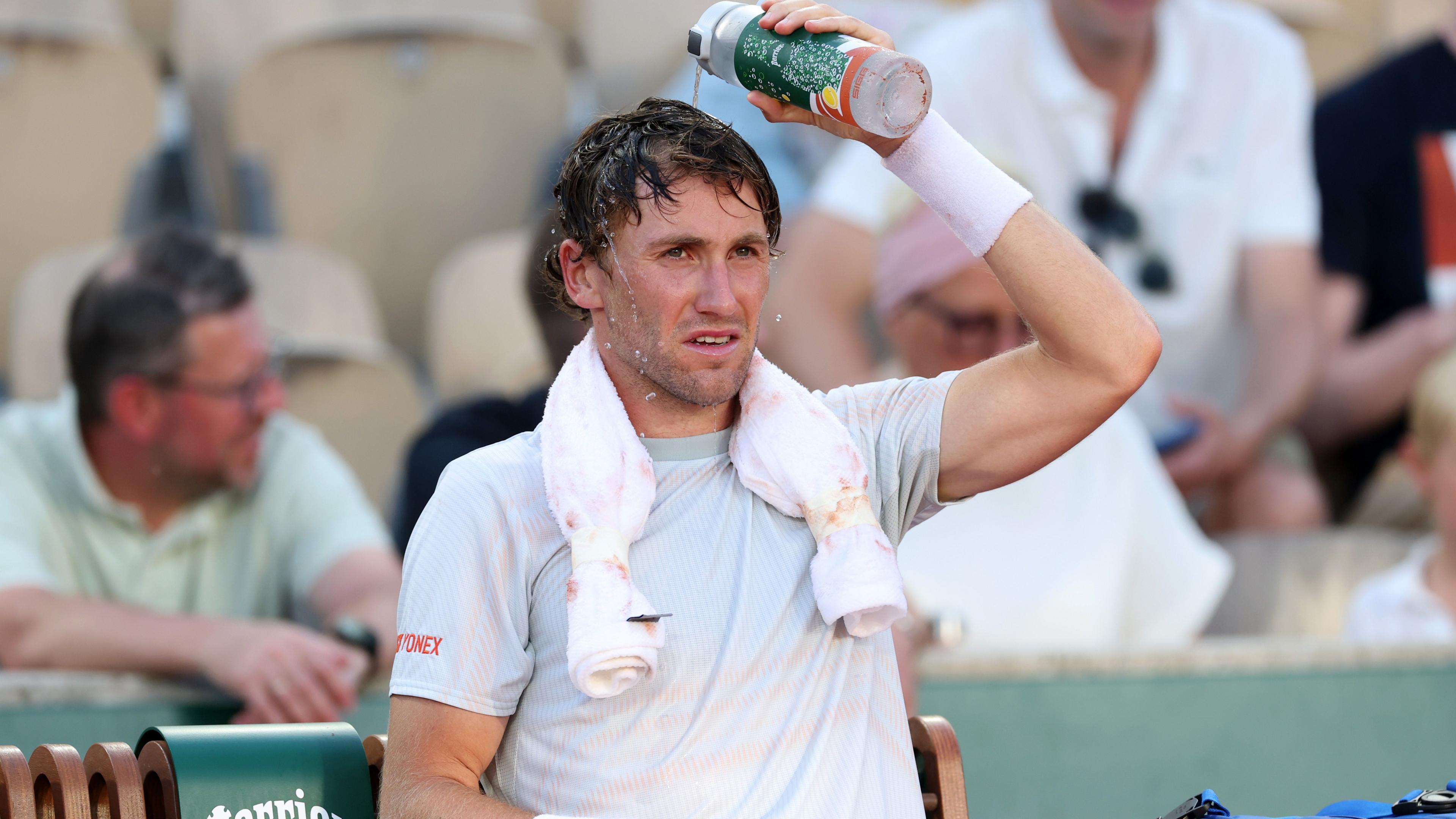
Casper Ruud finished his fourth set against the Paris heat, walking the line between collapse and victory like a man caught between two worlds. The 27-year-old Norwegian tennis star, a two-time runner-up at Roland Garros, fought through dizziness and exhaustion in sweltering conditions to advance to the second round—not through dominant tennis, but through sheer mental fortitude and the will to stay conscious.
The heatwave blanketing Paris this week turned the court into a furnace, and Ruud's body began to shut down. In the fourth set, he experienced what he described as heatstroke symptoms—a sensation so disorienting that he compared himself to "a zombie." The sensations of dizziness and fatigue were all too familiar. Years earlier, during a match in Washington DC, he'd encountered the same feeling and had to retire in the third set rather than risk his health. That experience haunted him on court today, making every moment feel like a battle not just against his opponent, but against his own biology.
Yet Ruud never surrendered. Instead, he made a calculated decision: with a 2-1 lead in sets, he deliberately lowered his intensity, focusing everything on slowing his pulse and bringing down his body temperature. The strategy was risky—it meant playing tentatively when the match remained undecided—but it was a lifeline. By the fifth set, he'd recovered enough energy to finish the match and book his place in the tournament.
When asked whether his victory was mental or physical, Ruud didn't hesitate. "It feels like a mental win," he said. The weight of that admission speaks volumes. In that fourth set, his mind wandered to darker places: booking a flight home, watching the next two weeks from his sofa while other players competed. The defeat felt inevitable. But instead of accepting it, he talked himself into staying, into fighting, into finishing. He allowed himself to drop intensity without dropping out entirely—a distinction only mental strength could sustain.
What makes Ruud's performance remarkable isn't that he played brilliant tennis. It's that he played through conditions that tested not just his skill but his physical resilience. Athletes train for excellence; they rarely train for moments when finishing means simply surviving the heat. Yet Ruud refused to join the growing list of players forced to withdraw or retire this week due to the extreme conditions. He proved that sometimes victory isn't about dominating—it's about enduring, adjusting, and finding the mental reserves to push forward when your body is screaming to stop.
As temperatures continue to spike across Paris, Ruud's match serves as a reminder of the human cost of playing elite sport in a changing climate. His victory advances more than just his tournament; it's a statement that even when the conditions are brutal and the body rebels, the mind can still find a way. Ruud didn't leave Paris on an early flight. He's still here, still competing, still proving that sometimes the greatest victories are the ones you simply survive.