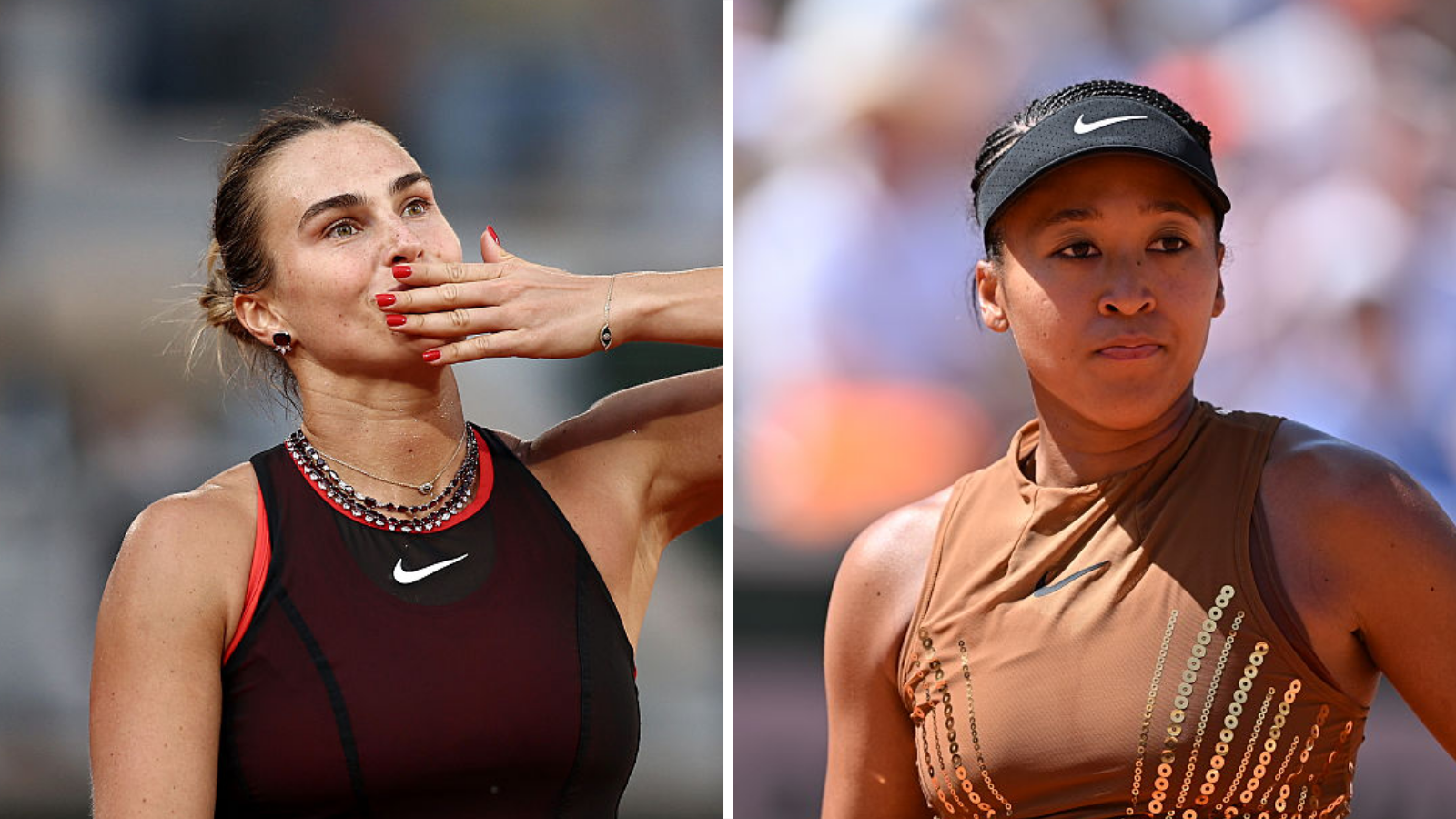
Aryna Sabalenka will take the Court Philippe Chatrier stage under the lights on Monday to face Naomi Osaka—a moment that carries weight far beyond the tennis itself. This fourth-round French Open match marks the first women's match to occupy the tournament's coveted night-time slot since 2023, a gap that speaks volumes about whose tennis the Grand Slam has chosen to showcase to prime-time audiences across France, Europe, and the United States.
The numbers tell a stark story. Since the French Open introduced evening sessions in 2021, only four of the first 60 night matches have featured women competing. Sabalenka versus Osaka will be the fifth. That means 55 of those prime-time slots—each designed to reach the largest possible television audience—went to men's matches.
Both players come to this moment as four-time Grand Slam champions. Sabalenka, the Belarusian top seed, is chasing her first Roland Garros title to add to her collection. Osaka, seeded 16th, brings a resume that already includes two Australian Opens, one US Open, and one Australian Open. Their credentials alone would seem to guarantee the night slot at any major championship. Yet when Osaka was asked about the evening session on Saturday, she said she did not "even associate" the French Open with night matches.
The frustration among women players has been building. Last year, American world number five Jessica Pegula said she felt like she was "hitting her head against the wall" over the subject. Ons Jabeur, a two-time Wimbledon finalist, posed a more pointed question: whether the people making these decisions "have daughters." Since 2023, these objections have only grown louder, prompting newly appointed WTA chief executive Valerie Camillo to seek direct answers from French Open tournament director Amelie Mauresmo—herself a former women's world number one—when they met at Roland Garros this week.
Mauresmo has offered a consistent justification: the concern that women's matches go "really fast," which apparently threatens the viability of evening programming. Yet this logic invites an uncomfortable question: if Sabalenka and Osaka—two of the sport's most accomplished and marketable stars—cannot secure the night slot regularly, which women's match ever would? Mauresmo has also insisted the night sessions will not expand to two matches, as they do at the Australian Open and US Open, citing fears of late finishes.
The conversation between Camillo and Mauresmo was described by the WTA as open and productive. Camillo emphasized that women's players have delivered some of the "most exciting and dynamic competition in global sport" in recent months and years. The ticket prices suggest the French Open views night matches as premium products: ranging from €60 to €280 (£50 to £240) for the 2026 tournament.
With Sabalenka and Osaka finally getting their turn under the lights, there is now an inescapable sense of expectation. If this blockbuster match delivers a quick two-set finish, it may well be weaponized by those arguing the women's game cannot sustain prime-time programming—irony that underscores just how loaded this single night match has become.