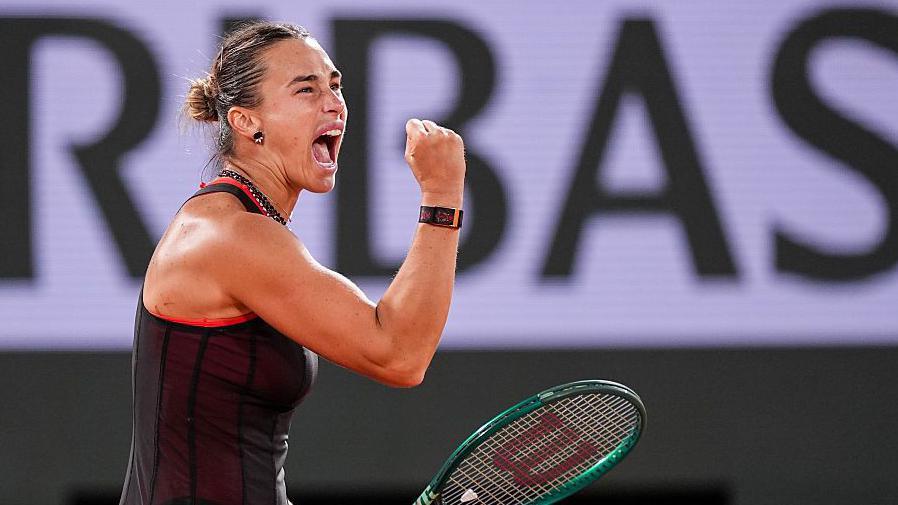
On Court Philippe Chatrier under the glow of night lights, Aryna Sabalenka moved through her opening service game with the precision of a player who knew exactly what was at stake. The world number one lost that first game to Naomi Osaka's spirited resistance, then didn't lose another. In an hour and 26 minutes, Sabalenka dismantled the 16th seed 7-5, 6-3, advancing to her fourth consecutive French Open quarter-final in what was only the fifth women's singles night session ever held at Roland Garros since the format was introduced in 2021.
The match mattered for more than its result. Sabalenka's dominance on serve—finishing with 12 aces to Osaka's two and an 83% win rate behind her first serve—highlighted a widening gap between the game's most brutal baseline hitters. Yet it was her willingness to leave the baseline, not her power, that proved decisive. She won 10 of her 11 points at the net and landed five deft drop shots among her 39 winners, refusing to be drawn into the endless rallies that might have favored Osaka's returning prowess.
The stats told a story of mounting pressure. Osaka landed just 53% of her first serves and was taken to deuce after leading 40-15 in three separate first-set service games—a pattern of self-inflicted hesitation that Sabalenka exploited ruthlessly. When Sabalenka stepped inside the baseline to receive second serves, she won 21 of 35 points, breaking Osaka three times across the two sets. That break came decisively in the 11th game of the opening set, then struck again twice more in the second as the world number one's relentless pressure built into something Osaka couldn't withstand.
This was their third meeting in three months—Sabalenka now leads 3-0 since April, when the two met in Madrid. Each time, Sabalenka's serve and court placement have proven the separating factor. At 28 years old, she remains the only player with major final experience remaining in the women's draw, a distinction that carries weight as the tournament narrows. Her next opponent is 25th seed Diana Shnaider in the quarterfinals, a continuation of her bid for a maiden French Open title.
What struck observers most was Sabalenka's demeanor after the victory. She moonwalked across the court, joking to the crowd that she wanted to "keep going"—evidence of a player operating in complete control. "It is amazing to play in the night session," she told the Roland Garros crowd. "Thank you for bringing such an amazing atmosphere. You guys make this place special." It was a gracious acknowledgment of the rarity of the moment. Women's night sessions at Roland Garros remain uncommon enough that her appearance under the lights carried its own significance. She had walked onto one of tennis's most storied courts in an unusual setting and delivered a masterclass in tactical precision, reminding everyone that power is only half the story—and sometimes not even the most important half.