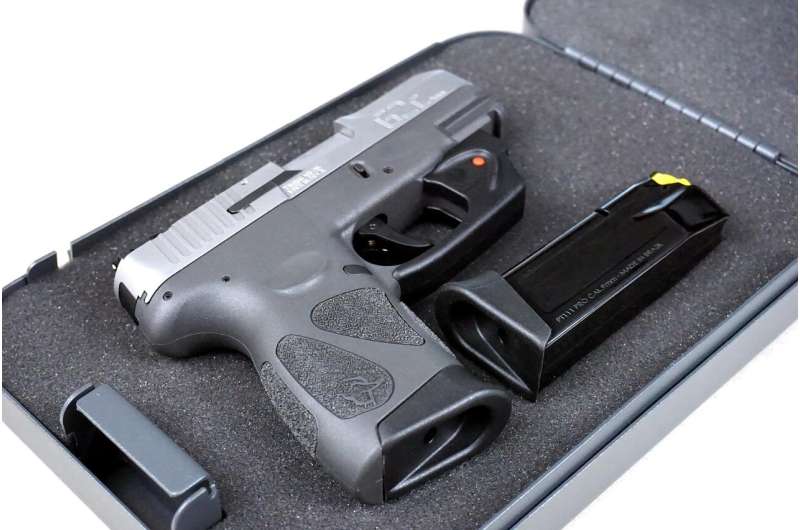
Christian Hoover, a pre-doctoral fellow in epidemiology at Brown University's School of Public Health, has identified something that gun owners can do right now to protect their children from an invisible threat: safely store their firearms.
The discovery emerges from research focused on a problem many households overlook — that firearms and ammunition contain lead, and discharging a gun releases lead particles that can be inhaled, tracked into homes on contaminated clothing, and eventually settle in household dust where young children play. In the first years of life, when brains are developing rapidly, lead exposure carries real stakes. It increases the risk of cognitive and behavioral problems in childhood and can potentially contribute to criminal behavior in adulthood. There is no safe level of lead exposure for young children, yet it remains a persistent environmental toxin affecting countless American households.
Working with Joseph Braun, a professor of epidemiology at Brown who studies how environmental pollutants affect children's health, Hoover analyzed data from the HOME Study, a longitudinal research project based in Cincinnati that has been tracking over 400 children since their mothers' pregnancies between 2003 and 2006. The researchers measured blood lead levels at ages 12, 24, and 36 months, along with floor dust lead levels at 12 and 24 months. They cross-referenced these measurements against caregivers' reports of firearm ownership, the number of firearms in the home, and storage practices.
The results were striking. In homes where firearms were not stored or locked, dust lead concentrations were 29 to 84 percent higher in the first two years of a child's life. Children in these homes had approximately 20 percent higher blood lead levels between ages 12 and 36 months compared to children in homes with safely stored firearms. These percentages translate to meaningful differences in a child's neurological trajectory during a critical window of development.
"Keeping guns away from children is an important factor in reducing the amount of lead those children are exposed to," Hoover said when discussing the findings, which were published in the Journal of Exposure Science and Environmental Epidemiology.
The research connects two previously separate conversations — firearm safety and environmental health — in a way that could resonate with gun owners already motivated to prevent harm. Hoover emphasizes this point: "Most gun owners are safety-oriented and thoughtfully engaged in determining how to prevent firearm-related harms, and these findings present an actionable way to address lead exposure." Safe storage practices that prevent injuries and deaths from firearms simultaneously create a protective barrier against lead contamination.
Young children are particularly vulnerable because they spend more time on floors where dust settles and naturally put contaminated objects and their hands in their mouths. Parents who store firearms securely — whether locked in a cabinet, safe, or stored separately from ammunition — create distance between their children and this source of lead exposure without requiring costly environmental remediation.
The findings suggest that lead exposure from household firearms represents a significant but preventable environmental health risk. As Braun notes, "These data show that it is important to consider multiple sources of environmental lead exposure to protect children's rapidly developing and sensitive brains." For families with guns at home, this research offers a concrete step toward protecting the next generation's health.