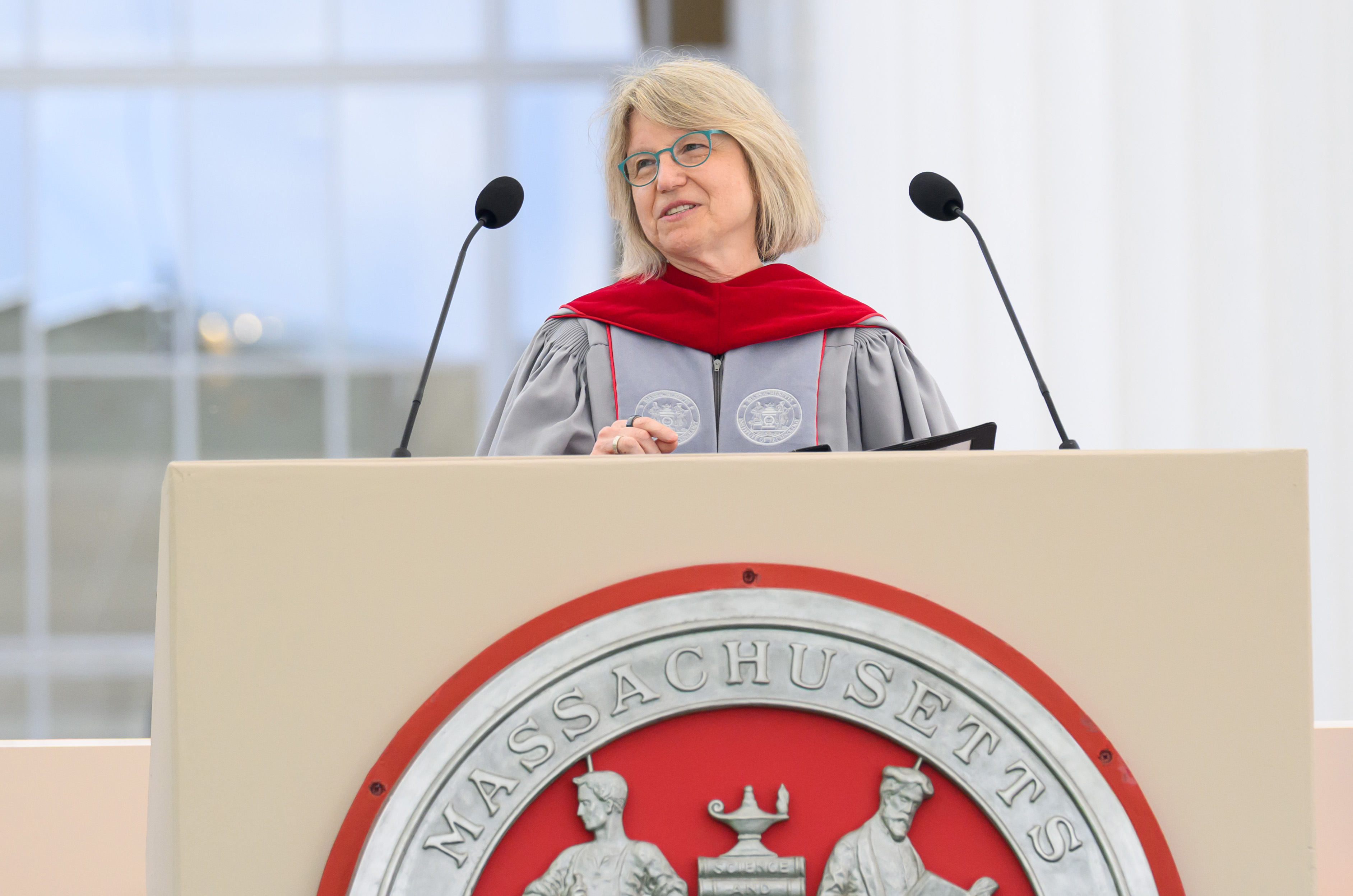
When Sally Kornbluth stepped to the podium to address MIT's Class of 2026, she didn't deliver a lecture—she delivered a gift of wisdom, drawn not from her own words but from the lived experience of thousands of MIT alumni scattered across the globe. As the institution's president, Kornbluth had the authority to charge the graduates with expectations of their own making. Instead, she chose humility, turning to the alumni community to distill what truly changes lives at MIT.
The answer surprised no one, yet it struck at something deeper than any single discovery or degree. Nearly all the MIT graduates Kornbluth speaks with, she revealed, describe the same transformative force: not a particular subject studied or skill acquired, but the full experience of living and working within a community bound by distinctive passions and values. That insight became the architecture of her charge—two foundational values that appear at the top of MIT's official statement: excellence and curiosity.
Excellence at MIT is not merely aspirational language, the kind every company and university claims. Rather, it is woven into the daily fabric of the community. You feel it in the hallway conversations where colleagues are eager to share their latest breakthroughs. You see it in the institution's commitment to merit-based admissions—no legacy preferences, no back doors for donors—because MIT values "potential over pedigree." This week alone, Kornbluth noted with wry humor, four hundred graduates apparently felt earning an MIT degree wasn't challenge enough, so they also threw themselves out of airplanes.
Yet Kornbluth was careful to distinguish excellence from arrogance. Quoting the American poet Walt Whitman, she invoked "the scientific spirit—the holding off, the being sure, but not too sure, the willingness to surrender ideas when the evidence is against them." That capacity to stay open, to accept the risk of failure as a necessary rung on the ladder of growth, is what transforms excellence from self-regard into rigorous truth-seeking.
On curiosity, Kornbluth's voice carried unmistakable energy. A journalist had once described her as "inexplicably ebullient"—and she laughed at the characterization before offering its real explanation: MIT is custom-made for people whose curiosity never sleeps. But beyond personal satisfaction, she emphasized something the world urgently needs to understand: curiosity is "our intellectual rocket fuel," and preserving it matters for society as a whole.
She traced the path from curiosity to consequence. Curiosity-driven science transforms deadly cancers into treatable conditions. It moves fusion energy from dream to reality. It reveals how to grow more food using fewer resources. The American government once understood this, investing public money with "steady patience" over eight decades, knowing that the practical payoff from basic research might arrive twenty, thirty, or forty years away. Today, Kornbluth acknowledged with evident concern, US investment in curiosity-driven science is in sharp decline.
As she sent the Class of 2026 into an uncertain world, Kornbluth's message was both anchoring and liberating. The values that define MIT—the relentless pursuit of excellence tempered by intellectual humility, and the untamed curiosity that fuels breakthrough discovery—are portable. They don't require a building in Cambridge or a lab on campus. They require only a commitment to live them, wherever the world calls next.