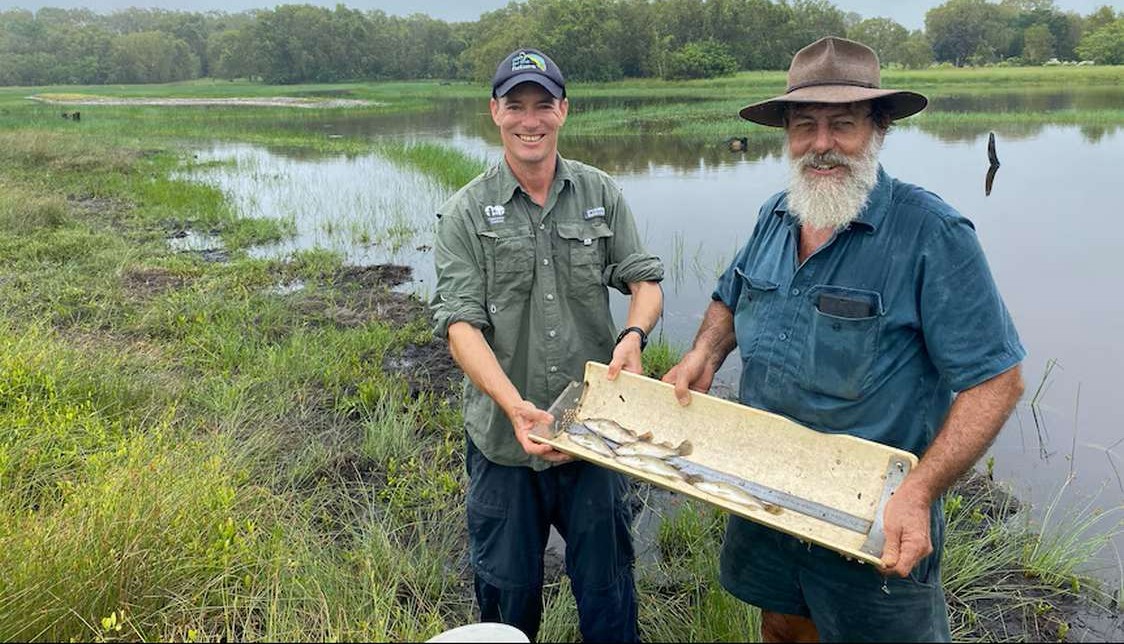
Near Mackay, Queensland, a 60-year-old rancher named Christopher Rek made a decision that would restore what his own cattle had taken: he opened his land back to the salt water. Dozens of tidal gates built five to six decades ago are now being removed across the region, undoing half a century of efforts to keep seawater out. What was once seen as land improvement—creating pasture at the expense of salt marshes and estuaries—is now recognized for what it cost: the loss of vital ecosystems that species like barramundi depend on to survive.
The scale of alteration is striking. In Mackay alone, between 500 and 600 tidal gates remain, with thousands more scattered across Queensland. These barriers, built with the best intentions of mid-20th-century agricultural expansion, gradually fell out of favor as ecologists and land managers came to understand what was being lost. Salt marshes and estuarine ecosystems aren't wastelands to be reclaimed—they're nurseries and corridors for fish and breeding grounds for species that move between ocean and inland waterways seeking spawning areas.
The removal of these gates is bringing salt water back to land that hasn't seen it in living memory. Already, the results are visible. Fisheries ecologist Matt Moore and Rek have recorded juvenile barramundi using the reestablished waterways. The presence of these young fish is no small thing: it means the ecosystem is beginning to function again as it did before settlement fundamentally altered the landscape.
The work involves multiple partners—Greening Australia, the Yuwi Indigenous Corporation, the water management company Catchment Solutions, and Queensland's state fisheries authority—working together to reverse the tidal suppression. At Cape Palmerston National Park, a particularly significant restoration unfolded. A 45-foot-long channel was dug through an artificial embankment that stretched 180 feet. That embankment had blocked the ocean's high tide from entering a wide area at the southern boundary of Yuwi traditional owners' native title lands. When the channel was cut, seawater flowed back in for the first time in generations.
The immediate ecological response was dramatic. Hymenachne, an introduced grass species brought to Queensland for cattle fodder that had outcompeted native mangroves, was knocked back significantly. Within the area around Cape Palmerston, salt water killed off 80 percent of it. Local Yuwi elders witnessed this moment and described it as deeply meaningful—more than an ecological victory, but a spiritual restoration of their connection to country and its waters.
Rek's perspective captures something essential about the shift underway. "Mackay's getting built in and the animals are running out of space," he told ABC News AU. "I stole from nature by using all my cows and now it's time to give the land back and let nature do its thing." That willingness to acknowledge what was taken, and to reverse it, matters. It's not guilt-ridden or performative—it's practical recognition that the land works better when salt water can move as it did for millennia before the gates were built.
This work in Queensland reflects a global movement toward removing dams and restoring natural water movement and displacement. Each restored estuary, each reconnected tidal flow, benefits both ecology and the industries that depend on healthy waterways. With hundreds of gates still to remove across the region, the momentum is building—driven by stories of ranchers and Indigenous communities choosing restoration over the status quo.