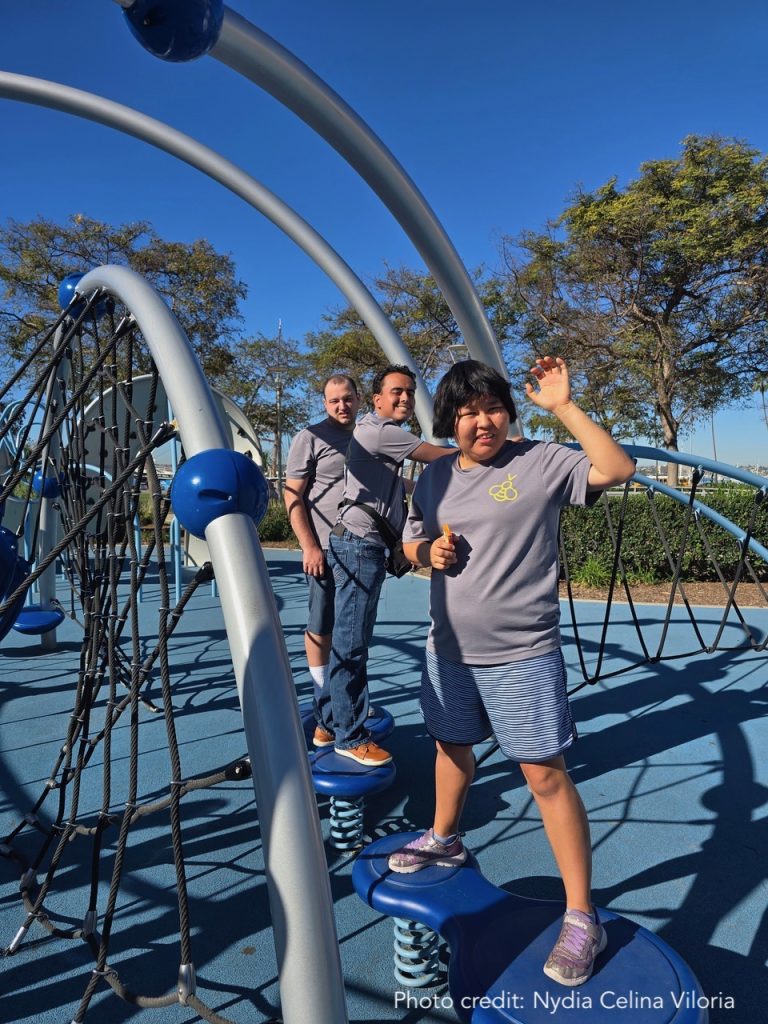
For Maria, a San Diego resident with a disability, "belonging feels limitless" in America's Finest City. After high school, she joined BEE (Builders of Eloquence and Engagement) Community, a day program for adults with disabilities. Every morning, she and her friends pack medical devices, mobility equipment, communication tools, medication, and special food — then set out to discover a county that has quietly become a national model for inclusive design.
San Diego County now offers more than ten venues explicitly designed with accessibility in mind, proving that inclusion isn't an afterthought — it's a foundation. At Play My Way in Mission Valley, universal design means wheelchair swings, soft-matted floors, quiet reading nooks, and specialized adaptive equipment for individuals with complex needs. Perhaps most meaningfully, the facility includes an adult-changing table: a small addition that sends a clear message that everyone belongs here.
Downtown's Waterfront Park takes play to a literal new level with an 830-foot-long, shallow interactive basin featuring 31 water jets, where visitors of all abilities splash safely together. Just north in Encinitas, Moonlight Beach welcomes visitors with Mobi-mat sand paths and beach wheelchairs that transform sandy terrain from obstacle to opportunity — turning visitors into what Maria calls "mermaids." Nearby San Elijo Lagoon Ecological Reserve offers ADA-compliant hiking trails that bring mudflats and fiddler crabs within reach of everyone, while gentle nature sounds support those with sensory differences. Six ADA-accessible camping spots at adjacent San Elijo State Beach mean the adventure can last overnight.
Balboa Park has built accessibility into its cultural backbone. The San Diego Museum of Art provides curator narration via app and screen-reader-compatible gallery labels. The Fleet Science Center holds accessibility mornings every third Saturday, an hour before public access. The Old Globe Theatre supports auditory differences through induction neck loops and sensory-friendly performances. The San Diego Zoo — where "you belong at the zoo" is a promise in motion — offers disability access shuttles, an adult-changing cot on site, wheelchair and scooter rentals, and reservable ASL interpreters.
For younger visitors, Escondido's Children's Museum of Discovery pairs trained staff with sensory-friendly mornings. And at Pizzabilities in Alpine and Santee, disabled employees serve up pizza, pasta, and sandwiches in what Maria describes as a "calm, judgement-free environment." Meanwhile, free open rehearsals at The Rady Shell downtown make the San Diego Symphony accessible to everyone, regardless of movement, hearing, or financial barriers — wheelchair-accessible seating and pre-requestable tents included.
What strikes Maria most isn't the features themselves, but what she calls "the village" that surrounds her: strangers who cheer her group on and give them space to support others. During a recent Balboa Park visit, a mother approached BEE members for advice on supporting her nonspeaking child. The moment crystallized something larger: in San Diego, accessibility isn't just about ramps and rails. It's about a community that meets people with patience, respect, and the assumption that everyone belongs.