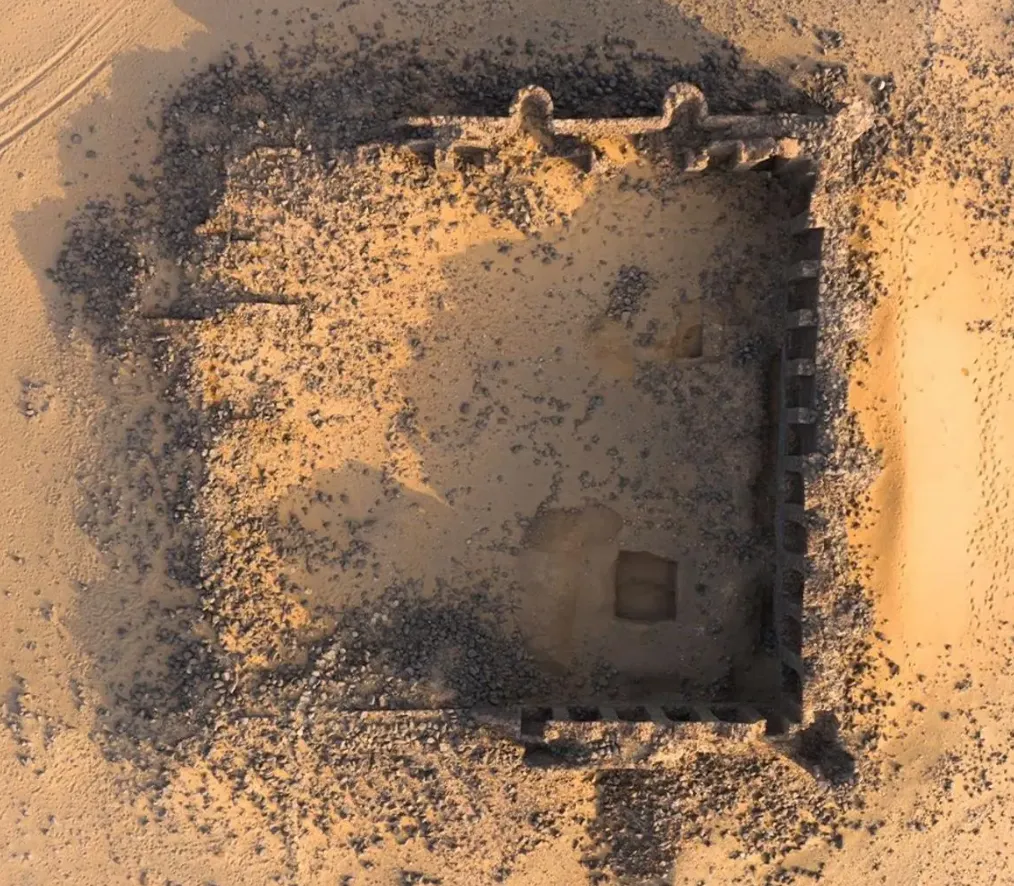
On the desert floor 187 kilometers northwest of Makkah, archaeologists uncovered the layered story of pilgrimage itself: more than 1,700 artifacts emerging from the earth at Al-Juhfah Miqat, a waystation that has welcomed travelers for nearly 1,400 years.
Saudi Arabia's Heritage Commission, working alongside researchers from the University of Exeter, completed the first season of excavation at this ancient site in 2024, revealing a snapshot of daily life along one of Islam's most sacred routes. What makes this discovery remarkable is not just the quantity of artifacts, but what they tell us about the diversity of people who passed through this place. Among the pottery shards, glass fragments, and worked stone pieces were finds originating from the Levant, Egypt, and Ethiopia—physical evidence that Al-Juhfah Miqat served as a genuine crossroads of the Islamic world, where pilgrims from different lands converged on their way to Makkah.
The excavations uncovered six pottery kilns, suggesting that the site wasn't merely a rest stop but a functioning community where goods were produced and traded. Archaeologists also identified a water channel believed to have served the steady stream of pilgrims and travelers, along with 13 tombstones dating to the Umayyad and Abbasid periods—reminders that this route, while sacred, was not without its hardships. These remains underscore the practical infrastructure that made pilgrimage possible in the early Islamic centuries.
Al-Juhfah Miqat holds particular significance in Islamic history. A miqat is a boundary point where pilgrims traditionally enter a state of ritual purity before proceeding to Makkah, and this site has been recognized as such since the early Islamic period, with strong historical associations to the Prophet's migration. The site flourished especially during the second Hijri century, when it supported not only water facilities but also shops catering to the needs of travelers.
The Heritage Commission's work at Al-Juhfah is part of a larger, methodical effort to survey and document archaeological sites along the Hijrah route between Makkah and Madinah. Using advanced technologies, researchers are systematically revealing the historical and civilizational depth embedded in these landscapes. Each excavation season adds to the map of how pilgrimage shaped—and was shaped by—the broader Islamic world.
What emerges from the soil at Al-Juhfah is more than museum pieces. These artifacts are witnesses to centuries of human movement, faith, and exchange. They tell the story of pilgrims who walked these routes, merchants who supplied them, and communities who built the infrastructure to welcome them. As archaeologists continue their work, they're not simply cataloging the past—they're preserving the material memory of one of history's most enduring spiritual journeys.